
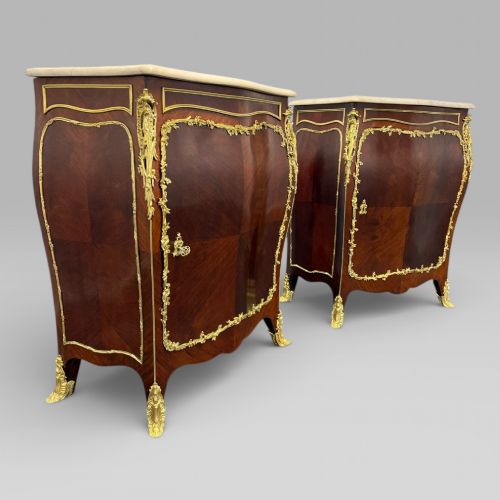
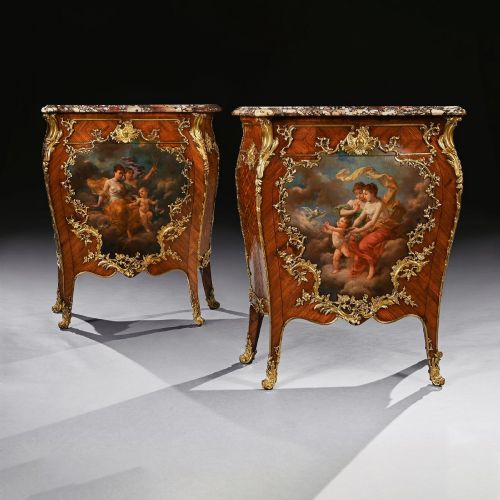
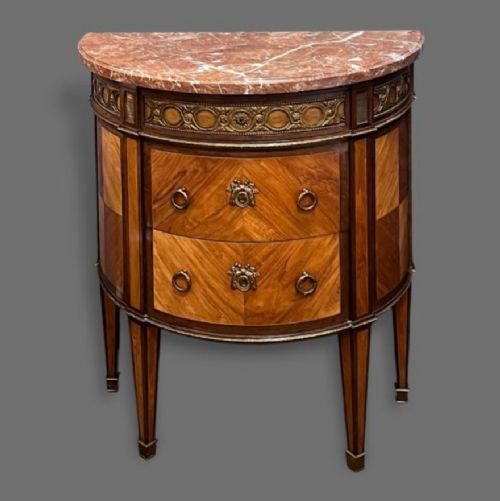
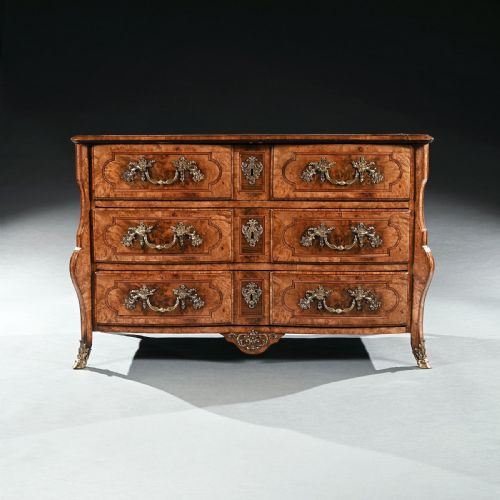
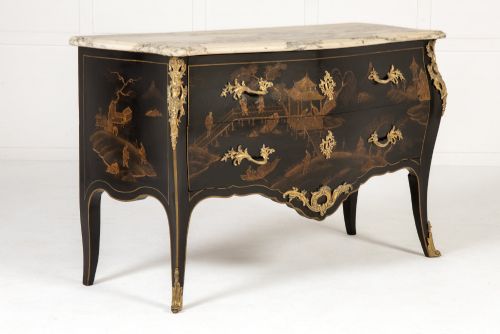


Gilt Bronze Commode
When you search for a gilt bronze commode, you are looking at substantial French case furniture designed to display wealth and status through lavish metal mounts and fine timber.
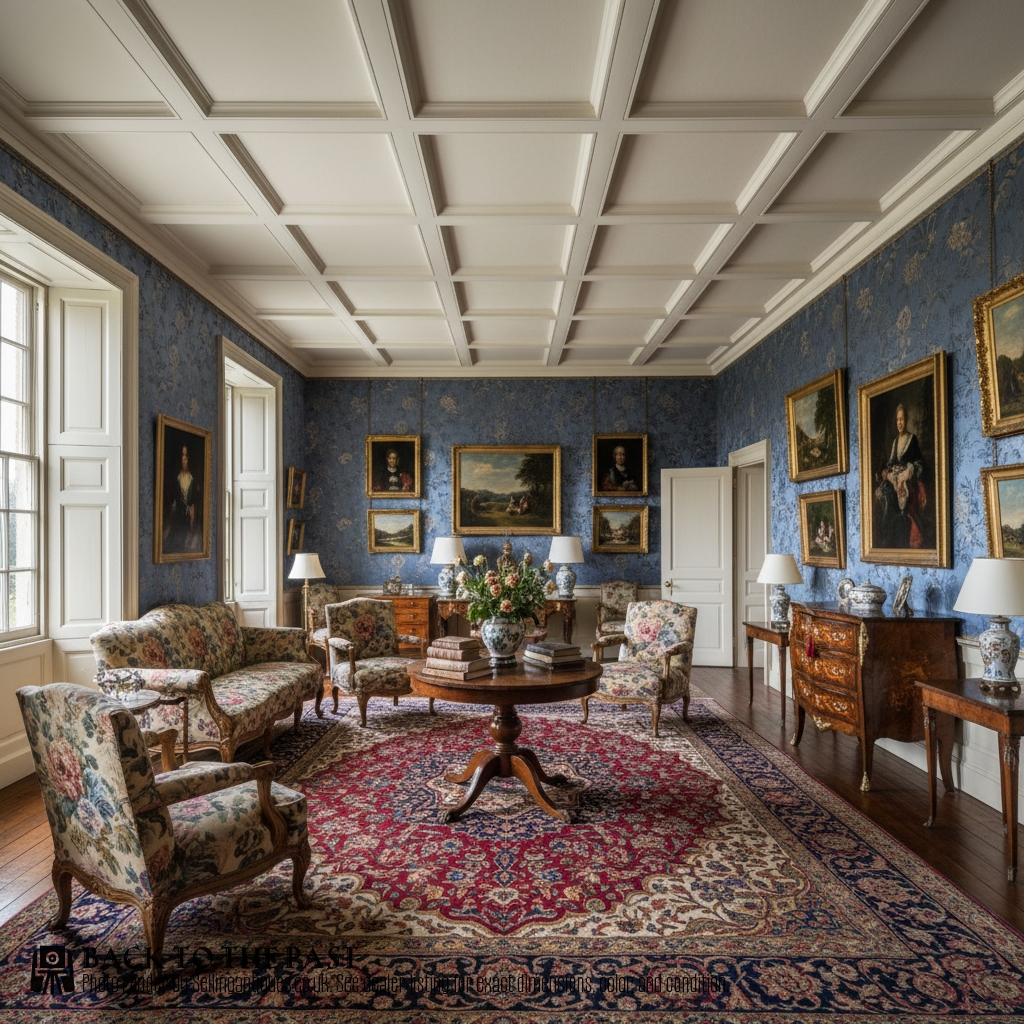
Gilt Bronze Commode
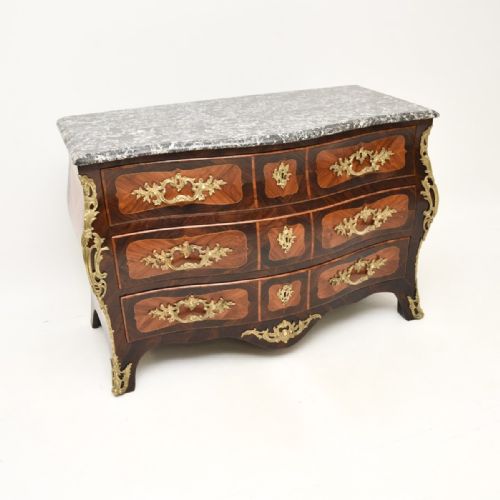
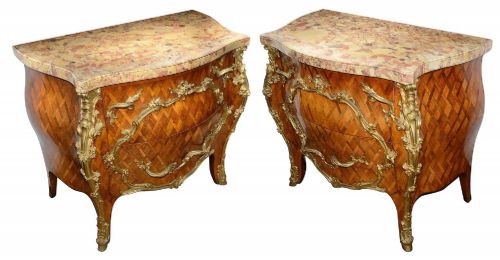
A gilt bronze commode is a low storage cabinet or chest of drawers designed primarily for formal reception rooms, featuring prominent metallic decoration. The pieces found here range from 18th-century originals to extensive 19th-century revivals created in Parisian workshops.
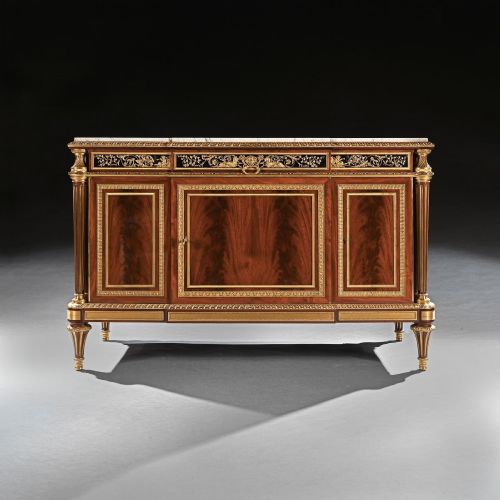
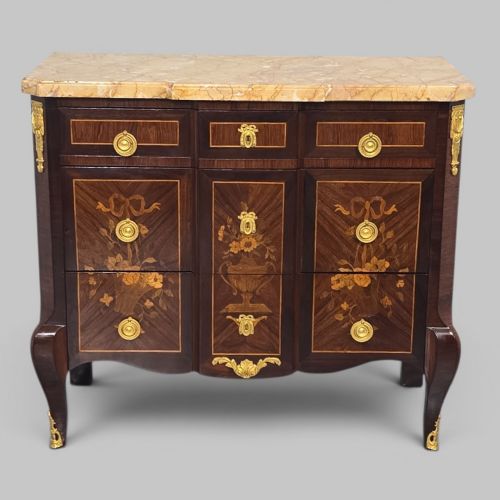
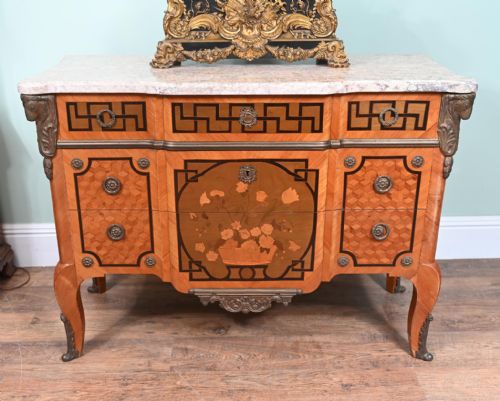
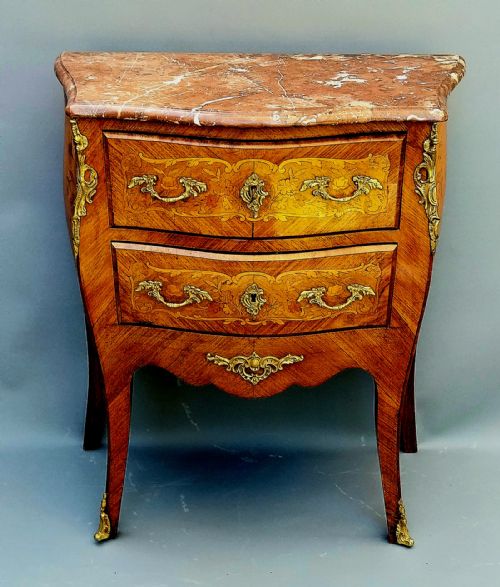
Forms vary from serpentine and bombé shapes to clean-lined neoclassical chests, frequently paired with fitted marble tops. Buyers regularly encounter side cabinets, petite commodes, and bedside tables alongside standard multi-drawer chests.
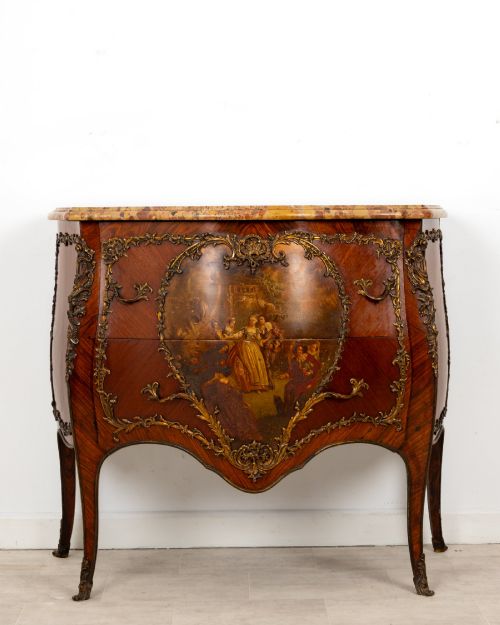
The aesthetic vocabulary draws heavily from Louis XV, Louis XVI, and Regence periods, demonstrating symmetrical or asymmetrical scrollwork, floral marquetry, and Japanned lacquer panels. These items function simultaneously as practical storage and grand decorative centerpieces.

How they were made
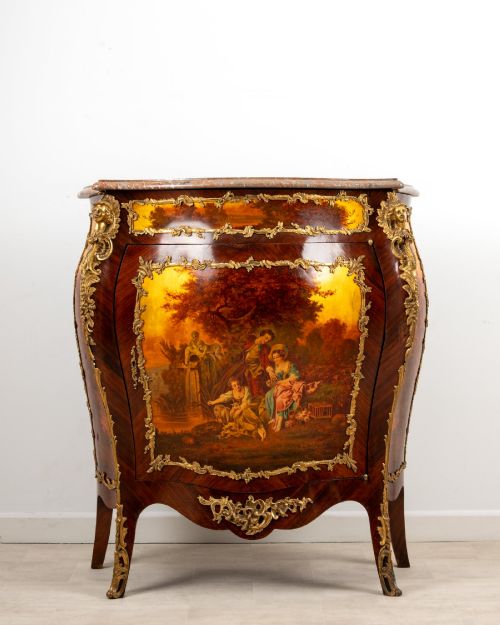
Cabinetmakers constructed the carcases using native and exotic timbers such as kingwood, walnut, mahogany, and tulipwood, often applying intricate marquetry or parquetry geometric patterns across the surfaces. Vernis Martin painted panels and Chinoiserie japanning provide pictorial decoration on specific luxury examples.
Mounts and feet were cast in bronze and subsequently gilded, employing mercury gilding on earlier items and electroplating on later 19th-century revivals. These cast ornaments were meticulously chased by hand to sharpen details before being secured to the timber frame through threaded pins and nuts.
Gilt Bronze Commode Retail Price Guide 2026
Typical asking prices for gilt bronze commode among the pieces listed under this phrase on Sellingantiques today, from the lower quarter to the upper quarter. They describe what is for sale here now, not the wider market.
Materials recorded across the inventory include kingwood, mahogany, walnut, rosewood, burr maple, tulipwood, satinwood, and marble.
What varies in quality
The standard of a gilt bronze commode rests heavily on the crispness and depth of the metal chasing rather than mere surface shine. Superior mounts exhibit sharp relief, distinct chisel marks on unpolished recessed areas, and heavy casting weight that sits flush against the timber.
Cabinetwork quality appears in the precision of the veneer matching, the tightness of the marquetry joints, and the substance of the underlying carcase wood. Pieces produced by documented Parisian makers command greater attention due to the superior engineering of their drawer construction and the integration of their mounts.
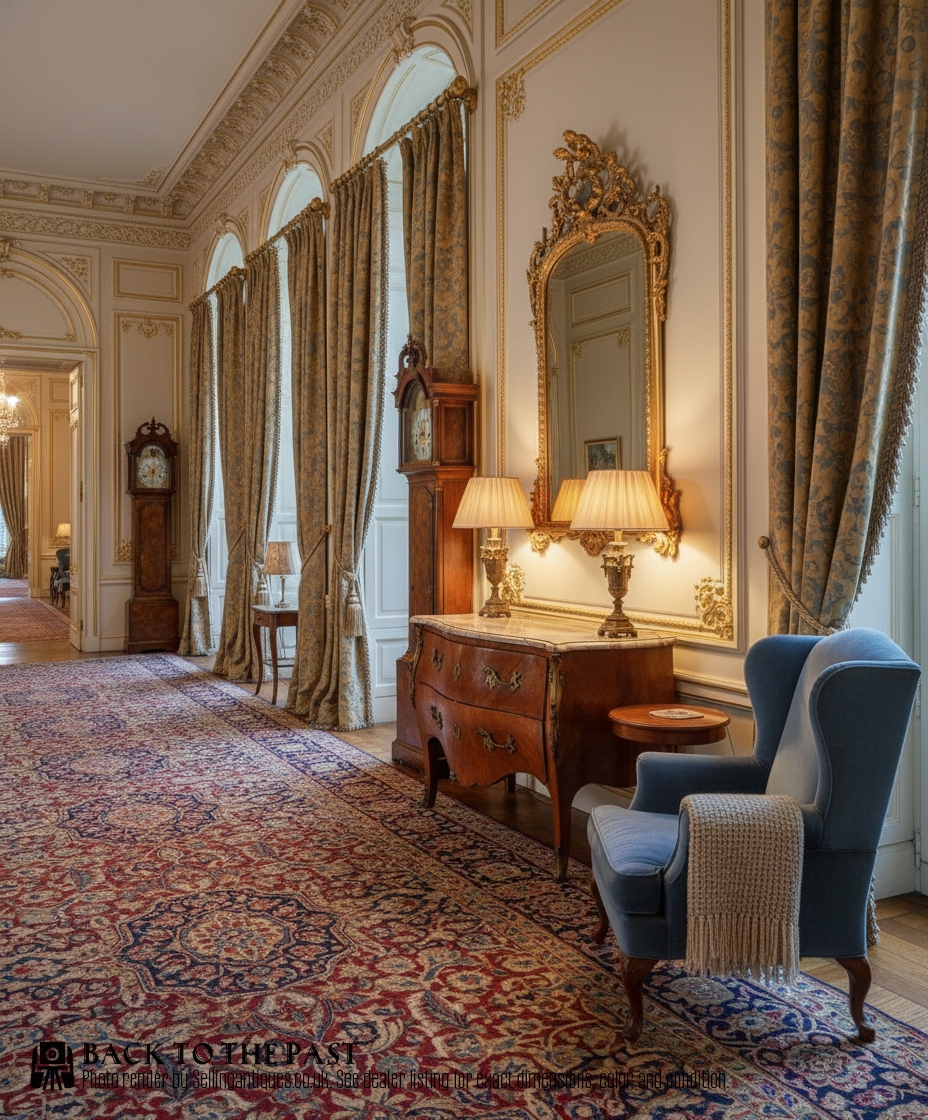
Jacques Bircké·Henry Dasson·E. Kahn·Thomas Hache·Joseph Zwiener·Jean-Henri Riesener·Paul Sormani·Charles Cressant
The Gilt Bronze Commode Glossary
- Ormolu
- Gilt bronze decoration applied to furniture mounts and hardware. The technique involves creating a gold and mercury amalgam on a bronze base, though later pieces utilise electrogilding.
- Bombé
- A bulging, outward-curving swollen shape characteristic of Rococo furniture forms. This silhouette demands precise woodworking to ensure the drawers operate smoothly within a curved carcase.
- Marquetry
- Decorative veneer patterns assembled from various coloured woods to form pictorial or geometric designs. Craftsmen cut these thin slices together to achieve tight, seamless joints.
- Vernis Martin
- A type of translucent resin varnish developed in France to imitate East Asian lacquer work. It allowed cabinetmakers to produce durable painted scenes in green, red, and black.
- Chasing
- The manual post-casting process of refining metal surfaces with hammers and small punches. Skilled metalworkers used this technique to add texture and definition to gilt bronze mounts.
Gilt Bronze Commode: Frequently Asked Questions
What is a gilt bronze commode?
A gilt bronze commode is an ornamental chest of drawers or low cabinet featuring cast metallic mounts finished in gold. These pieces originated primarily in France as elite functional furniture for palaces and grand houses.
Over subsequent centuries, European workshops reproduced and reinterpreted these designs, incorporating marble surfaces and exotic wood veneers. Today they serve as statement storage items in high-end interiors.
How do I identify a revival piece?
Revival pieces date largely from the 19th century, when workshops looked back to earlier royal French styles for inspiration. Cabinetmakers during this era utilised mechanical woodworking tools alongside traditional hand skills to recreate 18th-century aesthetics.
Examination of the internal secondary woods, screw types, and construction methods typically clarifies whether a piece is an 18th-century original or an 1880s interpretation.
How should I clean marble tops?
Marble surfaces on these cabinets require gentle treatment to avoid dulling the polished stone or staining the porous material. Warm water and a mild, neutral soap applied with a soft cloth will remove ordinary dust and grime without damage.
Harsh acidic cleaners, vinegar, and abrasive scouring pads must be avoided entirely because they etch the stone and strip the surface sheen.
Where were these commodes made?
The vast majority of these pieces were manufactured in Paris, which served as the capital of luxury furniture production and metal casting. Master cabinetmakers and bronze founders operated within distinct Parisian quarters to supply European aristocracy.
Regional French centres such as Grenoble also produced notable furniture, while occasional examples emerged from surrounding countries influenced by French design.