

Antique Marble Chest
When searching for an antique marble chest, collectors meet heavy timber carcasses topped with smooth stone slabs built for daily use and formal display.
Antique Marble Chest
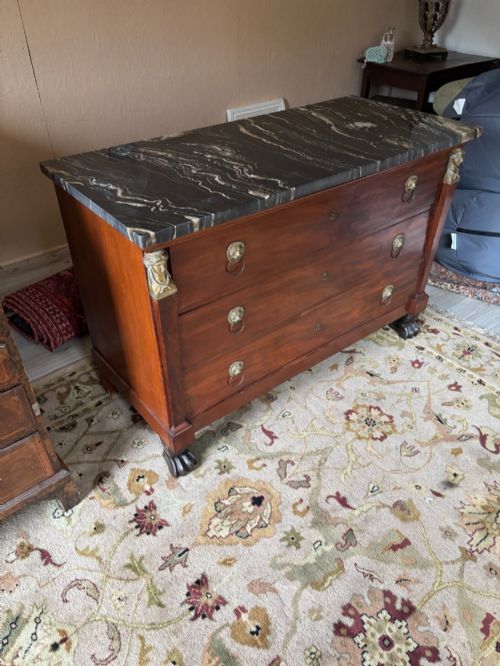
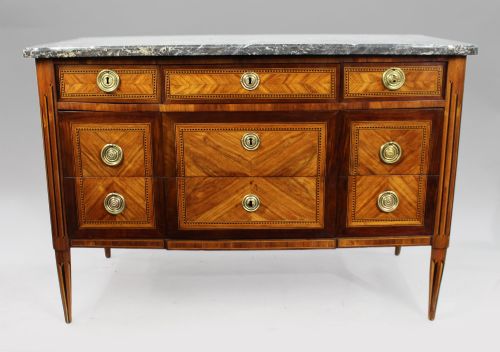
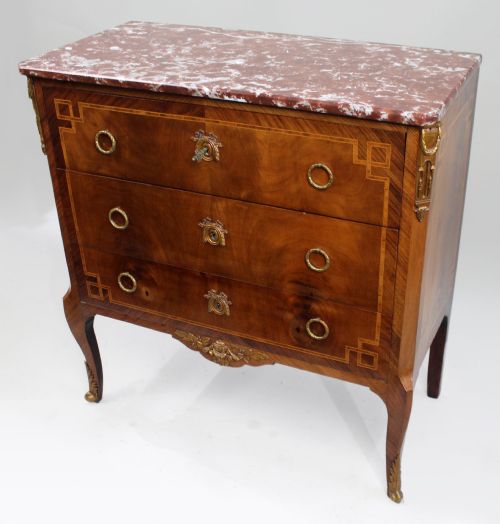
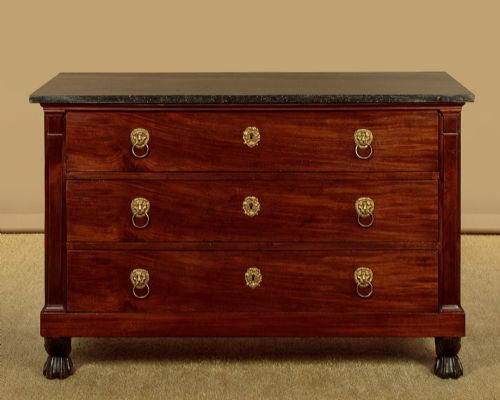
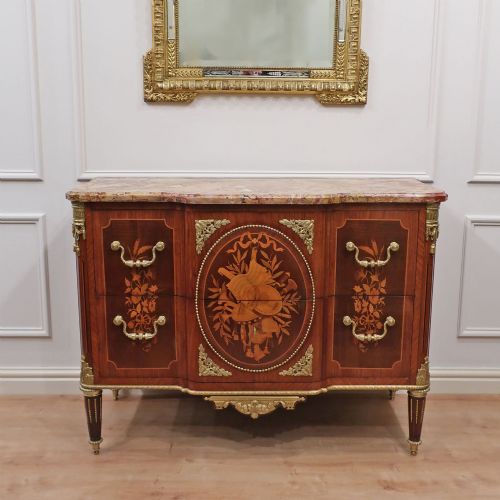
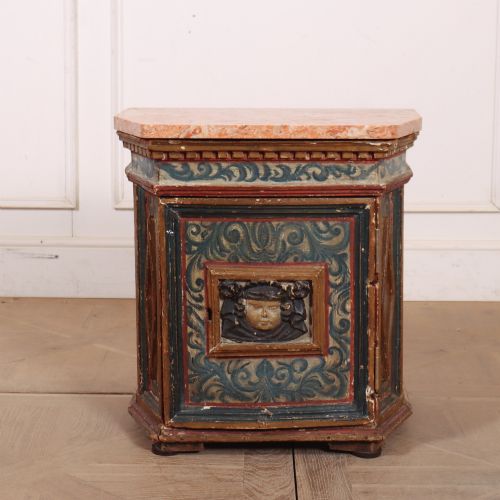
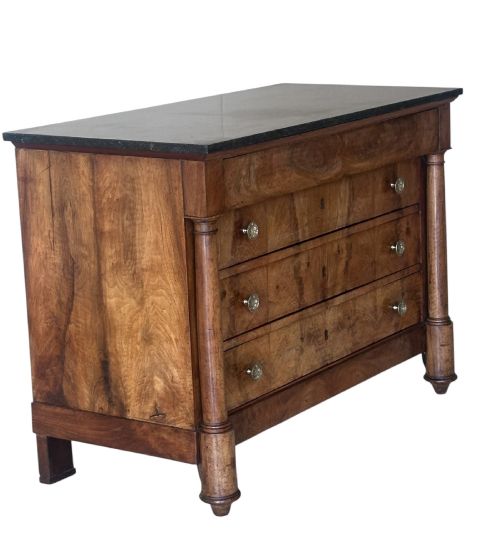
The search phrase antique marble chest brings together a varied group of storage furniture, most frequently appearing as French commodes, bedside cabinets, and chests of drawers from the eighteenth and nineteenth centuries. These pieces combine substantial timber bodies with fitted marble tops in shades of grey, rouge, and verde alpi.
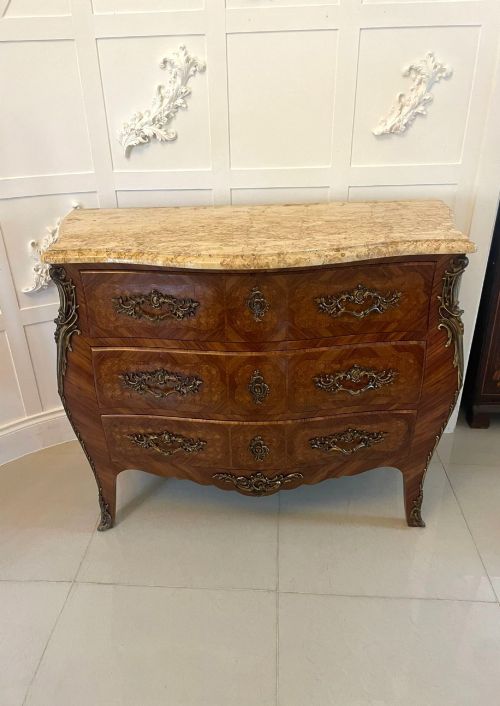
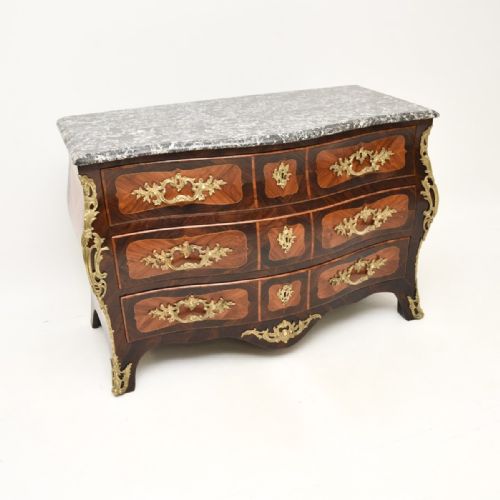
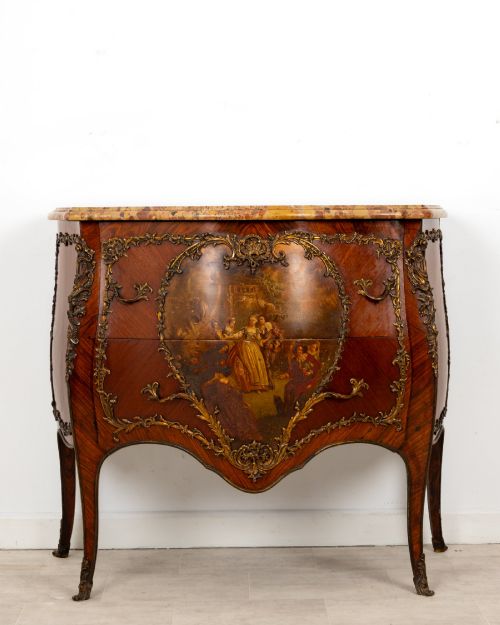
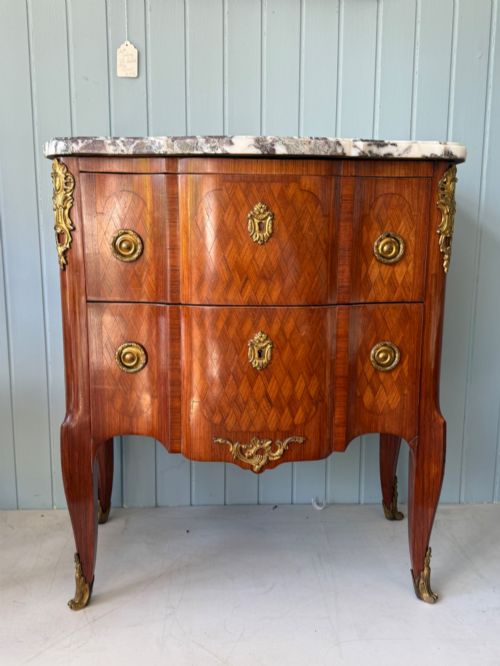
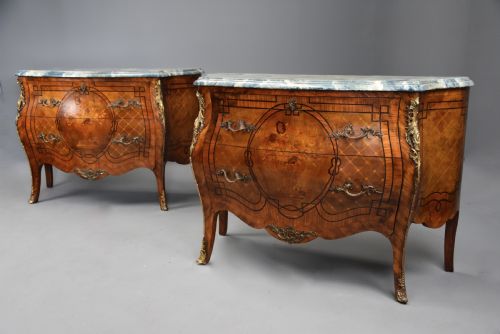
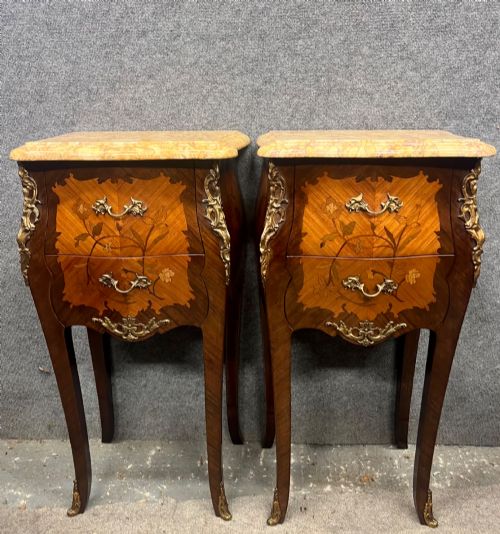
Buyers encounter forms ranging from rectilinear walnut and mahogany drawer units to serpentine and bombe shapes executed in kingwood and parquetry. Alongside full-size commodes, the selection includes smaller bedside tables and occasional chests designed to hold personal items while serving as decorative surfaces.
How they were made
Carcasses are constructed from native and exotic timbers including walnut, mahogany, oak, and cherry, often overlaid with intricate kingwood, rosewood, and tulipwood marquetry or parquetry patterns. Structural stability is maintained through traditional joinery, allowing the timber frames to support heavy stone surfaces.
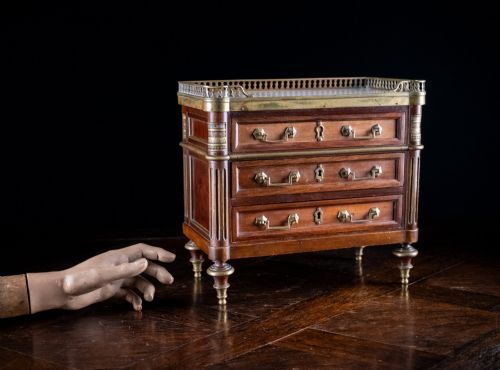
Mounts and hardware cast in brass, bronze, or ormolu accent the drawer pulls, corners, and apron rails of the finest continental examples. Selected cabinets also employ vernis martin lacquer finishes or painted details to achieve decorative depth.
The documented furniture spans Louis XV, Louis XVI, and Empire styles, incorporating parquetry, marquetry, and bombe silhouettes.
What varies in quality
The standard of a commode depends heavily on the precision of its timber veneers and the intricacy of its inlaid geometric or floral marquetry. Cabinets that retain their original heavy marble slabs, correctly matched cast bronze mounts, and fluid serpentine or bombe curves stand apart from simpler rectilinear alternatives.
Maker attribution and period integrity also govern the standing of individual pieces, with signed examples or documented workshop pieces commanding distinct attention. The crispness of the carving in the timber and the integration of the stone top into the overall silhouette dictate the visual weight of the furniture.
Jacques Bircklé·Henry Dasson·E. Kahn·Bruneau
The Antique Marble Chest Glossary
- Commode
- A low chest of drawers or cabinet originating in France during the seventeenth century. These units typically feature multiple drawer tiers and rest on short legs.
- Bombe
- A swelling, outward-curved contour found on the sides and fronts of advanced cabinet work. This bulging profile requires exceptional skill from the timber veneer cutter.
- Marquetry
- Decorative patterns formed by fitting together thin slices of various coloured woods onto a structural carcase. Floral and geometric motifs are the most common expressions.
- Ormolu
- Gilded bronze used for decorative mounts and feet on high-status case furniture. The technique involves applying a gold amalgam to cast bronze.
- Parquetry
- Geometric wood inlay work arranged in repeating patterns such as cubes or chequers. This technique emphasises the natural grain variations of walnut and kingwood.
- Verde Alpi
- A dark green marble featuring pale veining, frequently utilised for continental furniture tops. The stone provides a strong chromatic contrast to warm mahogany and kingwood frames.
Antique Marble Chest: Frequently Asked Questions
What is an antique marble chest?
An antique marble chest is a wooden storage unit, most commonly a continental commode or bedside cabinet, finished with a heavy stone top. These pieces were built to serve as functional drawer space while providing a durable, decorative surface for domestic interiors.
The category spans centuries of cabinetmaking, featuring materials like mahogany, walnut, and kingwood paired with detailed veneers and cast bronze mounts. They function today as focal storage points in bedrooms, hallways, and reception rooms.
How do I care for a marble top?
Marble surfaces require gentle cleaning with mild, non-acidic soap and warm water to protect the stone from etching and staining. Regular wiping prevents the accumulation of dust and moisture in the natural pores of the material.
Harsh chemical cleaners and abrasive pads must be avoided entirely to preserve the original polish. Placing protective pads under objects resting on the stone will guard against scratches.
How do I date an antique commode?
Dating a commode involves examining the construction methods, timber species, hardware, and stylistic traits associated with specific periods. Eighteenth-century examples often display hand-cut dovetails and regional timbers like cherrywood, whereas nineteenth-century pieces may incorporate revival styling and machine-assisted elements.
Signatures or stamps found on the carcase or bronze mounts can sometimes link a piece to known makers or recorded workshops. Comparing the veneer types and decorative motifs against documented historical examples provides further chronological context.
Where should I place a commode?
Commodes suit spaces where their decorative fronts and stone tops can be appreciated without obstructing household traffic. They find natural placement in bedrooms as storage chests or alongside beds as pairing cabinets.
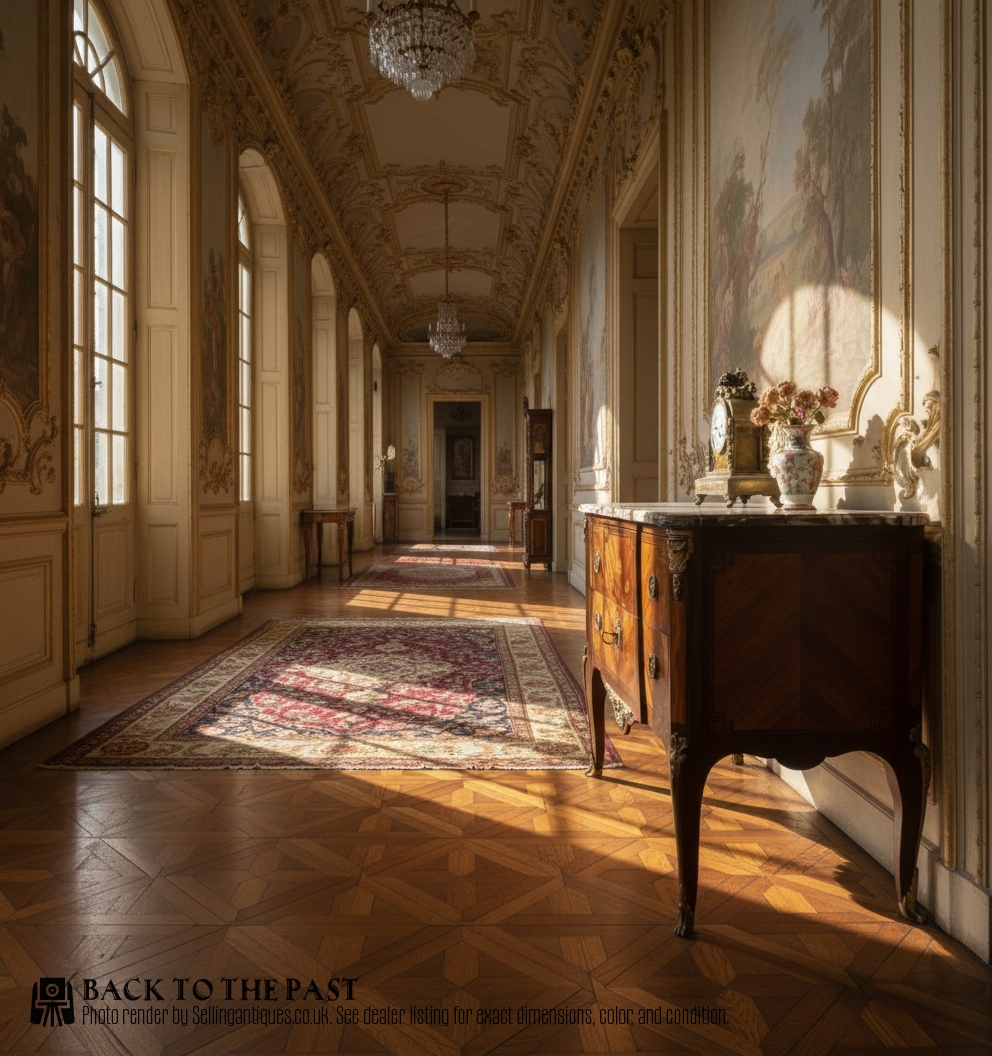
Living rooms and entrance halls also accommodate these units well, offering a surface for lamps or display objects above concealed drawer space. Environmental stability away from direct heat sources and strong sunlight protects both the timber and the marble.