




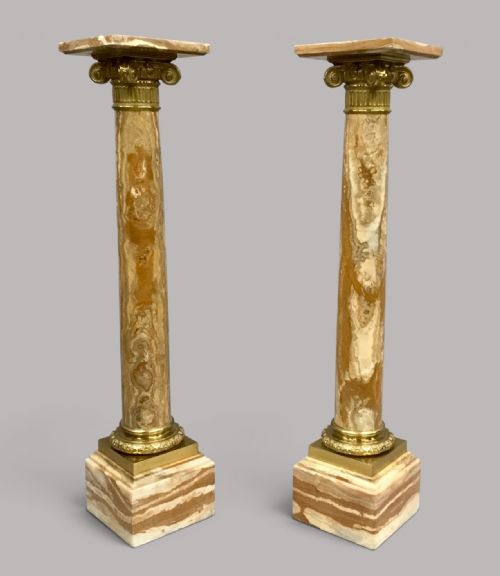


Gilt Bronze Column Stand
A gilt bronze column stand elevates sculpture, light and space with classical proportion and rich metallic lustre.
Gilt Bronze Column Stand
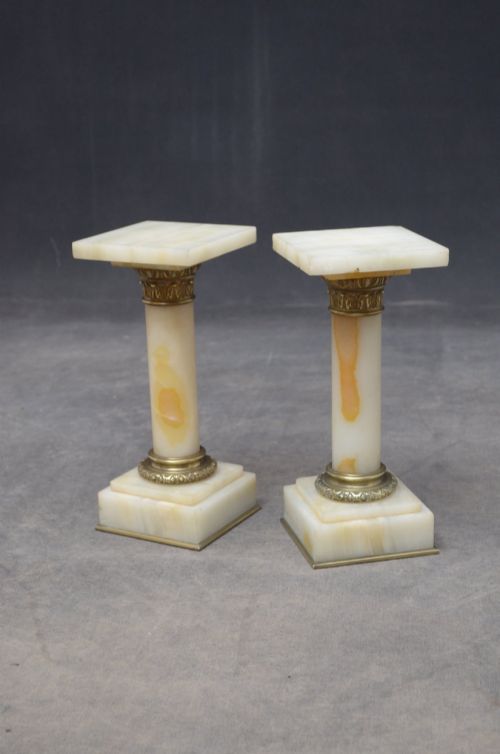
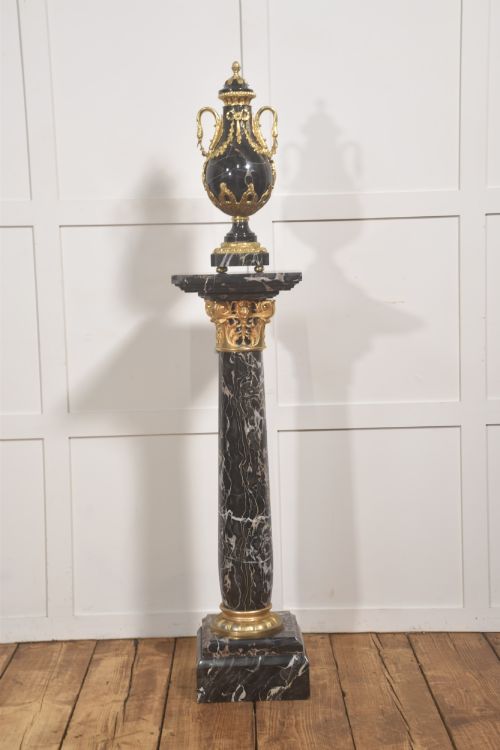
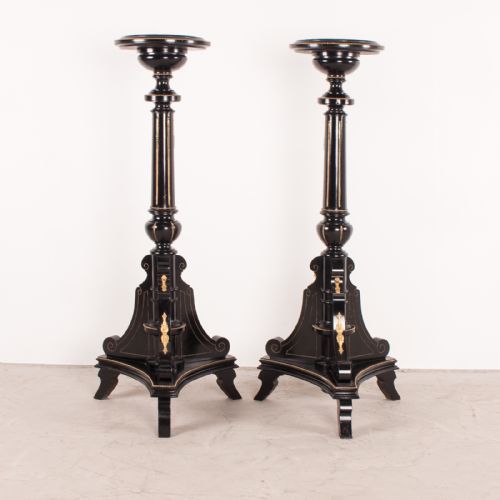
A gilt bronze column stand is an architectural support designed to display busts, urns, or lamps within a classical interior scheme. When exploring this selection, buyers frequently encounter taller floor torcheres, rotating display plinths, and multi-tier pedestals originating from the nineteenth century.
The dominant forms across these listings draw heavily upon neoclassical design principles, featuring fluted shafts and decorative metal collars. Makers combined structural stone with cast metal mounts to create imposing focal points for nineteenth-century reception rooms.
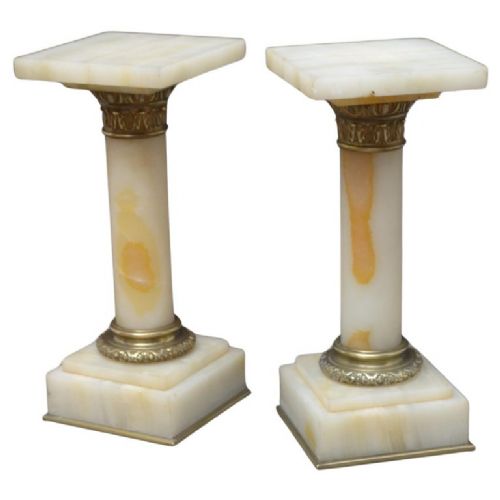
Variations range from slender onyx and marble columns to broader French chateau style stands incorporating marquetry or parquetry. Each piece serves primarily to elevate decorative objects to eye level, combining utility with formal display.
Materials and construction
Construction relies upon a stable core of timber, mahogany, walnut, or kingwood, frequently veneered with exotic woods or faced with solid stone. Cabinetmakers turned wooden shafts on lathes while stone masons shaped cylindrical marble and onyx columns to bear significant vertical weight.
Metal ornamentation involves casting bronze or brass before applying fire gilt or ormolu finishes to create a brilliant golden surface. Craftsmen then secured these chased mounts around capitals, bases, and collars using traditional mechanical fixings.
Gilt Bronze Column Stand Retail Price Guide 2026
Typical asking prices for gilt bronze column stand among the pieces listed under this phrase on Sellingantiques today, from the lower quarter to the upper quarter. They describe what is for sale here now, not the wider market.
Some nineteenth-century patrons used rotating marble pedestals so guests could admire every angle of a bronze bust without walking in circles.
Assessing craftsmanship and finish
The distinction between standard commercial pieces and exceptional examples lies in the crispness of the metal chasing and the quality of the stone selection. Superior stands display deeply carved acanthus leaves, finely articulated ormolu mounts, and perfectly matched marble or onyx graining.
Structural integrity also separates the grades, as finer pieces utilise robust internal bolting to support heavy stone tops without wobble. The precision of the parquetry inlay and the depth of the French polish on timber elements further indicate the original workshop's standing.
François Linke
The Gilt Bronze Column Stand Glossary
- Ormolu
- Finely chopped high-karat gold amalgamated with mercury, applied to a bronze base and heated to drive off the mercury. This historic French fire-gilding technique produces a deep, durable golden lustre.
- Torchere
- A tall stand designed specifically to support a candle holder, lamp, or small sculpture. In nineteenth-century interiors, these functioned as both auxiliary lighting points and decorative architectural elements.
- Neoclassical
- A revival style drawing inspiration from classical Greek and Roman architecture. It prioritises symmetry, straight lines, geometric proportion, and restrained ornamentation.
- Parquetry
- Geometric wood mosaic work formed by small veneer blocks laid onto a structural carcase. Makers used this technique to create intricate patterned surfaces on pedestal bases and columns.
- Vernis Martin
- A simulated Japanese lacquer developed in France during the eighteenth century and replicated later. It involved multiple layers of varnish applied to wood surfaces to achieve a glossy, translucent finish.
Gilt Bronze Column Stand: Frequently Asked Questions
What were these stands originally used for?
These pieces served as elevated display platforms for marble busts, bronze figurines, and heavy porcelain urns in formal reception rooms. They also functioned as structural supports for oil lamps and early electric standard lamps.
Positioned in corners, hallways, or beside seating groups, they brought lighting and sculptural art to eye level while breaking up flat wall expanses.
How do I spot a nineteenth century piece?
Nineteenth-century construction methods typically employ hand-cut timber joints, heavy cast brass or bronze mounts, and natural stone shafts rather than synthetic composites. Examining the underside and interior fixings reveals period-appropriate screws, hand-turned threads, and aged patina.
Stylistic cues such as neoclassical proportions, French rococo curves, and characteristic ormolu chasing also anchor these stands firmly in the eighteen hundreds.
Can these columns support heavy marble sculptures?
Most antique columns were engineered specifically to bear considerable weight, such as solid marble busts and large cast metal urns. The internal iron rod construction and heavy stone or wooden bases provide exceptional vertical stability.
Buyers should verify that the top surface sits level and that the internal tier connections remain tight before placing exceptionally heavy objects atop them.
How do I care for ormolu mounts?
Ormolu surfaces require gentle dusting with a soft, dry brush to prevent abrasive particles from scratching the delicate gold layer. Avoid chemical cleaners, metal polishes, and moisture, which can strip the historic fire-gilding or stain adjacent stone and wood.
Applying a microcrystalline wax occasionally protects the metal from atmospheric oxidation while preserving the original surface sheen.