

Gilt Brass Mounted Tables
Gilt brass mounted tables bring warmth and refined detail to a room, combining rich timber or marble with polished metal mounts.
Gilt Brass Mounted Tables
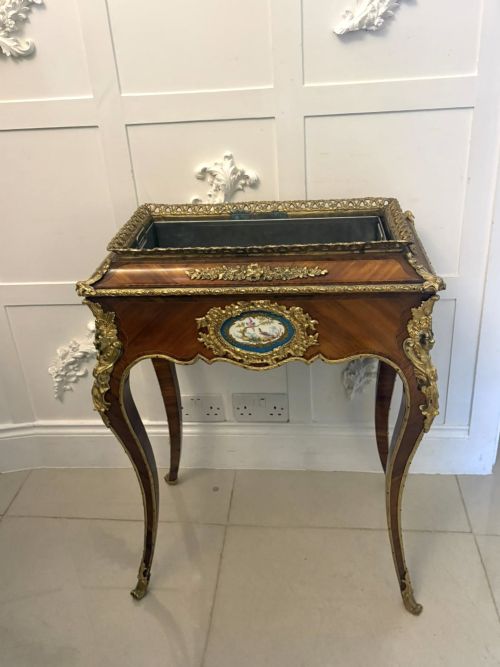
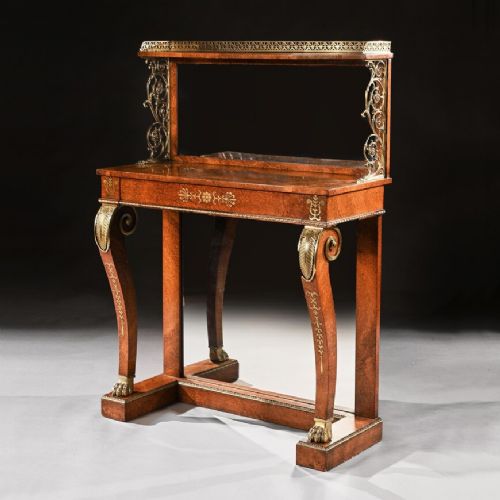
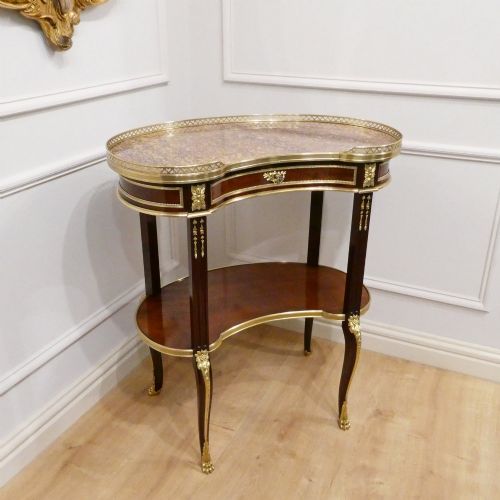
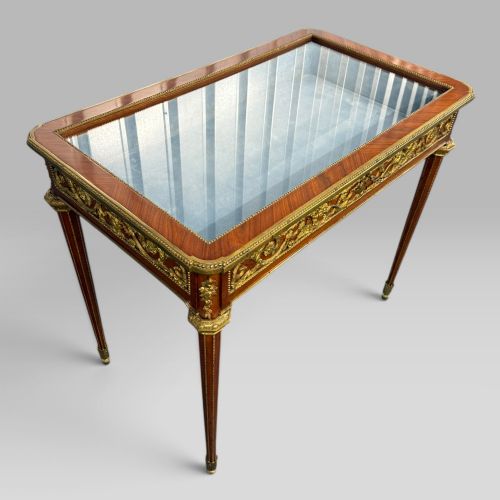
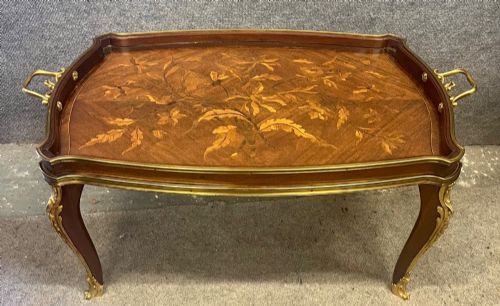
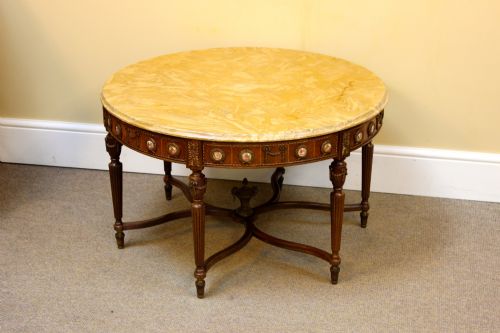
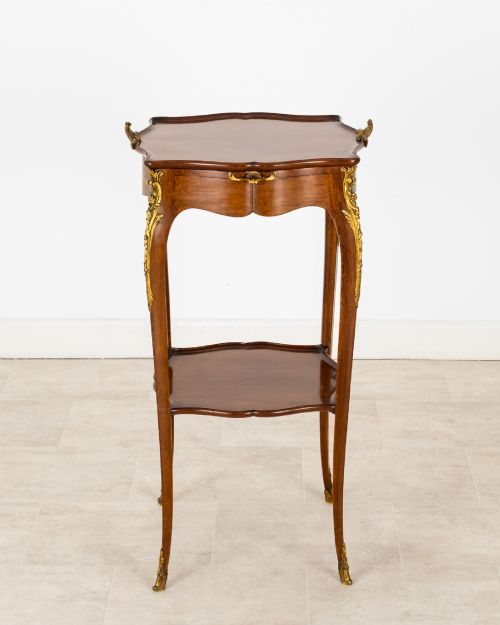
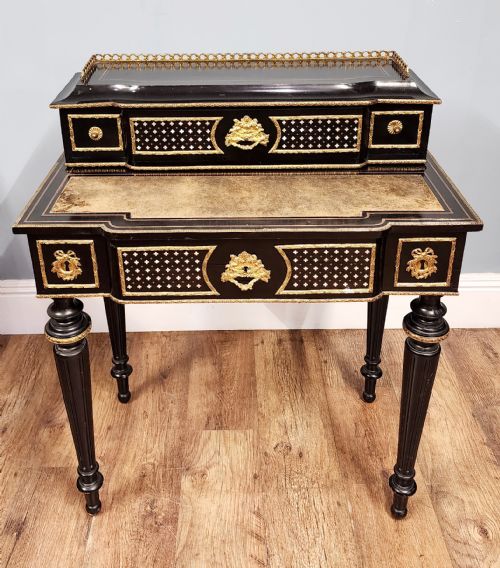
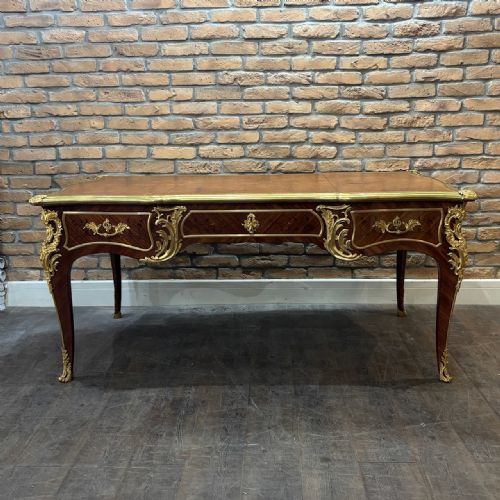
Gilt brass mounted tables encompass a variety of forms including side tables, centre tables, coffee tables, and desks. When searching this phrase, a buyer meets items primarily rooted in the nineteenth century, alongside later revivals.
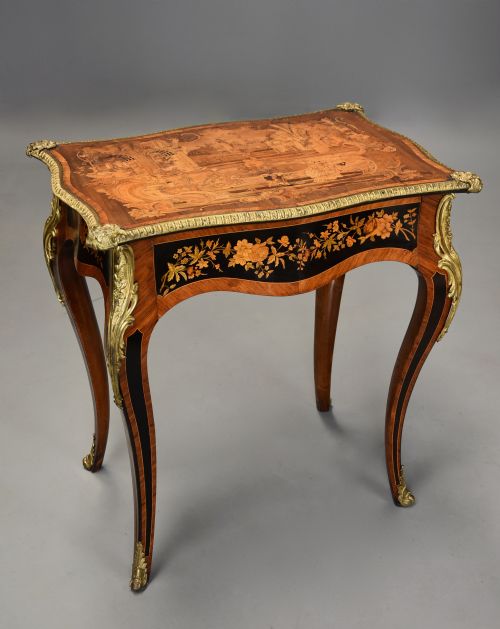
Many examples function as occasional tables, writing desks, or display surfaces, often paired with marble tops or intricate marquetry.
How they were made
Cabinetmakers utilised dense timbers like mahogany, kingwood, rosewood, and amboyna as foundational structures, frequently applying them as veneers over secondary woods.
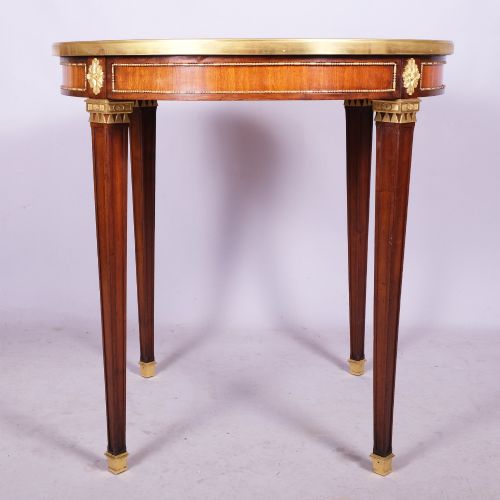
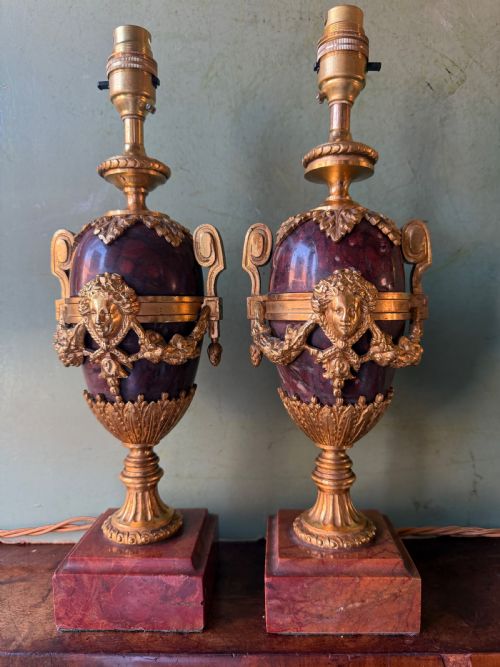
Metal elements such as brass, ormolu, and gilt bronze were cast, chased, and secured to corners, edges, and aprons to accentuate the contours.
Surface details often include marble slabs inset into table tops, alongside porcelain plaques and tortoiseshell inlay integrated into writing desks and occasional pieces.
Listings feature items spanning the nineteenth century alongside later twentieth-century interpretations, incorporating mahogany, kingwood, marble, and gilt bronze.
What varies in quality
The refinement of the cast metal mounts distinguishes finer examples, where crisp chasing and deep gilding show individual hand-finishing rather than mass production.
Timber selection and veneer matching dictate the visual depth of the piece, with carefully arranged grain patterns elevating standard forms into accomplished cabinetwork.
Structural integrity relies on traditional joinery within the carcase, ensuring drawers operate smoothly and legs remain stable under daily use.
Maison Millet·François Linke·Etienne Lenoir
The Gilt Brass Mounted Tables Glossary
- Ormolu
- Gilt bronze applied to furniture mounts and clock cases. The technique involves coating bronze with a mercury and gold amalgam before heating.
- Bouillotte table
- A small neoclassical occasional table with a raised gallery rim, traditionally utilised for card games. They frequently feature marble tops and candle slides.
- Bureau plat
- A freestanding double-sided writing desk featuring a rectangular top inset with leather, supported by cabriole or tapered legs.
- Bijouterie table
- A display table with a glazed top and compartment designed for exhibiting small ornaments and valuables. These pieces often rest on slender legs.
- Marquetry
- The art of applying pieces of veneer to a structure to form decorative patterns. Craftsmen utilise various coloured woods to achieve pictorial designs.
Gilt Brass Mounted Tables: Frequently Asked Questions
Where do I place a gilt brass mounted table?
These tables suit principal reception rooms, hallways, or studies where their decorative mounts catch the light. Centre tables function well in open spaces, while side tables anchor empty wall sections.
Smaller occasional and lamp tables fit comfortably beside seating, adding a functional surface with distinct period character.
How do I care for the metal mounts?
Dust the brass and ormolu gently with a soft, dry cloth to prevent accumulation. Avoid abrasive polishes that strip the gilt surface and expose the underlying bronze.
Keep these tables away from direct heat sources and strong sunlight to protect both the metal finish and the timber veneer.
How do I distinguish nineteenth-century revival styles?
Revival pieces from the nineteenth century draw heavily on Louis XV and Louis XVI aesthetics, utilising similar mounts and veneering techniques. Examining the secondary woods and construction methods helps determine the precise age.
Makers working in these periods often combined traditional French forms with contemporary joinery practices of their own time.