


Gilt Brass Mantle Timepiece
A gilt brass mantle timepiece brings together solid metal, glass panels and precise mechanical movement from the nineteenth and early twentieth centuries.
Gilt Brass Mantle Timepiece
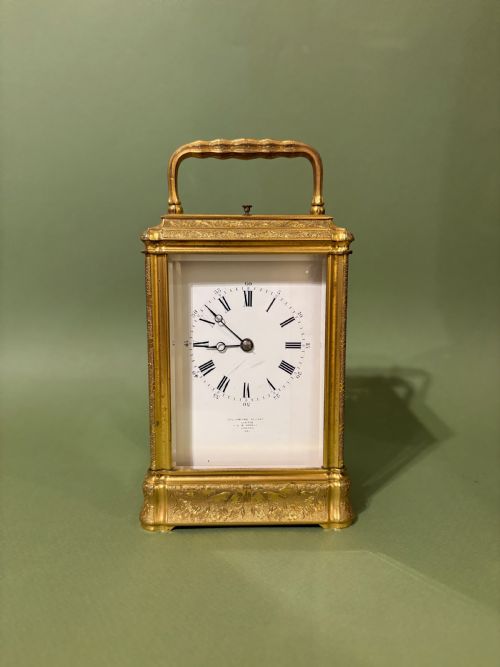
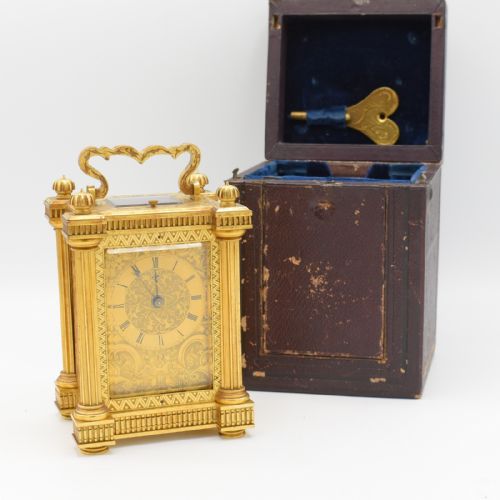
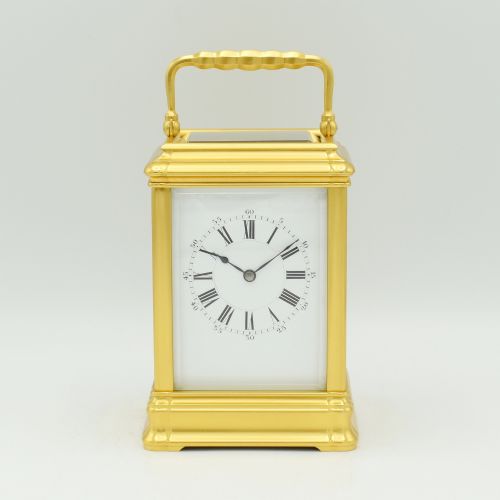
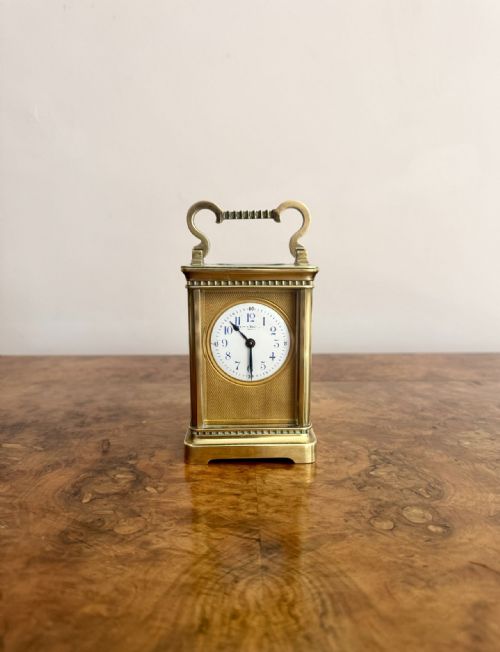
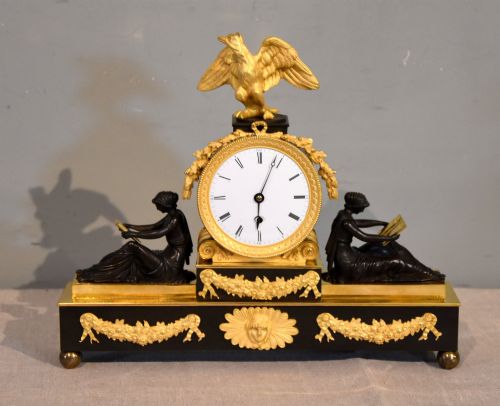
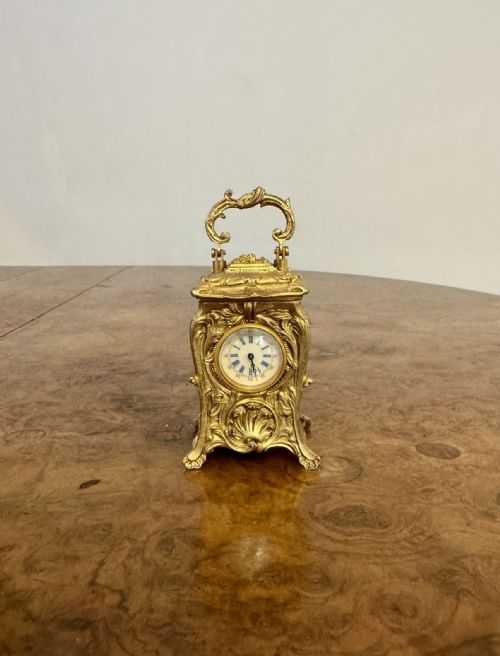
A gilt brass mantle timepiece is a portable or shelf-standing clock originating primarily from nineteenth-century France and England. The pieces found here range from compact carriage clocks with glass panels to larger marble and ormolu mantle clocks bearing detailed cast figures or classical motifs.
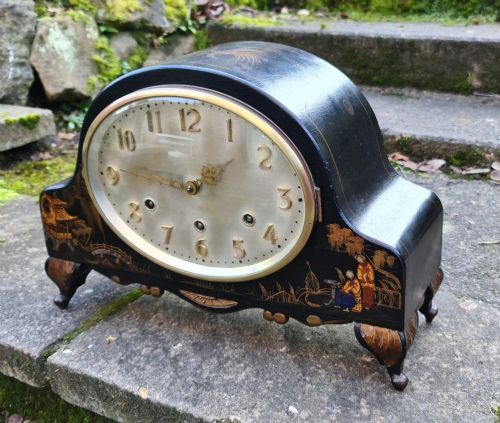
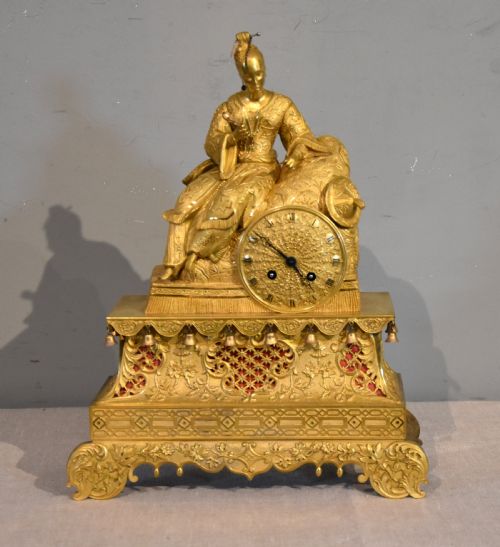
Makers produced these works during the Victorian, Regency and Belle Epoque periods, drawing upon styles such as Louis XVI revival and Edwardian Chinoiserie. Buyers encounter smaller travel clocks alongside substantial domestic timepieces designed to sit permanently on a mantelpiece.
The selection reflects diverse workshop traditions from London and Paris, combining heavy cast cases with white enamel dials. Many examples utilise bevelled glass panels that reveal the intricate gear train operating within.
Materials and Construction
Artisans constructed these clocks using brass, gilt bronze and ormolu, often mounting the metal framework upon marble or wooden bases. Enamel served as the primary material for the dial faces, painted with Roman or Arabic numerals and occasionally decorated with miniature pastoral scenes.
Foundries cast the metal components before applying gilding or lacquer to achieve a bright, reflective finish. Mechanics fitted eight-day movements, escapements and sometimes striking or repeating complications inside the heavy metal cases.
Listings feature French and English origins, spanning the Victorian period through to nineteen hundred with brass, marble and glass.
Distinctions in Execution
Quality rests upon the crispness of the cast brass or ormolu mounts and the precision of the engraved detailing on the dial mask. Superior examples exhibit heavy, well-proportioned cases where the gilding remains intact and uniform across the surface.
The sophistication of the internal movement dictates the standing of the piece. Clocks featuring repeater mechanisms, alarm functions or complex escapements demonstrate higher levels of horological skill than standard time-only versions.
HENRI JACOT·Howell & James London·Baetens London·Philippes Paris·TIFFANY·Charles Frodsham & Holingue Frères·Paul Garnier
The Gilt Brass Mantle Timepiece Glossary
- Gilt brass
- Metal coated with a thin layer of gold or gold-coloured wash. This treatment gives the brass a warm, reflective sheen while protecting the base metal from tarnishing.
- Ormolu
- Finely ground high-carat gold applied to a bronze base using a mercury-gilding technique. The process creates a rich, matte yellow finish characteristic of luxury nineteenth-century decorative objects.
- Carriage clock
- A small, spring-driven timekeeper equipped with a folding handle and glass panels. Travellers used these portable clocks during the nineteenth century to keep time on journeys.
- Repeater
- A complication that strikes the hours and quarters when a button or pendant is pressed. This mechanism allowed owners to check the time in the dark without lighting a candle.
- Enamel
- A glassy substance fused to a metal dial plate through high-temperature firing. It provides a smooth, bright white background for painted clock numerals.
Gilt Brass Mantle Timepiece: Frequently Asked Questions
How do I wind a carriage clock?
Insert the key into the winding square located on the backplate of the movement. Turn the key gently in the indicated direction until you feel resistance.
Avoid overwinding the mainspring, as this can damage the internal components. Ensure you support the case securely while operating the key.
What is the difference between a timepiece and a clock?
In horological terms, a timepiece refers strictly to a device that shows the time without any striking mechanism. A clock includes bells or gongs that sound the hours or quarters.
Many listings use the words interchangeably, so check the description for specific striking complications.
Why does my clock run fast or slow?
Changes in temperature, age and the settling of the movement can affect the speed of the balance wheel. Most clocks feature a small regulating lever visible through an aperture on the backplate.
Moving this lever towards the fast or slow marker allows you to calibrate the daily accuracy.
Where should I place a mantle timepiece?
Position the clock on a stable, level surface away from direct sunlight, draughts and moisture. Wooden or marble mantelpieces provide an ideal heavy foundation that absorbs vibrations.
A level surface ensures the escapement beats evenly, keeping the movement running reliably.