



Gilt Brass Candle Holder
These gilt brass candle holder pieces combine metalwork and candlelight to illuminate period interiors with warmth.
Gilt Brass Candle Holder
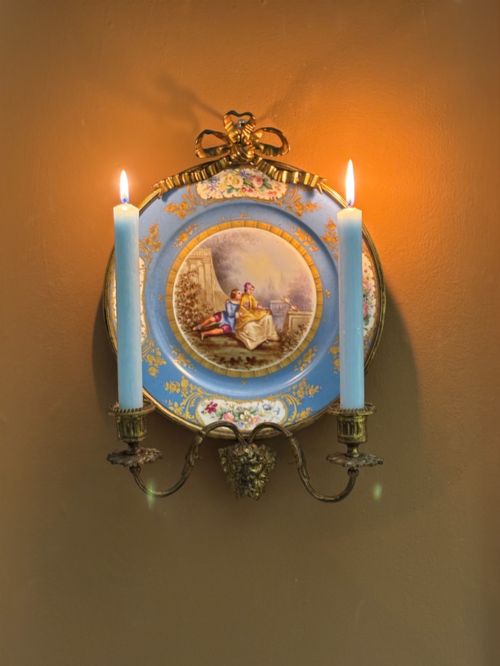
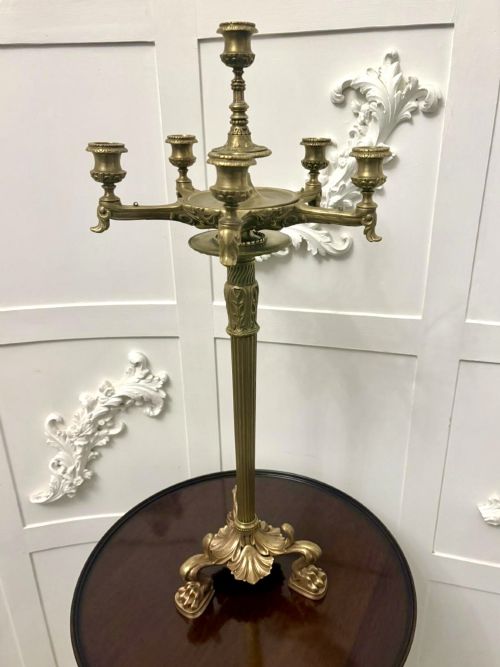
A gilt brass candle holder encompasses candlesticks, multi-arm candelabra, wall sconces and table lamps designed to support candles or provide lighting in domestic and ecclesiastical spaces. These objects emerge from various periods including Regency, Victorian, Edwardian and the eighteenth and nineteenth centuries, reflecting diverse international tastes from French Empire to Gothic Revival.
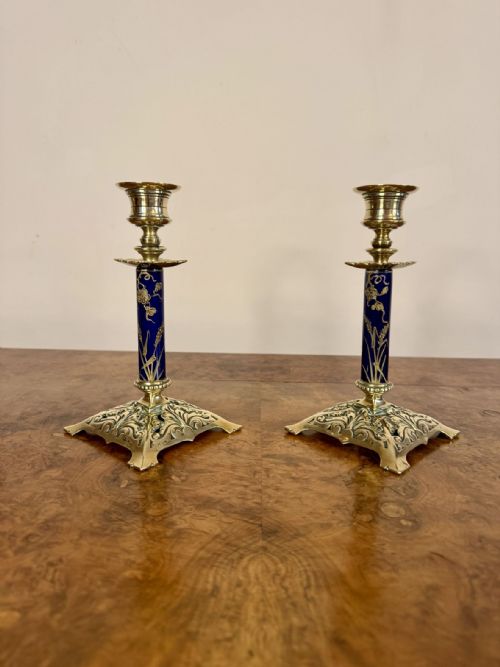
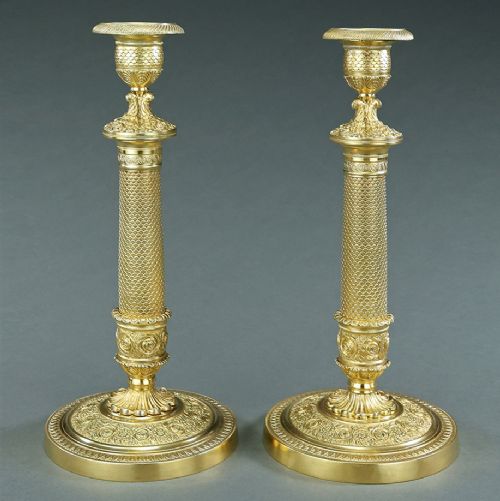
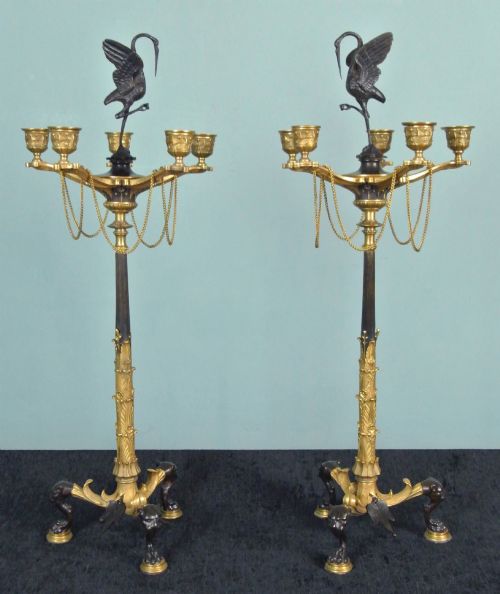
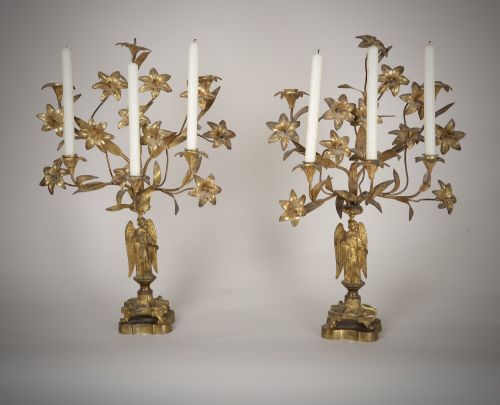
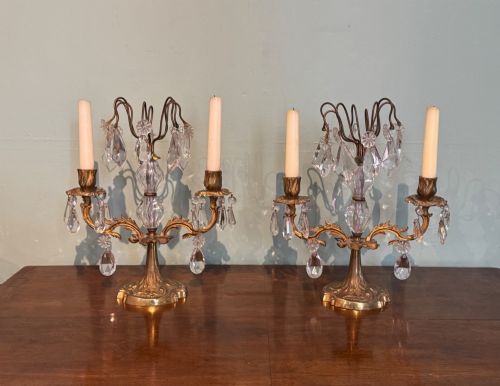
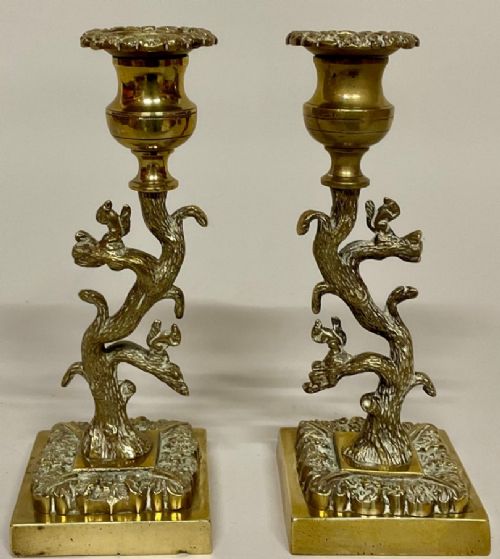
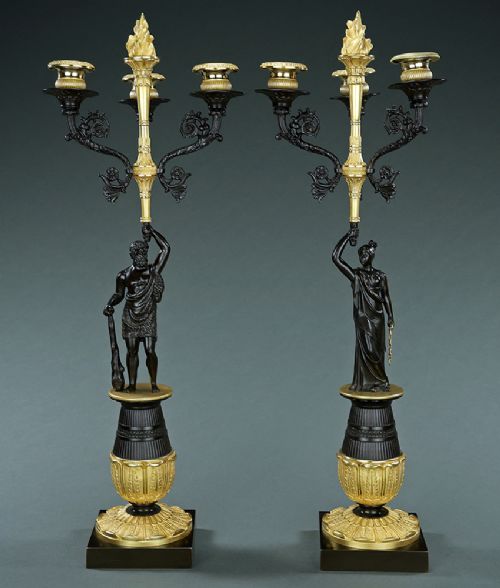
Buyers most frequently encounter pairs of nineteenth-century French and Victorian examples fashioned from gilt bronze, ormolu and brass. These often incorporate architectural elements, figural motifs or naturalistic forms such as trees with squirrels.
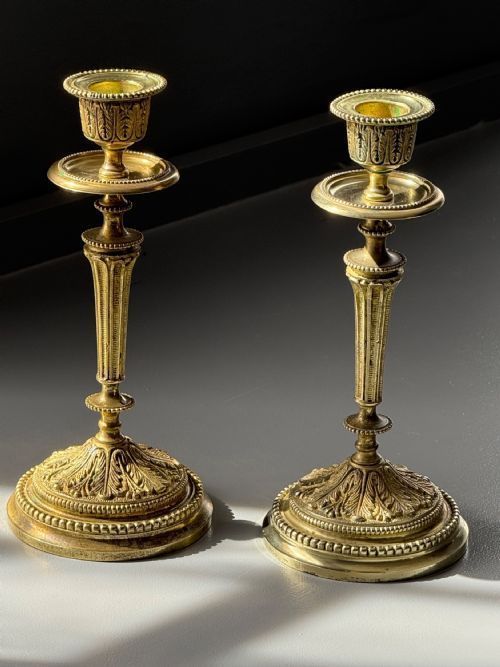
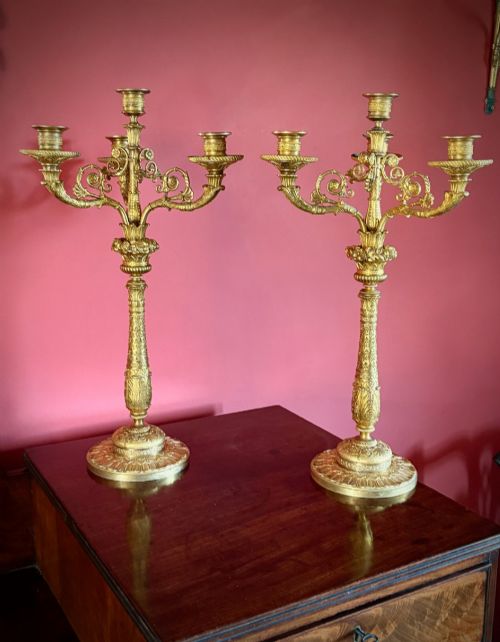
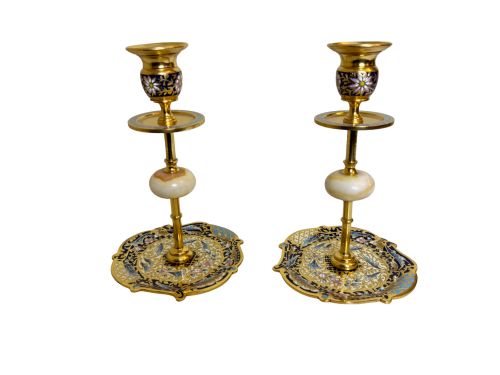
The inventory spans humble brass domestic items up to grand French Empire and Louis XVI style candelabra featuring marble bases, cut glass or champleve enamel details. Many survive as matched pairs, designed originally to flank mantlepieces, sideboards or wall mirrors.
How They Were Made
Metal components are cast using traditional foundry methods, often utilising bronze or brass that receives a mercury gilding or modern electroplated gilt finish known as ormolu. Artisans then chase the cooled metal surfaces by hand with chisels and punches to sharpen details like foliage, drapery and facial expressions.
Many items incorporate mixed media, combining the cast gilt metals with white marble, onyx, porcelain, cut glass or patinated bronze sections. These secondary materials are turned, carved or enamelled separately before being secured together with internal threaded rods and nuts.
Gilt Brass Candle Holder Retail Price Guide 2026
Typical asking prices for gilt brass candle holder among the pieces listed under this phrase on Sellingantiques today, from the lower quarter to the upper quarter. They describe what is for sale here now, not the wider market.
Recorded styles range from French Empire and Rococo Revival to Gothic Revival, Regency, Edwardian and Neoclassical designs.
What Varies in Quality
The integration of secondary materials defines the higher tier, where genuine white marble, finely fired porcelain, or complex champleve enamel work align precisely with the surrounding metal mountings. The durability and warmth of the original gilding layer further separate masterwork ormolu from simpler lacquered brass finishes.
Barbedienne·Abel Landry
The Gilt Brass Candle Holder Glossary
- Ormolu
- Gilded bronze produced by applying a mercury-gold amalgam to a bronze base and heating it to vaporise the mercury. This technique yields a deep, warm golden lustre characteristic of eighteenth and nineteenth-century French decorative arts.
- Candelabra
- A branched candlestick holding multiple candles on separate arms. These lighting devices often feature a central light surrounded by symmetrical detachable branches.
- Campana
- A classical vase shape resembling an inverted bell, frequently utilised as the socket or drip pan on French and English candlesticks.
- Champleve
- An enamelling technique where troughs or cells are hollowed out of the metal surface and filled with vitreous enamel powder before firing. The resulting coloured patterns sit flush with the surrounding gilt metal.
- Sconce
- A wall-mounted lighting fixture designed to hold candles or lamps, often backed by a mirrored plate to reflect and amplify the light.
Gilt Brass Candle Holder: Frequently Asked Questions
Were these originally for candles or electricity?
Virtually all nineteenth-century and earlier examples were engineered exclusively to burn wax or tallow candles. Many incorporate drip pans and removable nozzle inserts to catch melting wax.
Later adaptations often convert these items into table lamps or wall lights by running concealed wiring through the central stem. Collectors generally value pieces retaining their original unmodified candle sockets.
How can I tell French Empire style from Rococo?
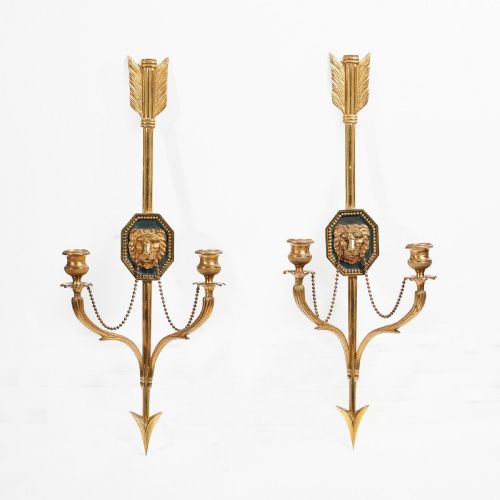
French Empire pieces rely on strict symmetry, neoclassical motifs like military trophies or classical figures, and heavy architectural proportions. They reflect the influence of Napoleon's reign and ancient Roman aesthetics.
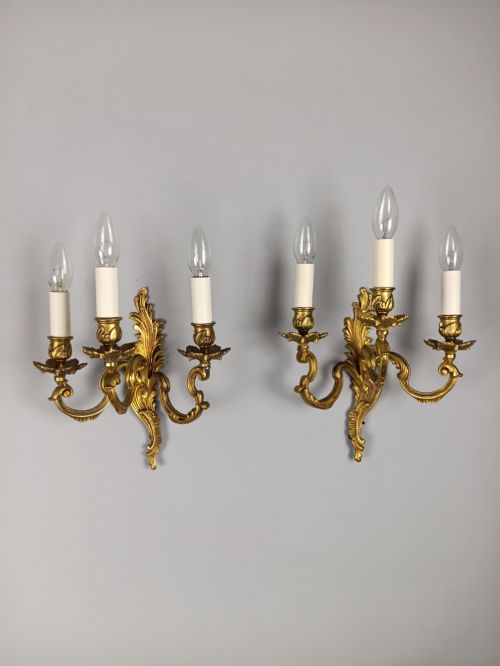
In contrast, Rococo items feature asymmetrical scrolling foliage, C-scrolls, shell motifs and naturalistic curves that evoke organic movement. These designs prioritize playful elegance over formal rigidity.
Why are most of these offered as pairs?
Symmetry dominated formal interior decoration during the eighteenth and nineteenth centuries, requiring matching lighting fixtures to balance fireplace mantels, console tables and sideboards. Candlesticks and candelabra were manufactured in matched pairs specifically for this balanced room arrangement.
Finding surviving pairs intact adds significantly to the historical integrity of the objects. Single items often indicate the loss or separation of their counterpart over time.