
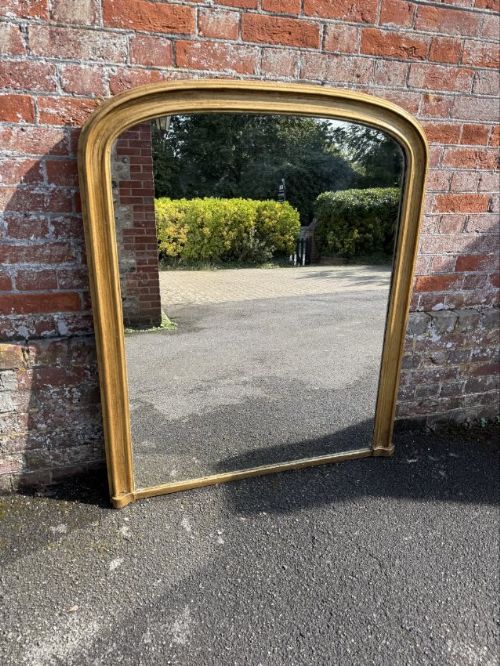
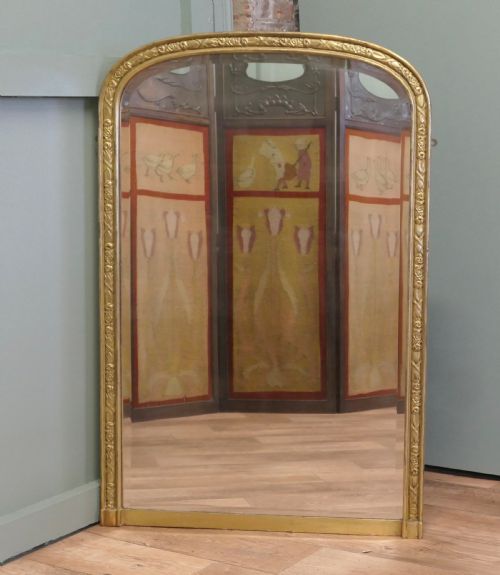

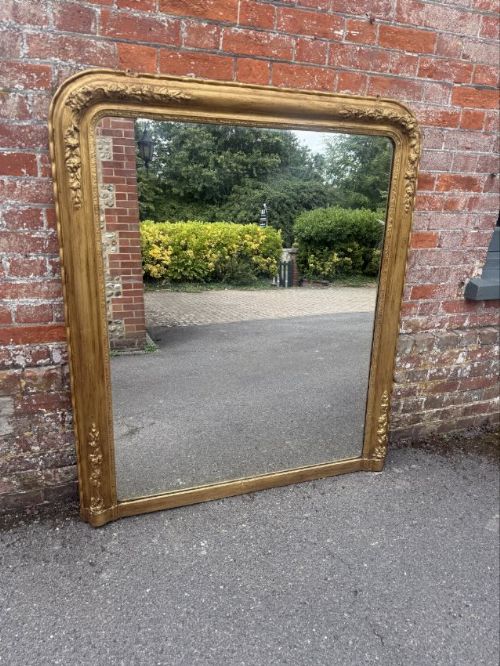
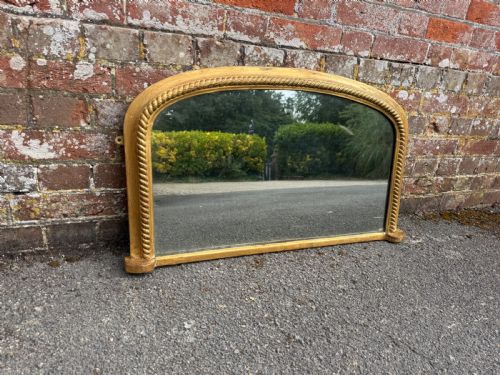
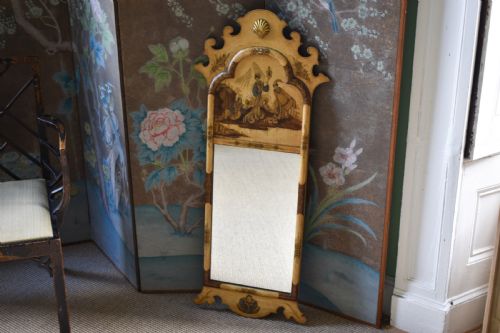


Gilt Arch Top Mirror
A gilt arch top mirror brings nineteenth-century presence and reflecting light to a room through its curved crest and metallic frame.
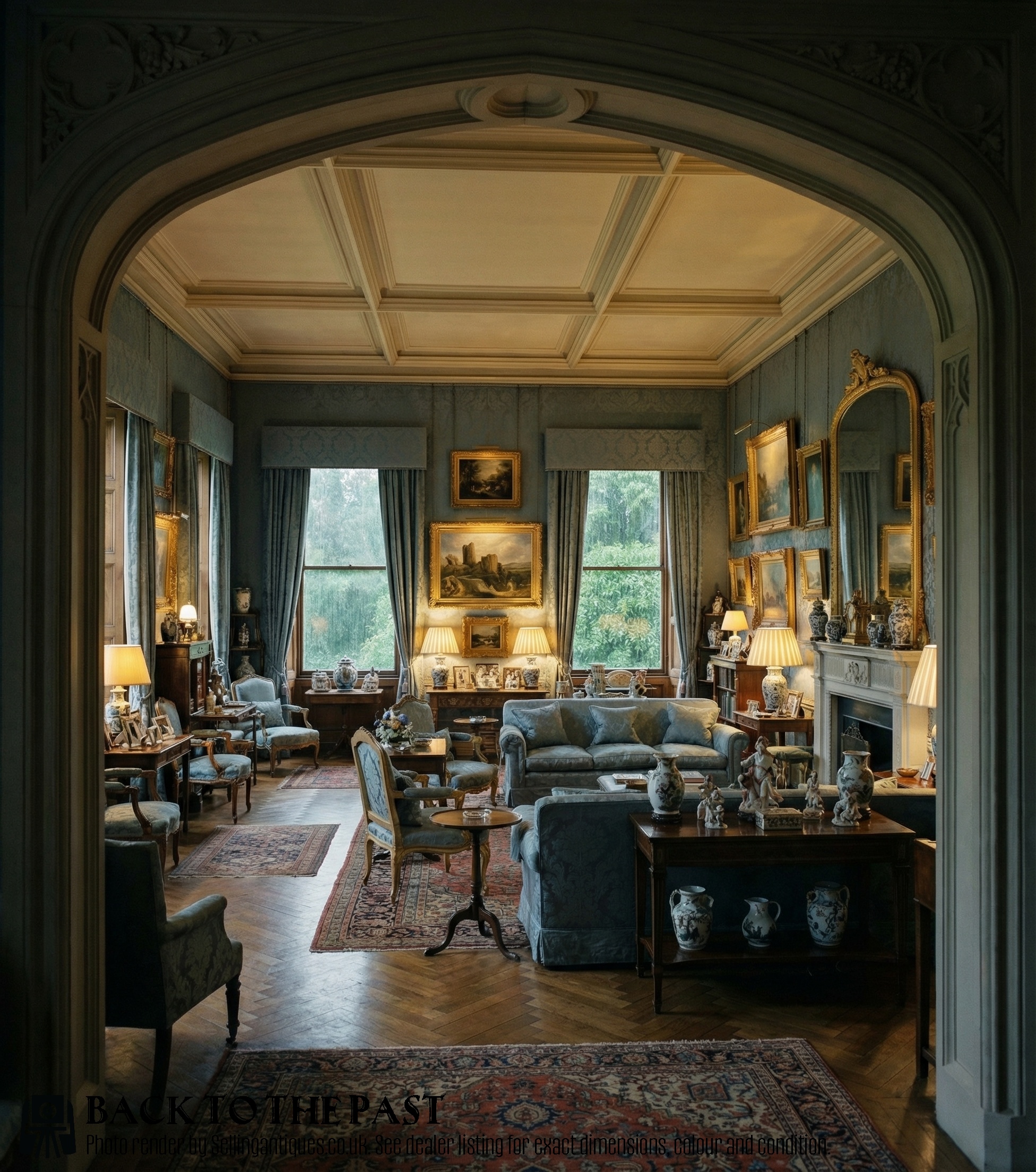
Gilt Arch Top Mirror
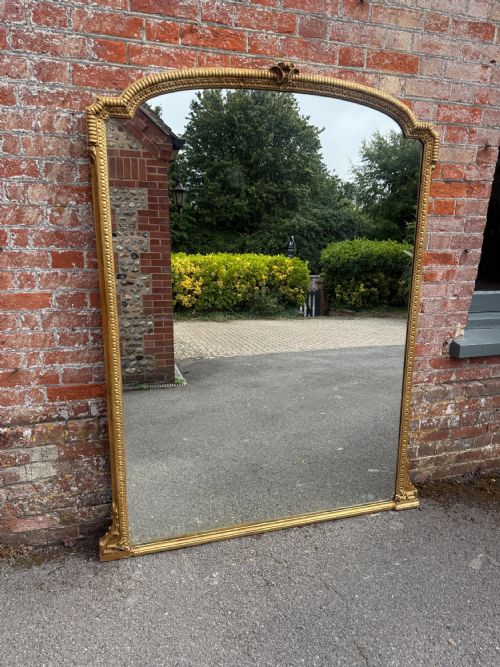
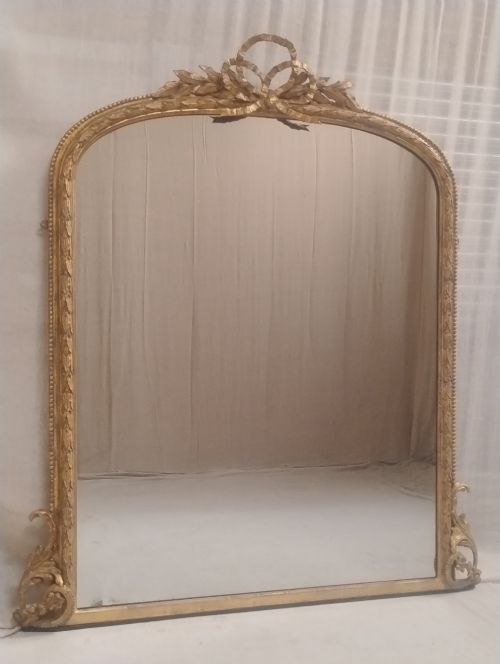
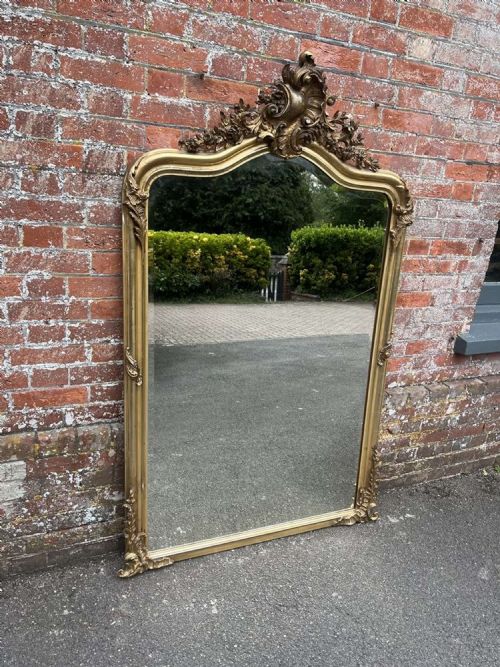
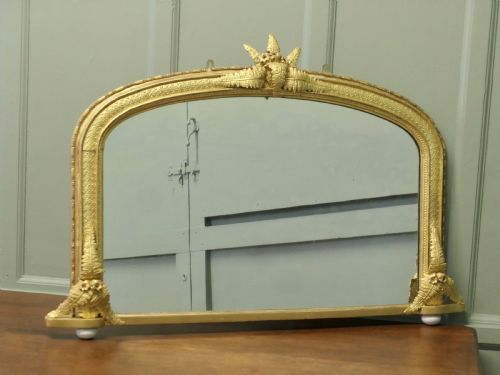
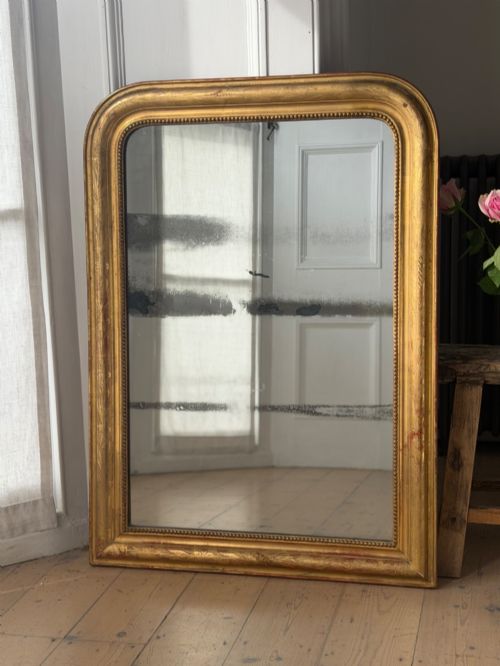
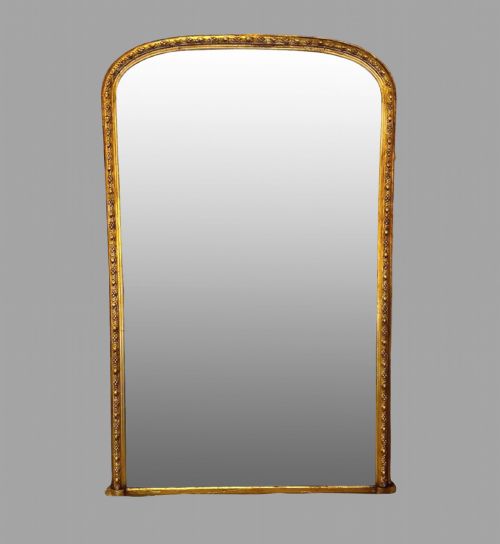
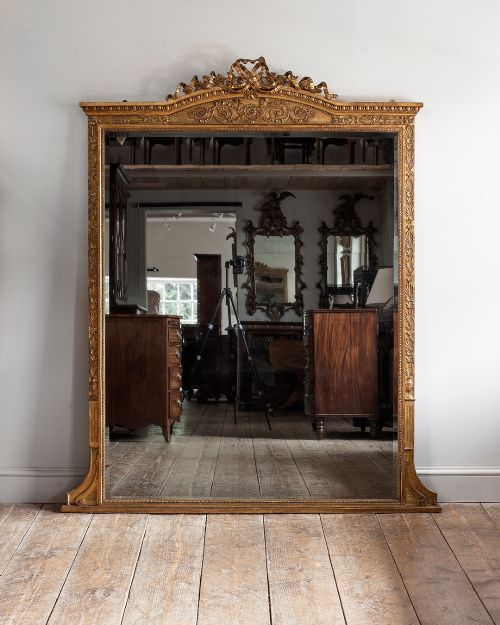
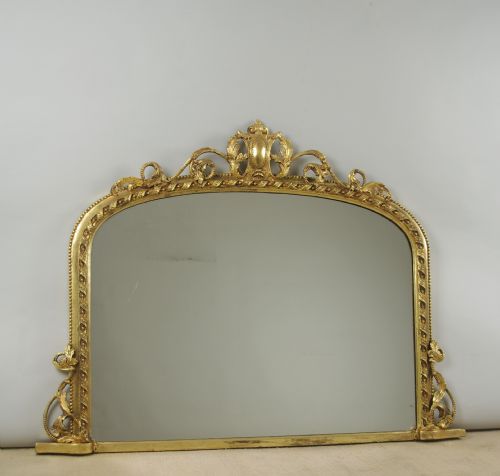
A gilt arch top mirror is principally represented on this page by nineteenth-century English overmantel mirrors and French wall mirrors. These pieces span the Victorian, Georgian, and Louis Philippe periods, featuring arched or shaped tops designed to sit above a fireplace or upon a main wall.
The selection encompasses large formats intended for principal reception rooms alongside neater wall mirrors. Alongside English carved wood and gesso overmantels, the inventory includes French chateau and Rococo revival pieces with distinct decorative frames.
How they were made
Frames are constructed from carved wood, frequently layered with gesso or composition to build up decorative mouldings such as rope twists, tulip patterns, and ribbed profiles. Gold leaf or paint is then applied to the prepared surface to achieve the characteristic metallic finish.
Mirrors utilise glass plates secured within these timber and gesso frames, with historical examples occasionally retaining original mercury glass. Construction methods rely on traditional nineteenth-century joinery to support the substantial weight of the glass and heavy moulded frames.
Gilt Arch Top Mirror Retail Price Guide 2026
Typical asking prices for gilt arch top mirror among the pieces listed under this phrase on Sellingantiques today, from the lower quarter to the upper quarter. They describe what is for sale here now, not the wider market.
Listings feature Victorian, Georgian, and Louis Philippe periods, constructed from wood, gesso, and gold leaf.
What varies in quality
The crispness of the carved wood and gesso ornamentation defines the visual success of the frame, where deep, sharply defined motifs indicate skilled handwork rather than mass-produced composition mouldings. Original gilding and untouched surfaces hold greater integrity than later repainting.
The condition of the mirror plate itself establishes a piece's authenticity and historical depth, with natural foxing on older glass demonstrating age. Structural solidity in the large timber frames and surviving original backing boards further distinguish superior examples.
The Gilt Arch Top Mirror Glossary
- Gesso
- A plaster-like mixture applied to wood frames to create a smooth surface for gilding or to be moulded into decorative details. It allows for intricate relief ornamentation around the mirror border.
- Overmantel Mirror
- A large mirror specifically designed to be hung on the wall directly above a mantelpiece or fireplace. These pieces often feature wide horizontal or arched proportions.
- Giltwood
- Timber that has been coated with gold leaf or a gold-coloured finish. It provides the reflective metallic sheen characteristic of these antique frames.
- Foxed Glass
- Mirror glass displaying dark spots, clouding, or speckled oxidation caused by the degradation of the backing material over time. This ageing process is often valued by collectors for its authentic antique appearance.
- Cartouche
- An ornamental scroll-like frame or tablet motif, often placed centrally on the crest of a mirror. It serves as a decorative focal point on elaborate nineteenth-century designs.
Gilt Arch Top Mirror: Frequently Asked Questions
How do I hang a heavy overmantel mirror?
These substantial nineteenth-century frames require secure wall fixings anchored directly into masonry or heavy studwork to support their considerable weight safely.
Professional mirror hangers typically utilise heavy-duty brackets and taut steel wire rated well above the actual mass of the wood and glass.
What is the difference between an overmantel and a pier mirror?
An overmantel mirror is traditionally proportioned to sit horizontally or vertically above a fireplace mantel, reflecting light across the main seating area of a room.
A pier mirror is typically designed to fit the narrow wall space between two windows, often resting on a console table or floor.
Should I clean foxed mirror glass?
Foxing represents the natural ageing of the historical silvering or mercury backing behind the glass, which many collectors prefer to leave undisturbed.
Attempting to clean or restore foxed spots can remove the original reflective coating and diminish the antique character of the piece.
How do I date a nineteenth-century gilt mirror?
Dating relies on examining the construction of the wooden frame, the composition of the gesso mouldings, and the method used to secure the mirror plate.
Style indicators such as Louis Philippe curves or Victorian rope twist framing also help narrow down the period of manufacture alongside any surviving backboards.