
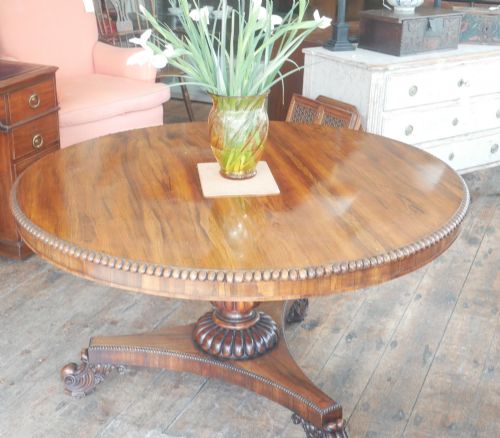


Gillows Style Pedestal Table
A gillows style pedestal table brings architectural proportion and fine cabinet-making to a room, offering the sturdy centre support characteristic of Lancaster workshops.
Gillows Style Pedestal Table
A gillows style pedestal table draws upon the enduring design vocabulary of the Lancaster and London firm, spanning Regency, Victorian, and Georgian periods. These pieces appear in forms such as centre tables, breakfast tables, occasional tripod tables, and games tables, each built around a central column support.
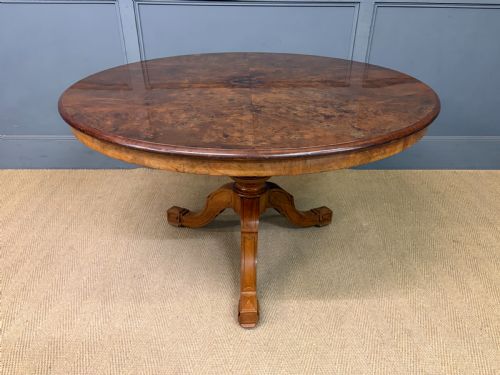
The version most commonly met on this page is the circular centre or breakfast table in rosewood or mahogany, often dating from the Regency or William IV eras. Such pieces frequently feature tilt tops, tripod bases, or drum tops supported by robust pillars, reflecting the functional elegance demanded by nineteenth-century interiors.
How they were made
Makers utilised dense timbers such as mahogany and rosewood, alongside decorative veneers like satinwood, burr amboyna, and goncalo alves. These woods were chosen for their deep grain patterns and finished with careful polishing to highlight natural figures.
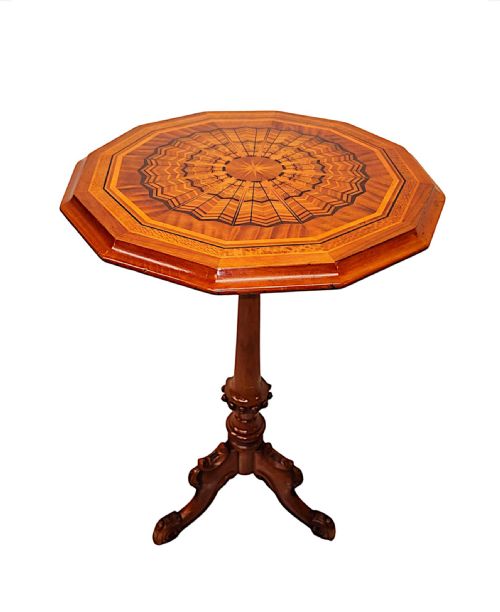
Construction techniques combined robust joinery with fine decorative details, incorporating brass hardware, leather inserts, papier mache, and intricate inlay work. Tripod and pedestal bases were engineered for stability, balancing heavy timber tops upon carved columns and splayed legs.
Listings feature pieces from the Georgian, Regency, William IV, and Victorian periods, constructed in mahogany, rosewood, oak, and satinwood.
What varies in quality
The standard of a gillows style pedestal table rests upon the selection of timber and the precision of its carving and inlay. Superior examples display figured mahogany or rosewood with sharp, crisp detail in the column capitals and base mouldings.
Construction integrity also dictates worth, seen in the seamless movement of tilt-top mechanisms, the weight and stability of the central pillar, and the fluency of secondary woods used in drawers and framing.
Gillows of Lancaster·Gillows
The Gillows Style Pedestal Table Glossary
- Pedestal table
- A table supported by a single central pillar or column rather than four corner legs. This construction allows for greater seating freedom around the perimeter.
- Tilt top
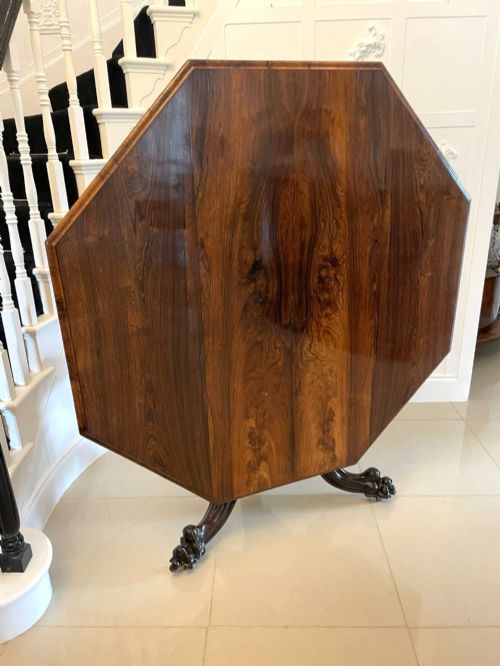
- A table top hinged to the pedestal column so it can be tipped vertically when not in use. This mechanism saved floor space in period rooms.
- Tripod base
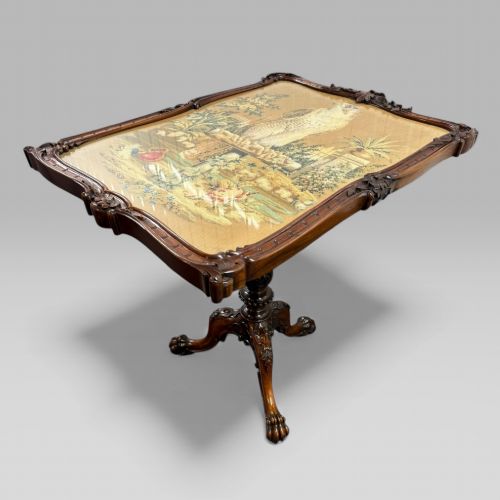
- A support structure featuring three splayed legs radiating from the base of a central column. It provides steady contact on uneven floors.
- Centre table
- A freestanding table designed to be viewed from all sides rather than pushed against a wall. These frequently served as library or breakfast tables in the middle of a room.
Gillows Style Pedestal Table: Frequently Asked Questions
What is a gillows style pedestal table?
A gillows style pedestal table is a piece of furniture built around a central column, reflecting the design traditions of the renowned Lancaster firm. They include breakfast, library, and occasional tables dating from the Georgian, Regency, and Victorian periods.
These pieces use timbers like mahogany and rosewood, often featuring refined turnings, tripod bases, and decorative inlays that mimic high-end nineteenth-century workshop production.
How do I use a pedestal table today?
Pedestal tables work well as freestanding centrepieces in a hallway, drawing room, or library where they can be approached from all sides. Their single-column design allows chairs to tuck underneath easily.
Smaller tripod versions serve effectively as lamp or wine tables beside seating, while larger tilt-top examples can stand flat against a wall when floor space is required.
How can I tell a Regency table from a Victorian one?
Regency tables, generally dating from the early nineteenth century, typically favour clean classical lines, rosewood or mahogany veneers, and restrained brass mounts. Their proportions often reflect strict adherence to proportion and neoclassical design.
Victorian pieces tend to introduce heavier carving, darker oak or walnut materials, and more elaborate decorative flourishes such as intricate inlay or pierced galleries.
What is a tilt top table used for?
A tilt top table allowed owners in the eighteenth and nineteenth centuries to store the heavy timber top vertically against a wall when the furniture was not in active use. This practical function conserved valuable floor space in principal rooms.
In modern settings, the mechanism remains a hallmark of traditional cabinet-making, though the top is rarely tipped down except for cleaning or moving.
What woods were used on these tables?
Cabinet-makers relied primarily on dense, durable hardwoods such as mahogany and rosewood for the main structural and surface areas. These timbers took a dark, rich polish.
Secondary or decorative accents incorporated exotic woods like satinwood, goncalo alves, and burr amboyna, alongside brass inlay and leather writing surfaces.