


Gillows Mahogany Seating
Gillows mahogany seating brings together the finest cabinet work and robust timber from the Georgian and Regency periods.
Gillows Mahogany Seating
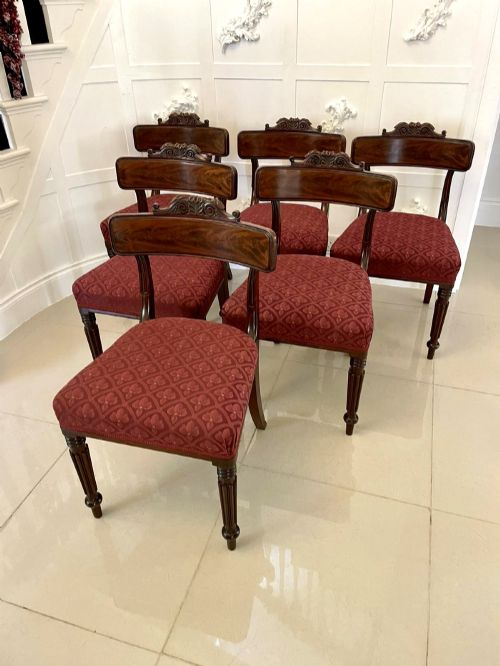
Gillows mahogany seating encompasses a diverse range of forms including hall chairs, library armchairs, dining chairs, benches, piano stools, and sofas. These pieces span the Georgian, Regency, and 19th-century periods, showing the evolution of domestic seating from formal architectural designs to more comfortable library and parlor arrangements.
Buyers browsing this selection will frequently encounter sets of hall chairs alongside single armchairs and country house seating. Many examples display distinct regional characteristics associated with Lancaster and London workshops, often surviving in matched pairs or larger dining sets.
Materials and Construction
The primary material across these pieces is solid mahogany, selected for its dense grain and structural stability. Workshops supplemented this timber with secondary woods for internal framing and incorporated brass castors, handles, or decorative mounts on library chairs and armchairs.
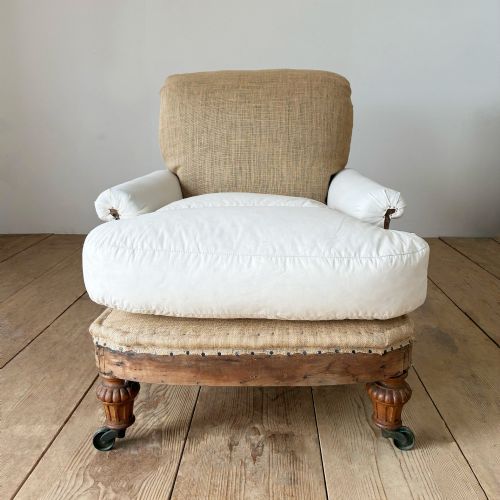
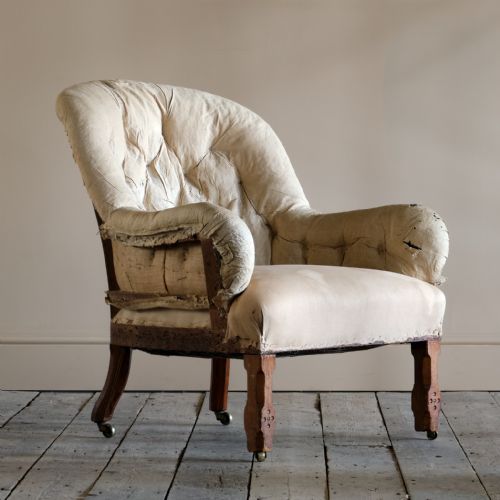
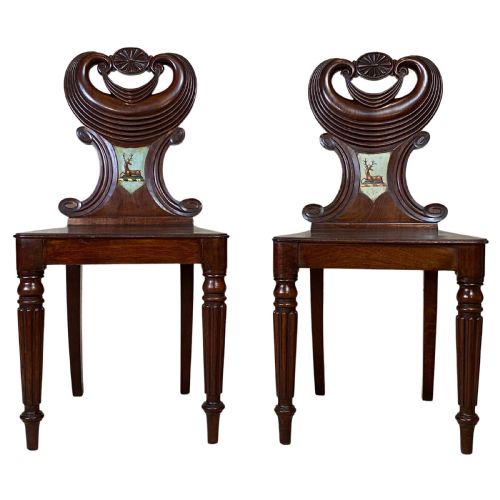
Upholstered forms rely on traditional stuffing techniques paired with leather, cane, fabric upholstery, or jute hessian for support. Shield-back and shell-back hall chairs demonstrate precise carving directly into the dense mahogany timber rather than relying on applied ornamentation.
Object types include hall chairs, armchairs, dining chairs, benches, piano stools, and sofas.
Distinguishing Quality in Construction
The distinction between standard workshop output and top-tier production rests on the crispness of the timber carving and the integrity of the joinery. Superior pieces maintain tight frame construction and subtle detailing on elements like reeded legs or carved shield backs without excessive wear.
Condition of secondary materials such as original leather, cane work, or structural webbing significantly impacts the integrity of a piece. Original surfaces and untouched timber patination elevate examples above those with heavily restored or replaced components.
Gillows
The Gillows Mahogany Seating Glossary
- Mahogany
- A durable tropical hardwood imported for high-end furniture production. Its rich reddish-brown tone and stable grain made it the preferred medium for quality seating.
- Regency
- An English design period spanning the early 19th century. Furniture from this era often draws inspiration from classical Greek and Roman forms.
- Bergère
- An enclosed upholstered armchair with exposed wooden framing. Cane panels frequently form the sides and back of these library seats.
- Hall chair
- A rigid wooden seat placed in an entrance hall. These often feature painted or carved armorial crests and solid timber seats.
- Porters armchair
- A high-backed enclosed seat designed to block drafts in draughty hallways. They typically feature hooded leather upholstery.
Gillows Mahogany Seating: Frequently Asked Questions
What defines Gillows seating?
Gillows seating is characterised by robust mahogany construction, refined carving, and functional elegance spanning the Georgian and Regency eras. Workshops in Lancaster and London produced durable pieces ranging from formal hall chairs to comfortable library armchairs.
The firm maintained rigorous standards of cabinet making, often stamping their furniture or employing distinct structural methods that help identify their output today.
How do I spot a hall chair?
Hall chairs are typically constructed entirely from solid mahogany with wooden seats and carved backs rather than upholstered cushions. They were designed for entrance halls and often feature painted family crests or shield-shaped panels.
These pieces prioritise architectural presence and durability over everyday lounging comfort, reflecting their original placement in grand domestic hallways.
Where should I place a library armchair?
Library armchairs suit studies, drawing rooms, or spacious reading corners where their generous proportions and leather or fabric upholstery can be appreciated. Their sturdy mahogany frames provide substantial support for regular daily use.
Positioning them away from direct sunlight and heat sources helps protect the historic timber and traditional upholstery materials from drying out.
How do I care for mahogany frames?
Maintaining mahogany furniture involves keeping the timber clean with a soft, dry cloth and avoiding modern silicone-based polishes. Occasional application of quality beeswax helps nourish the grain and preserve the historic surface patination.
Keeping pieces in stable indoor environments with moderate humidity prevents the timber from warping and protects historical joints from loosening.