
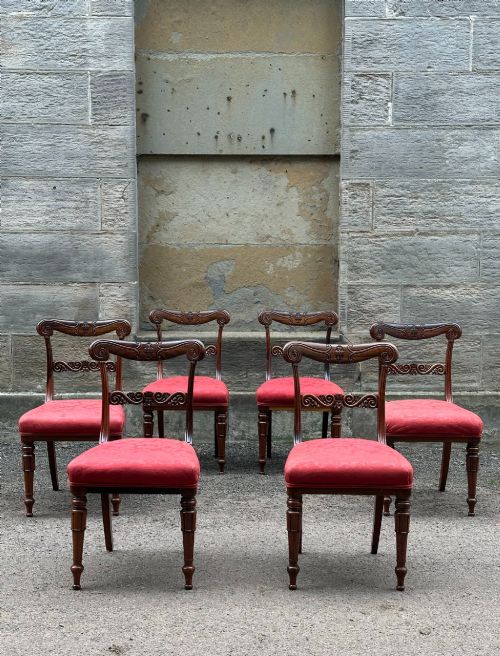
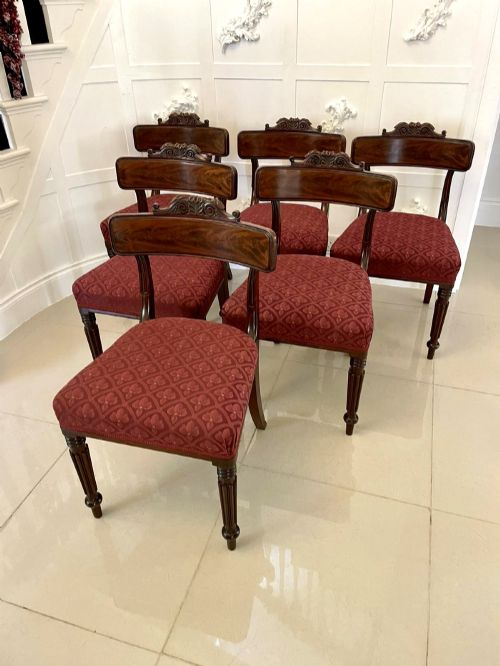
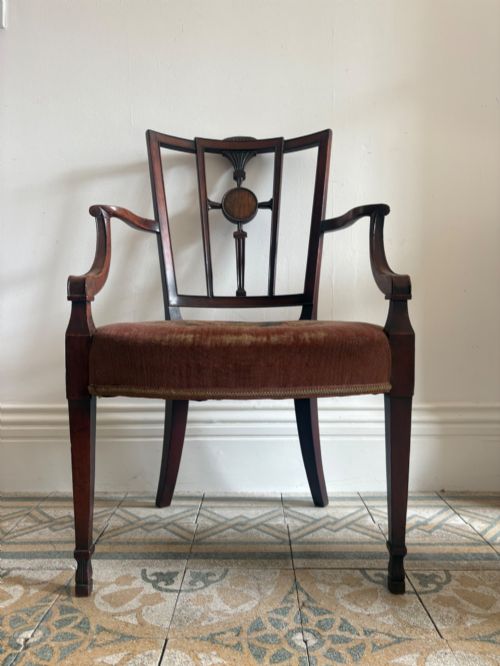
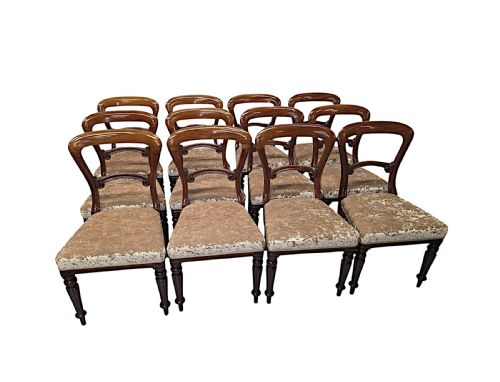
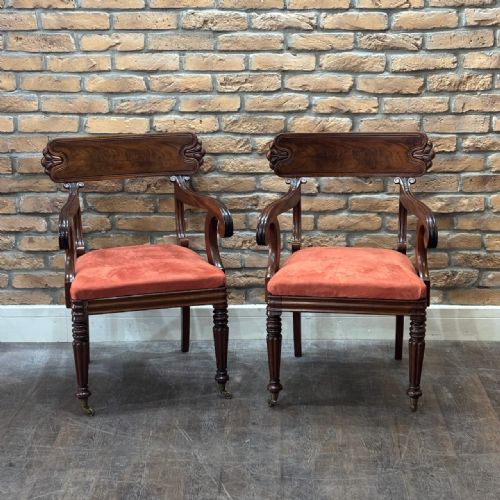


Gillows Mahogany Dining Chairs
Gillows mahogany dining chairs combine robust Lancaster cabinet-making with refined Georgian and Regency styling.
Gillows Mahogany Dining Chairs
When searching for gillows mahogany dining chairs, buyers encounter formal seating spanning the Georgian, Regency, William IV, and Victorian periods. Sets range from small pairs of side chairs up to large assemblies of twelve, alongside occasional armchairs and hall chairs.
The dominant material recorded in these pieces is mahogany, often supplemented by Cuban mahogany or rosewood details. Workshops produced designs featuring reeded legs, carved backs, and upholstered or caned seats.
Attributions span pieces physically stamped by the Lancaster firm, items linked through stylistic traits, and later interpretations produced in the manner of the workshop.
Judging the standard
Quality rests upon timber selection and the crispness of hand-carved details such as shell motifs, fluting, and reeding. Tighter grain and heavier solid mahogany denote superior output compared to plainer or heavily restored alternatives.
Completeness within matched sets separates ordinary examples from notable ones. Factory stamps and documented attribution records elevate historical standing, whereas later loose interpretations sit at a different level of the market.
Periods represented span from the eighteenth century through Regency and Victorian eras.
Gillows·Gillows of Lancaster·Waring and Gillows
The Gillows Mahogany Dining Chairs Glossary
- Mahogany
- A durable, dark reddish-brown tropical hardwood favoured for high-end cabinet-making. It takes a fine polish and resists warping.
- Reeded
- A decorative moulding formed of parallel convex rounds resembling bundles of reeds. This detail frequently appears on chair legs during the Regency period.
- Caning
- Woven rattan material used for lightweight seat panels. It provides flexibility and a textured surface.
- Stamped
- A maker's mark physically impressed into the wood using a metal die. This method provides definitive proof of workshop origin.
- Armchair
- A seating furniture piece constructed with side supports for the arms. These often accompanied larger dining sets for the head of the table.
Gillows Mahogany Dining Chairs: Frequently Asked Questions
How do I identify Gillows chairs?
Look for physical maker stamps on the underside of the rails or distinctive structural traits like reeded legs and solid mahogany construction. Stylistic attribution often relies on documented design patterns from the Lancaster workshop records.
Many pieces lack stamps but match known proportions and carving standards associated with the firm's documented output.
What periods do these chairs cover?
The listings span from the late eighteenth century through the Georgian and Regency eras into the William IV and Victorian periods. Later Edwardian interpretations also appear under the Waring and Gillows name.
Design motifs shift from George III restrained elegance to bolder Regency forms and heavier Victorian proportions.
Are large sets common?
Sets of six and twelve appear frequently, alongside smaller configurations of four or pairs of side and armchairs. Matched larger sets often represent assembled groups rather than single original commissions.
Buyers find both single side chairs and complete dining arrangements suited for functional use.
What wood types were used?
Mahogany is the primary timber recorded, including denser varieties such as Cuban mahogany. Accents of rosewood occasionally appear on roundels and inlay work.
Frames rely entirely on solid hardwoods to ensure structural integrity across dining and hall chairs.