


Gilded Wood River Painting
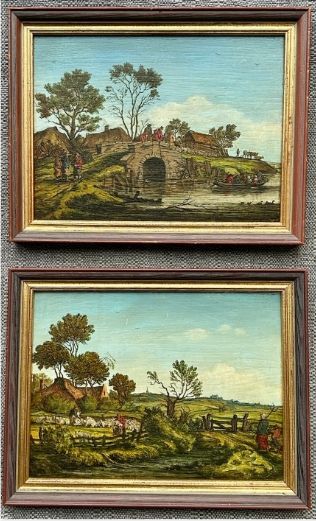
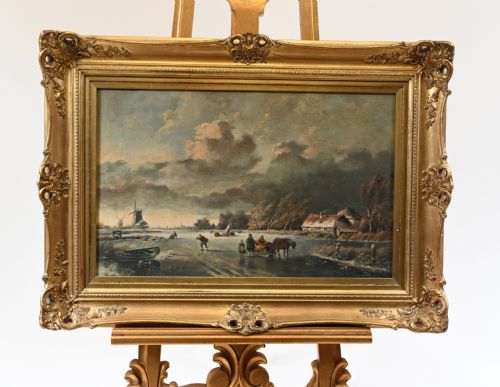
These gilded wood river painting works capture watercourses and pastoral banks framed in gold, offering a classic focal point for a traditional interior.
Gilded Wood River Painting
A gilded wood river painting brings together landscape scenery and ornate metallic framing, typically originating from nineteenth century and Edwardian periods. Buyers encountering this search phrase find oil paintings, watercolours, and fine art depicting rivers, lakes, and coastal waterways.
The selection ranges from Flemish and Dutch school compositions to British Impressionism and Victorian pastoral scenes. These works frequently feature waterways such as the River Severn, the Thames, and the River Wharfe, accompanied by original gilt wood surrounds.
Materials and construction
Artists painted primarily with oil paint or watercolour upon canvas, wood panels, and paper supports. The frames utilise wood, gesso, and applied gilt layers to create the distinctive metallic finish characteristic of these works.
Makers shaped the frames with carved wooden mouldings coated in gesso before applying gold leaf or gilt. This traditional technique secured a durable surface designed to reflect candlelight and daylight alike in period interiors.
Frames combine carved wood with gesso and gilt finishes, housing river scenes from the Thames to the River Severn.
Factors determining quality
Quality rests upon the handling of light and water by the painter, alongside the preservation of the original gilt frame. Stronger examples display confident brushwork and accurate topographical detail rather than formulaic foliage and sluggish water rendering.
The survival of the original gesso and gilt wood frame intact adds considerably to the integrity of the piece. Frames showing heavy restoration or re-gilding alter the historic balance between the canvas and its border.
W Klombeck·T Bergman·Robert John Hammond·Clarence Henry Roe·Walter J Watson·Benjamin Williams Leader·Maud Raphael Jones·William Mellor·Samuel Palmer·Francis Moltino
The Gilded Wood River Painting Glossary
- Giltwood
- Wood carved and coated with gold leaf or metallic powder. This material defined the principal framing style for nineteenth century fine art.
- Gesso
- A plaster mixture applied to wooden frame bases to provide a smooth surface for gilding. It allows intricate moulded details to hold the gold finish.
- Oil on Canvas
- Pigment mixed with drying oil applied to a woven fabric stretched across a wooden frame. This combination formed the dominant medium for landscape paintings.
- Continental School
- A term describing artworks produced by artists trained in mainland Europe rather than Britain. It frequently encompasses Flemish and Dutch painters.
- Pastoral
- An artistic style celebrating rural life, rivers, and natural scenery. These compositions emphasise tranquil countryside settings and calm waterways.
Gilded Wood River Painting: Frequently Asked Questions
What periods do these river paintings represent?
The works span the nineteenth century, including Victorian pastoral and Edwardian periods. Artists painted landscapes across various decades from eighteen hundred through to nineteen hundred and twenty.
Buyers encounter both British regional scenes and continental interpretations from these eras. The accompanying frames generally match the era of the canvas itself.
How should I hang a framed oil painting?
Hang the piece on a stable wall away from direct sunlight and damp conditions. Heavy gilt frames require secure fixings anchored directly into wall studs or solid masonry.
Keep the painting distant from active heat sources to prevent the wood panel or canvas from warping. Proper placement protects both the painted surface and the delicate gesso framing.
Are watercolours framed differently from canvas paintings?
Watercolour paintings require glass protection to shield the paper and water-soluble pigments from moisture and atmospheric dust. They sit behind mounts inside wooden frames rather than stretched across open stretcher bars.
Oil paintings on canvas or wood panels remain unglazed to let the textured paint surface breathe. The heavy gilt frames for oils are built deeper to support the rigid wooden support.
How do I identify a continental school painting?
Continental school works reflect the training methods of European academies outside Britain, often showing distinct atmospheric effects. Flemish and Dutch examples frequently focus on frozen winter landscapes or low-horizon waterways.
Signatures, framing traditions, and subject matter often point toward specific regional origins. Documentation or stylistic traits help separate British impressionism from continental output.