

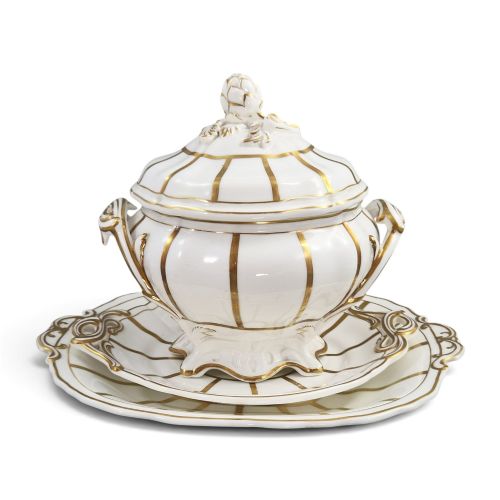


Gilded White China Dish
A gilded white china dish brings the elegance of the 18th, 19th and early 20th centuries directly to the table.
Gilded White China Dish
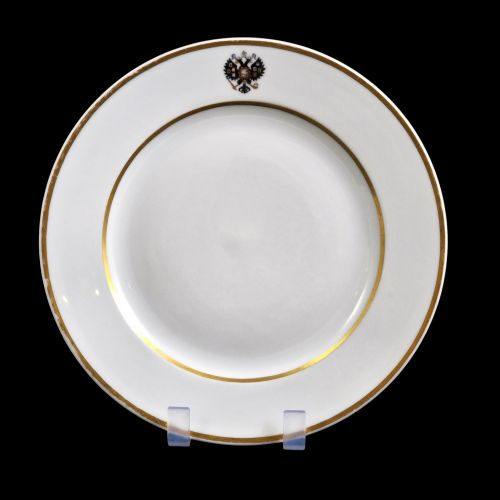
A gilded white china dish encompasses plates, platters, trays, tureens and bowls produced across multiple historical periods, including Georgian, Regency and Victorian eras. These items served functional roles at formal dining tables as well as decorative purposes in cabinet displays.
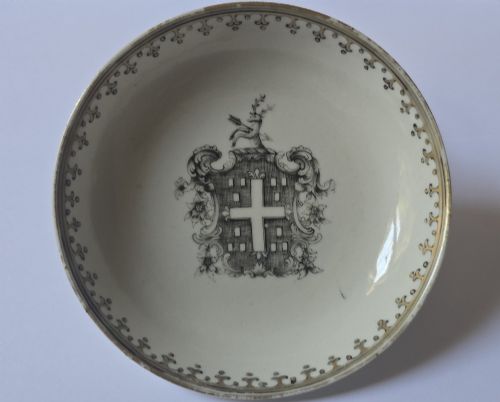
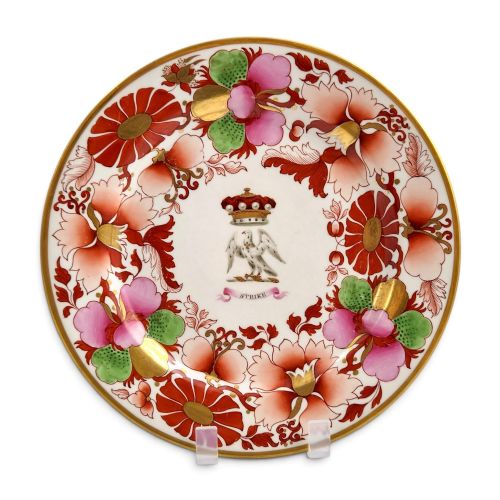
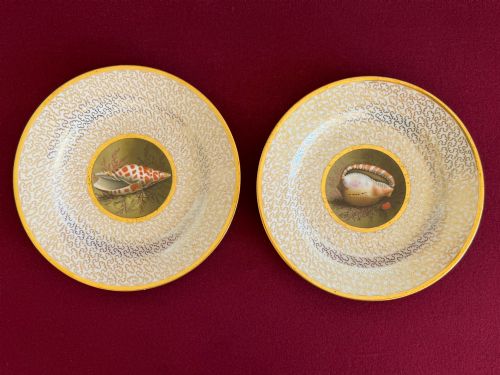
The pieces appearing here span porcelain, bone china, ceramic and ironstone bodies, often decorated with hand-painted scenes, armorials or floral bouquets. Makers from England and continental Europe produced these wares in varied shapes, from basketweave patterns to scalloped dessert services.
Buyers seeking a gilded white china dish find examples ranging from simple serving platters to elaborately decorated cabinet plates and soup dishes. The selection reflects the output of prominent factories and smaller potteries across more than a century of ceramic manufacture.
Judging quality and craftsmanship
Quality rests upon the fineness of the porcelain body, the precision of the moulding, and the skill evident in the hand-painted decoration. Finer pieces display crisp botanical or armorial details and even glaze coverage without firing distortions.
The application of gold leaf and gilding differentiates standard production from exceptional work, with superior pieces showing burnished detail and well-preserved metallic lustre. The reputation of the factory and the complexity of the shape also dictate the standing of the piece.
Gilded White China Dish Retail Price Guide 2026
Typical asking prices for gilded white china dish among the pieces listed under this phrase on Sellingantiques today, from the lower quarter to the upper quarter. They describe what is for sale here now, not the wider market.
Some cabinet plates spent centuries hidden away in dark sideboards, emerging today with their bright gold leaf as shiny as the day they left the kiln.
H and R Daniel·Imperial Porcelain Factory·Herend·Davenport·Rockingham Pottery·Minton·Coalport·Flight Barr and Barr·Paul Muller Selb·Chantilly·Grainger and Co·Royal Worcester·Wedgwood·Mason·Nantgarw·Duesbury and Kean·Derby Porcelain
The Gilded White China Dish Glossary
- Bone china
- A type of soft-paste porcelain containing bone ash, known for its high strength, chip resistance, and warm white translucency. It became a staple of English ceramic production during the 19th century.
- Ironstone
- A heavy earthenware developed in the 19th century prized for its durability and resistance to chipping. It served as a robust alternative to porcelain for everyday and institutional tableware.
- Porcelain
- A ceramic material made by heating raw materials, generally including clay in the form of kaolin, in a kiln. It is recognised for its vitrified, non-porous body and bright white appearance.
- Gilding
- The decorative application of gold leaf or gold powder to the surface of ceramic objects. This technique accentuates rims, handles and embossed details.
- Armorial
- A ceramic design featuring a family coat of arms, crest, or heraldic shield. These bespoke commissions were popular among the aristocracy for formal dining services.
Gilded White China Dish: Frequently Asked Questions
How do I care for antique gilded china?
Wash these pieces gently by hand using mild soap and warm water, avoiding abrasive sponges that can wear away the delicate gold leaf. Dry them immediately with a soft cloth to protect the painted enamel and metallic surfaces.
Display them securely on padded plate hangers or flat within enclosed cabinets where they remain safe from daily bumps. Minimising direct exposure to strong sunlight helps preserve the vibrancy of the hand-painted colours.
Can I use these dishes for serving food?
While many of these items originated as functional tableware like dessert plates, tureens and serving platters, antique pieces with extensive gilding are generally suited for light use or display. Older glazes can be sensitive to modern detergents and heavy cutlery.
For formal dining occasions, they add historical character when used carefully, but many collectors prefer to keep them as decorative cabinet pieces. Inspecting the surface for wear helps determine if a piece remains practical for the table.
How do I identify the maker of a dish?
Look to the underside of the piece for impressed stamps, painted factory marks, pattern numbers or retailer signatures. Different potteries utilised specific ciphers, crowns or animal symbols that changed across decades.
Matching the shape, paste and decorative style against known factory archives provides further confirmation of origin. Reference books and pottery guides help decode unfamiliar marks and cyphers.
What is the difference between porcelain and ironstone?
Porcelain is fired at extremely high temperatures to create a vitrified, translucent body that rings when struck gently. It offers a refined, delicate appearance often reserved for formal dessert services and cabinet plates.
Ironstone is a denser, opaque earthenware designed for durability and heavy daily use. It provides a sturdier structure for large serving platters and soup tureens while maintaining a white surface suitable for gilding.