


Gilded Wall Lighting
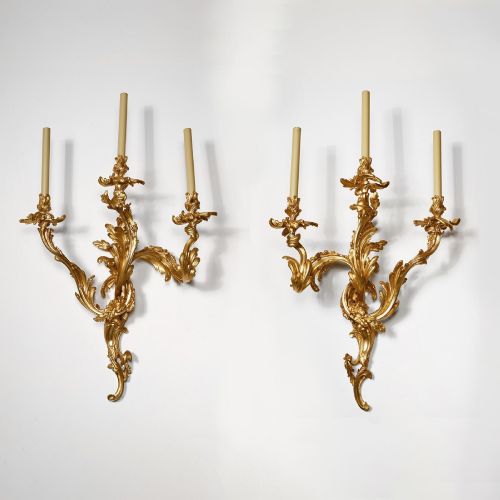
Gilded wall lighting brings warmth and polished reflection to a room, spanning French Rococo, Empire and Venetian styles.
Gilded Wall Lighting
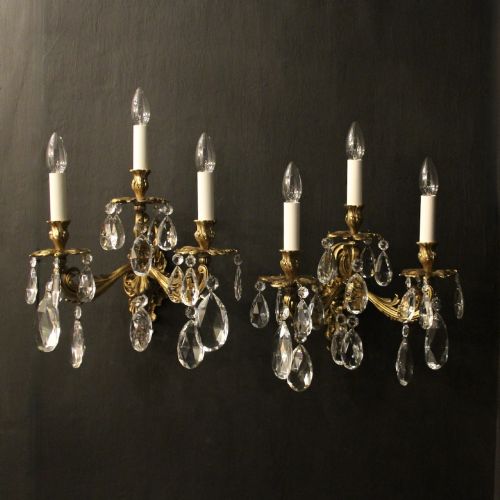
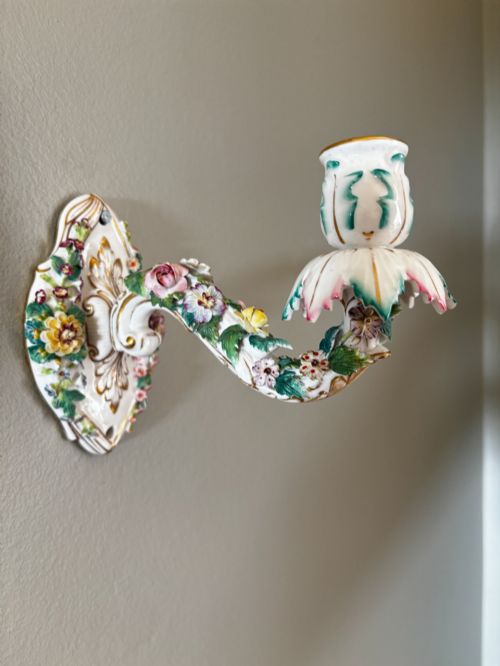
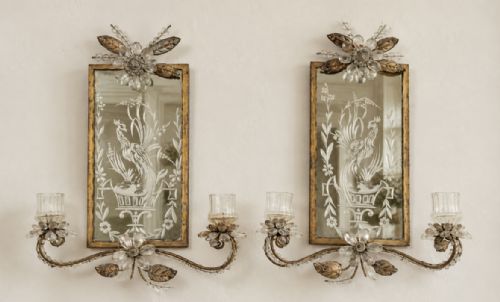
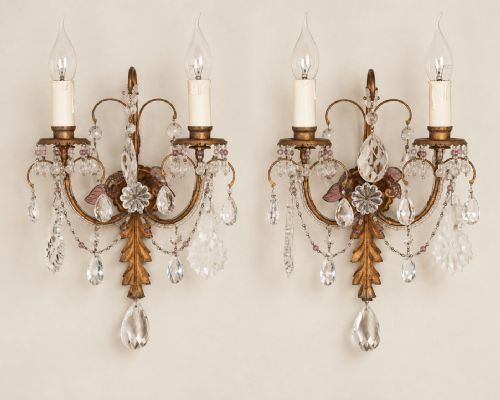
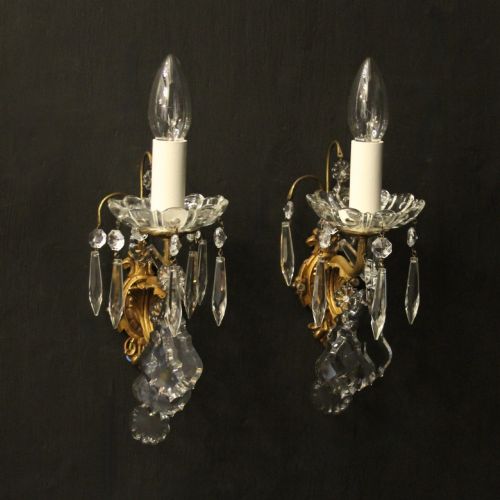
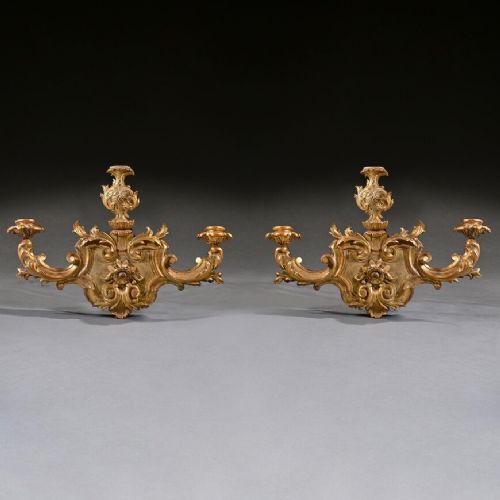
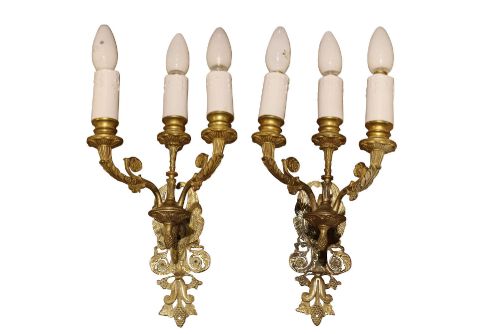
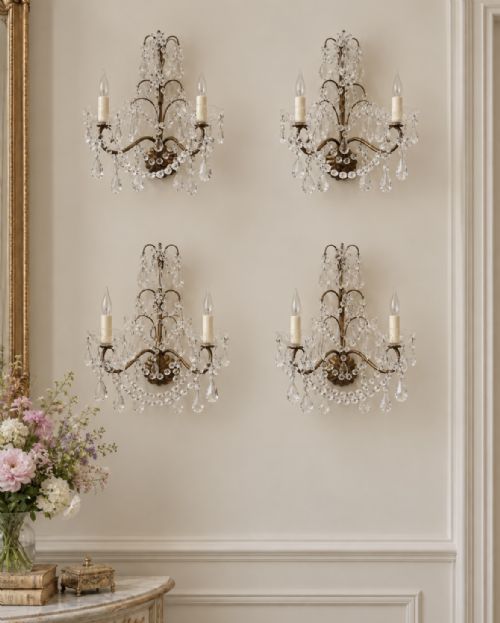
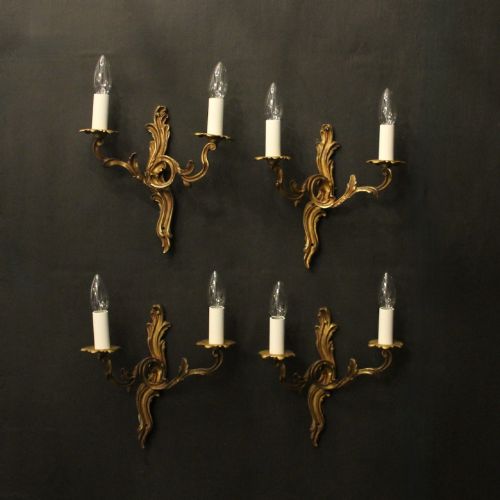
When you search for gilded wall lighting, you encounter ornate fixtures designed to reflect candlelight and electric illumination across a room. The selections here include French wall lights, girandoles, and sconces originating from the eighteenth century through the mid-twentieth century.
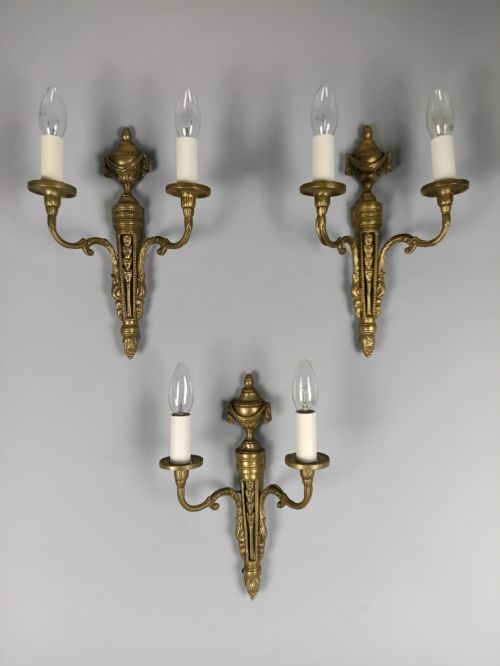
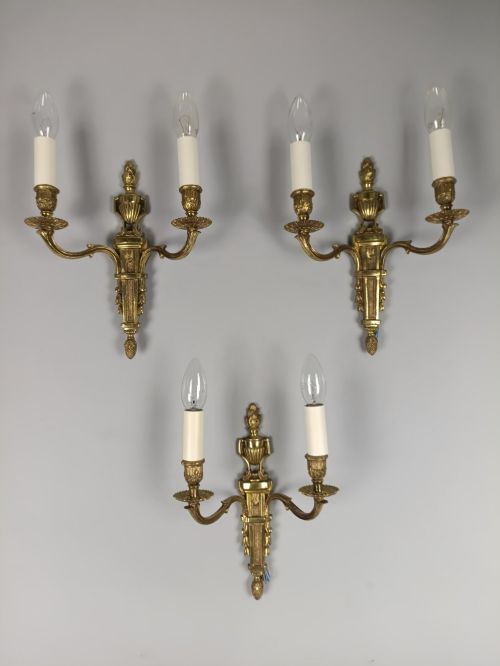
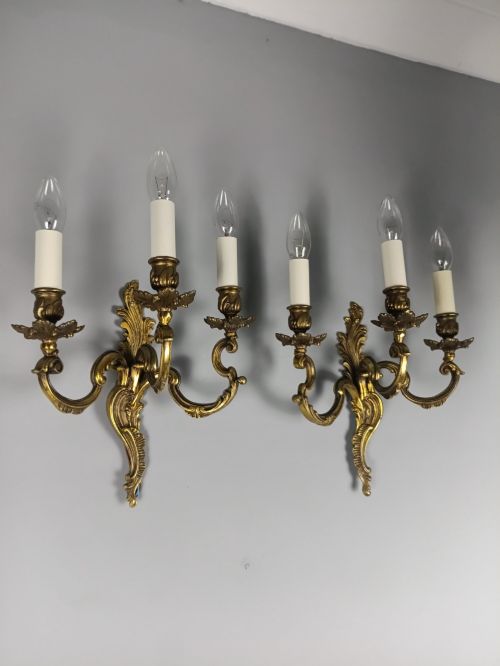
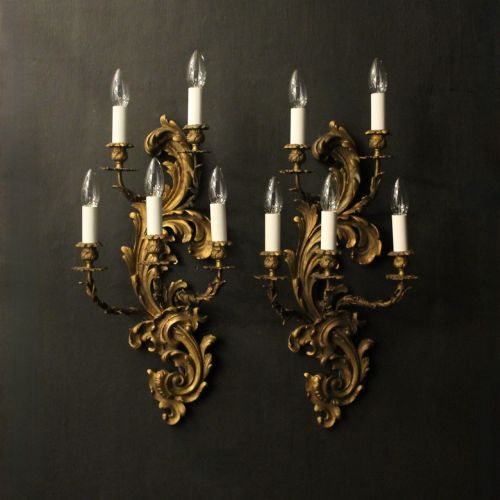
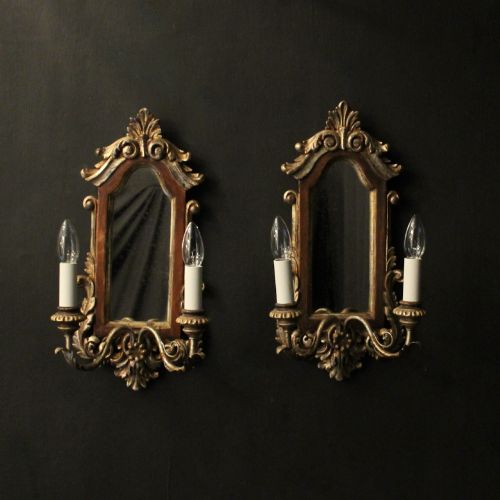
French pieces dominate the selection, often taking the form of twin-arm or multi-branch fixtures in the Rococo revival and Empire styles. Alongside these, Italian giltwood girandoles and English brass pieces appear, offering alternative interpretations of classical decoration.
How They Were Made
The makers of these pieces relied heavily on cast bronze, brass, and carved wood as foundations for gold leaf or ormolu application. Giltwood surfaces involve carving wood, applying gesso, and laying fine sheets of gold leaf by hand.
Metal components often receive fire-gilding or ormolu treatment, creating a durable golden coating over bronze or brass bases. Glass and crystal elements are integrated into mirrors and girandoles to multiply the reflected light.
Gilded Wall Lighting Retail Price Guide 2026
Typical asking prices for gilded wall lighting among the pieces listed under this phrase on Sellingantiques today, from the lower quarter to the upper quarter. They describe what is for sale here now, not the wider market.
Listings feature pieces spanning the eighteenth century through the mid-twentieth century, dominated by French bronze and Italian giltwood.
What Varies in Quality
The crispness of the casting and carving dictates the refinement of each piece, separating mass-produced items from studio work. Hand-chased bronze details show sharp relief and depth that mechanical smoothing simply misses.
The preservation of the original gilt surface determines historical integrity and visual warmth. Pieces retaining their undisturbed gold leaf or period ormolu carry greater depth than later regilt surfaces.
The Gilded Wall Lighting Glossary
- Ormolu
- Finely ground high-carat gold applied to a bronze base using a mercury amalgamation process. This technique produces a deep, lasting metallic lustre characteristic of eighteenth and nineteenth-century French works.
- Girandole
- A decorative wall sconce featuring a mirror backplate that multiplies the candle flame. The reflective glass serves to brighten darker period interiors.
- Giltwood
- Timber, typically lime or pine, coated in gesso and covered with thin leaves of gold. It allows for intricate, deep-relief carving that metal casting cannot achieve.
- Appliqué
- A French term for a wall-mounted light fixture or sconce. It designates brackets designed to fix directly to wood-panelled or plastered walls.
- Putti
- Depictions of plump, winged infant figures commonly found in Rococo ornamentation. They frequently support the arms of antique wall lights.
Gilded Wall Lighting: Frequently Asked Questions
How do I wire antique wall lights?
Most antique metal wall lights accommodate modern electrical wiring with minor adjustments by a qualified electrician. Components can be integrated carefully through existing channels without altering the visible exterior.
Original backplates and mounting brackets often require bespoke backing boxes to meet current safety standards securely. Professional installation preserves the structural integrity of the antique metalwork.
What is the difference between a sconce and a girandole?
A sconce is a wall-mounted bracket designed specifically to hold candles or electric bulbs. It focuses entirely on projecting illumination outward into the space.
A girandole incorporates a mirror plate behind the candle arms to reflect and amplify the light. This hybrid form functions as both a decorative wall mirror and a lighting fixture.
How do I clean gilded bronze safely?
Dusting surfaces gently with a soft, dry artist's brush prevents the accumulation of grit without scratching the delicate gold leaf. Moisture and chemical cleaners should be avoided entirely to protect the underlying metal.
Harsh polishing compounds strip away thin layers of ormolu or gold leaf permanently. Conservative maintenance ensures the historic finish remains stable over generations.
Are these lights French or Italian?
Distinguishing between origins relies heavily on stylistic motifs and choice of base material. French pieces frequently employ cast ormolu and bronze within rigorous Neoclassical or exuberant Rococo Revival frameworks.
Italian pieces often favour carved giltwood and polychrome finishes, particularly from Florence and Venice. Regional carvers utilised local timbers to create flowing organic forms distinct from foundry-cast metal.