





Gilded Satsuma Ceramic Vase
These gilded satsuma ceramic vases combine intricate earthenware forms with rich gold leaf details, offering collectors a striking piece of Japanese history.
Gilded Satsuma Ceramic Vase
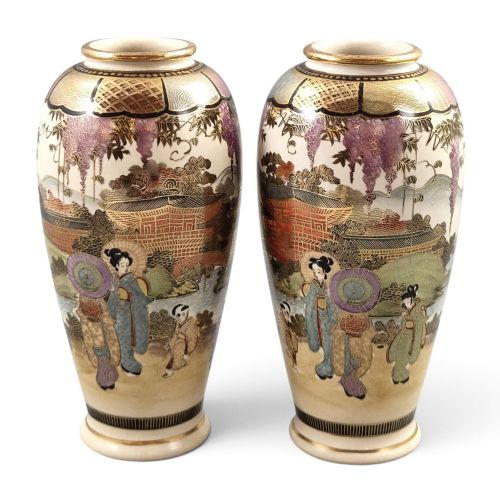
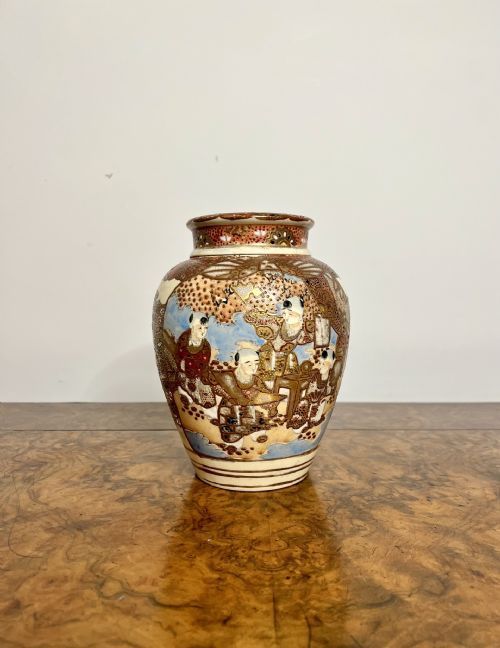
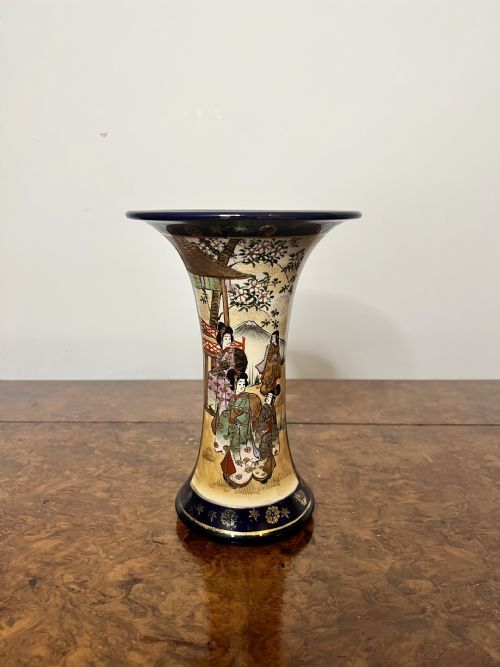
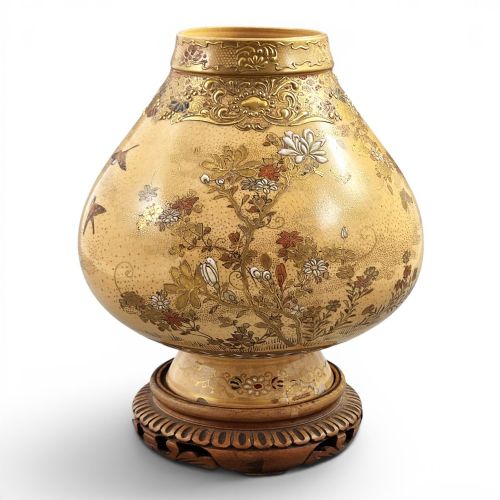
When searching for a gilded satsuma ceramic vase, buyers encounter traditional Japanese earthenware vessels typically decorated during the Meiji and Showa periods. These objects range from miniature jars and ginger jars to large garnitures, table lamps and monumental urns.
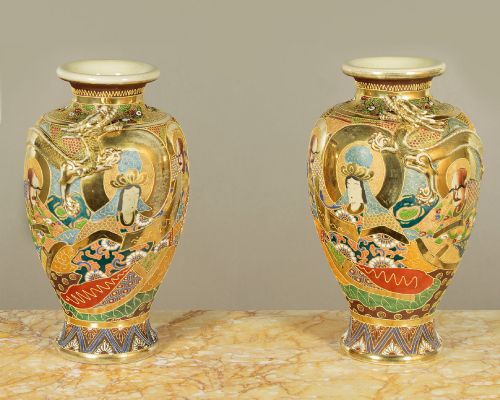
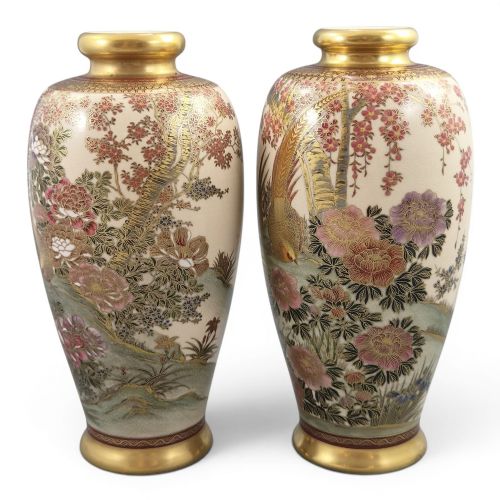
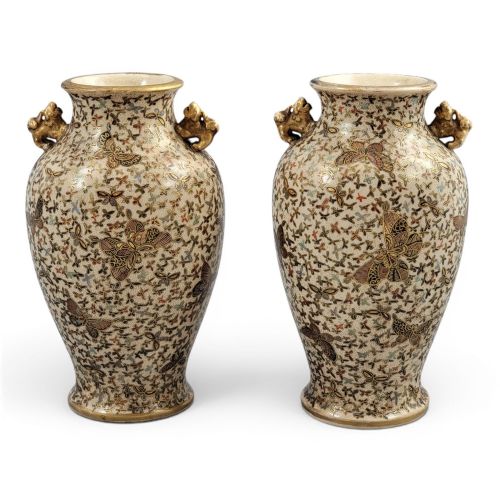
The pieces on this page originate predominantly from workshops in Kyoto and Kobe, spanning the late nineteenth century into the early twentieth century. Common decorative motifs include court figures, arhats, landscapes, wisteria and butterflies rendered in detailed enamel and gold gilt.
How they were made
Makers shaped these vessels from earthenware, applying a fine cream-coloured crackle glaze as the foundation for subsequent painting. Artisans then utilised vibrant enamel colours alongside extensive gold leaf and gilt to build up complex figurative and landscape scenes.
Techniques such as moriage were frequently employed to create raised relief details that give the surface a tactile quality. Skilled painters signed many of these works with individual artist or workshop marks directly onto the ceramic body.
Listings span from the 1880s through the 1930s, featuring earthenware bodies adorned with gold leaf, enamel and wood.
What varies in quality
The standard of execution in the hand-painted enamel and the density of the gilding largely separate standard production from exceptional pieces. Workshop attribution plays a significant part, with recognised names from Kyoto achieving finer detail in their figures and facial expressions.
Overall composition and scale also dictate quality, where monumental pairs or intricately patterned surfaces demonstrate superior craftsmanship compared to simpler, mass-produced export wares.
Shozan·Manpei·Kinkōzan·Kinzan·Hotoda·Chosei·Seiko-en Chokei·Yamashu·Tagawa·Tashiro·Hattori·Hayakawa
The Gilded Satsuma Ceramic Vase Glossary
- Satsuma
- A type of Japanese earthenware originating from Satsuma Province, known for its ivory-coloured crackle glaze. It became widely exported during the Meiji period.
- Moriage
- A ceramic technique using slip to build up raised decorative dots and lines on the surface. This creates a textured effect beneath the enamel and gilding.
- Meiji Period
- The era in Japanese history spanning from 1868 to 1912, marked by the opening of trade with the West. This period produced much of the finest decorative Satsuma ware.
- Garniture
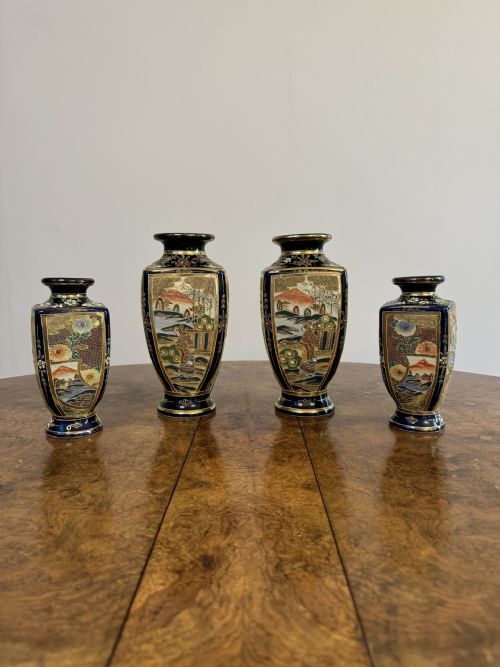
- A set of matching ceramic vases or vessels designed to be displayed together on a mantelpiece or sideboard. These sets often consist of three, four or five pieces.
- Shimazu Mon
- The heraldic crest of the Shimazu clan, featuring a cross within a circle. It frequently appears on Satsuma pottery associated with the province.
Gilded Satsuma Ceramic Vase: Frequently Asked Questions
How do I identify a Meiji period Satsuma vase?
Meiji period pieces typically display dense hand-painted enamel work combined with heavy gilt over a fine crackle glaze. Look for signature marks on the base and stylistic indicators such as court figures or arhat panels.
Many of these vases also feature traditional Japanese motifs like the Shimazu crest or Mount Fuji scenes. Examining the delicacy of the brushwork helps distinguish late nineteenth-century examples from later Showa period items.
What is moriage decoration on pottery?
Moriage refers to a raised clay technique where slip is piped onto the ceramic body before glazing and firing. This creates a tactile, three-dimensional relief effect that accentuates robes, borders and floral patterns.
On quality pieces, the gilding is carefully applied over this raised surface to catch the light. It adds significant depth and texture to the overall composition.
Are these vases suitable for everyday use as lamps?
Several vases on this page have been converted into table lamps while retaining their original ceramic bodies. They provide a decorative focal point for living spaces when paired with suitable fabric shades.
Care should be taken with placement to protect the antique enamel and gold leaf surfaces from accidental knocks. Cleaning requires only a soft, dry cloth to preserve the fragile glaze.
What does a garniture of vases mean?
A garniture is a matching set of multiple vases or jars designed to be displayed together as a decorative unit. These sets often comprise three or four pieces of varying heights and shapes.
Historically, they were placed across mantelpieces or large pieces of furniture in formal reception rooms. Finding a complete matching set remains unusual for collectors.