




Gilded Round Wall Mirror
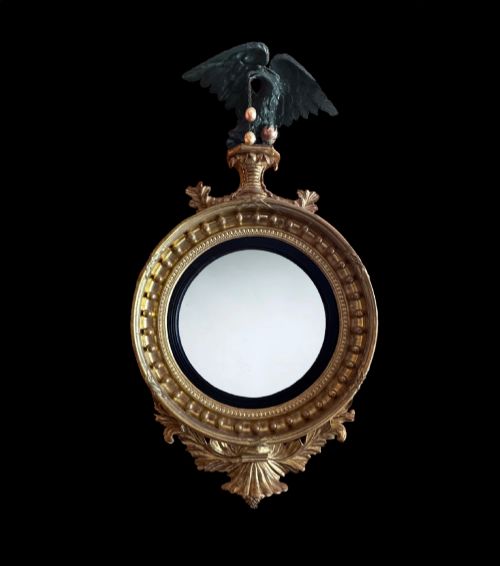
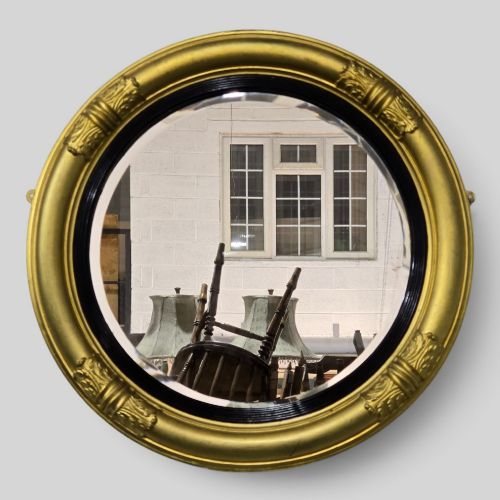
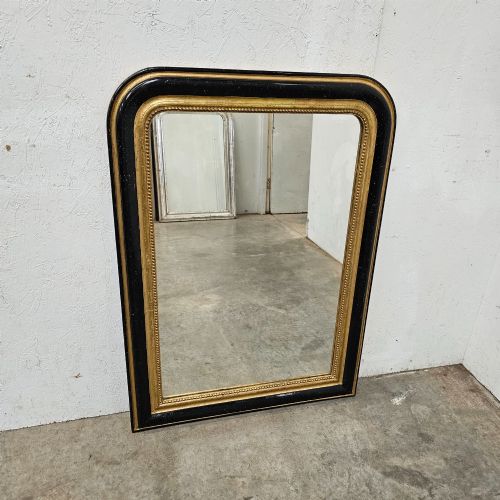
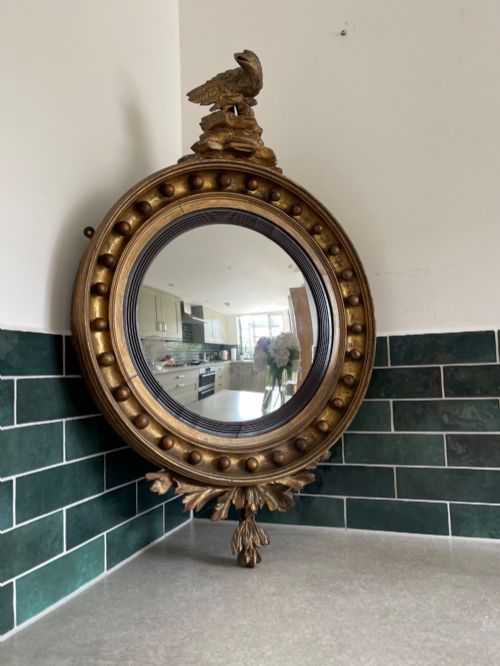
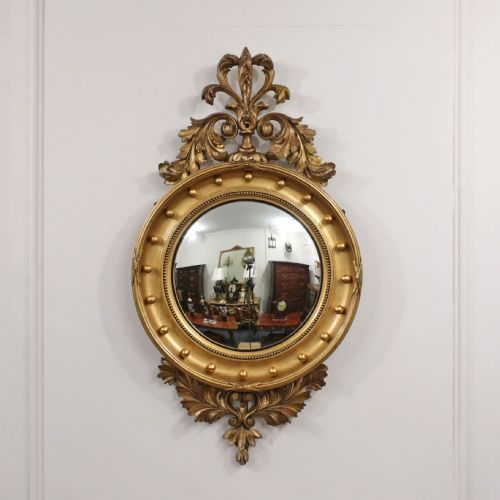
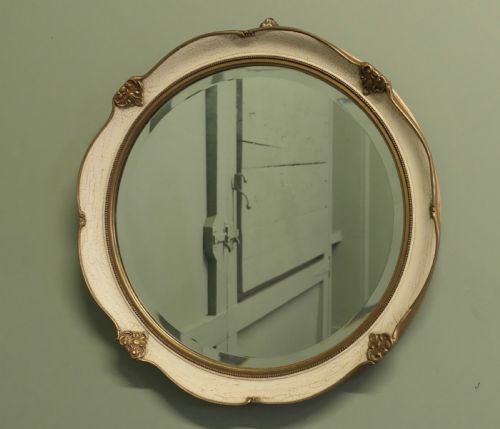
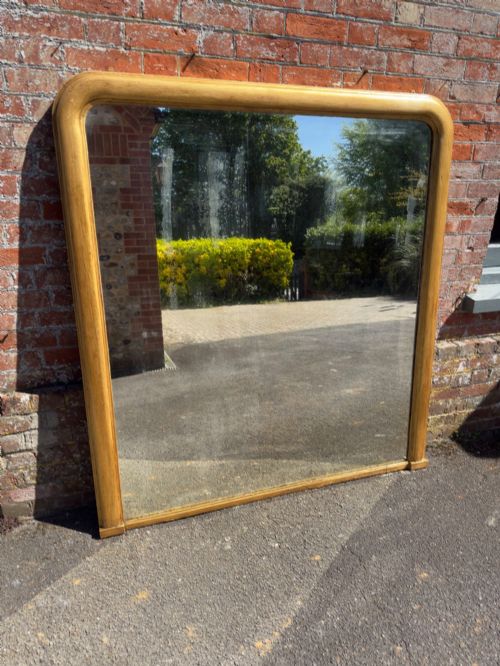
These gilded round wall mirrors bring light and proportion to a room, dominated here by Regency convex forms.
Gilded Round Wall Mirror
A gilded round wall mirror is a circular looking glass framed in wood, gesso, and gold leaf, designed to catch and spread natural light across an interior. When searching for a gilded round wall mirror, buyers encounter a strong showing of Regency convex examples alongside Victorian and later interpretations.
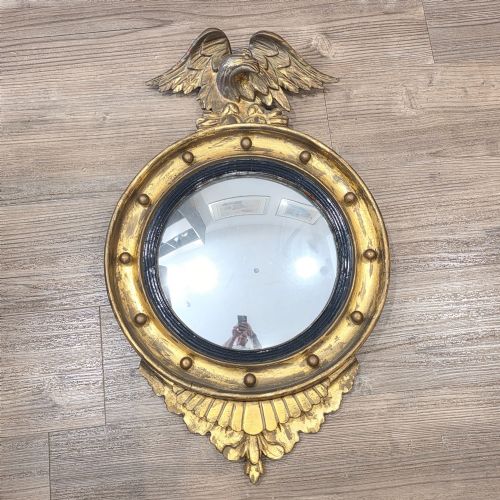
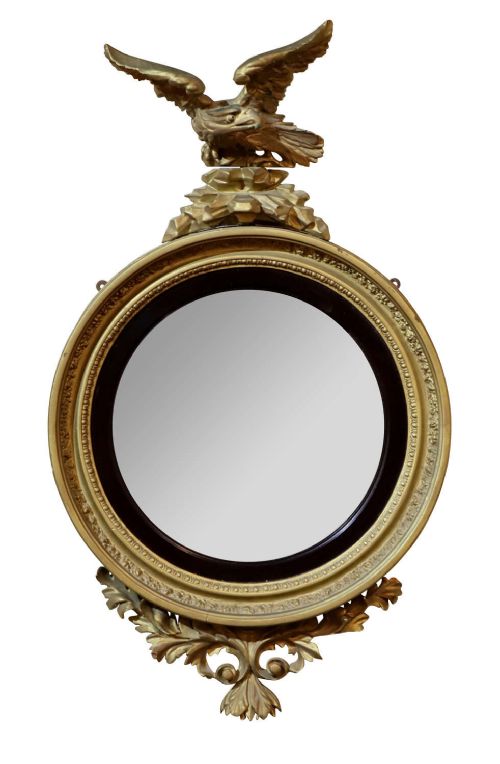
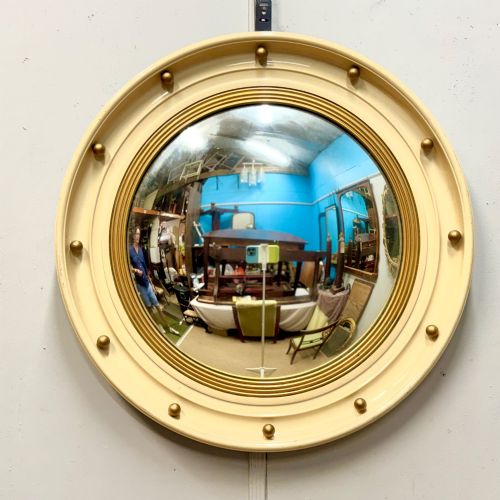
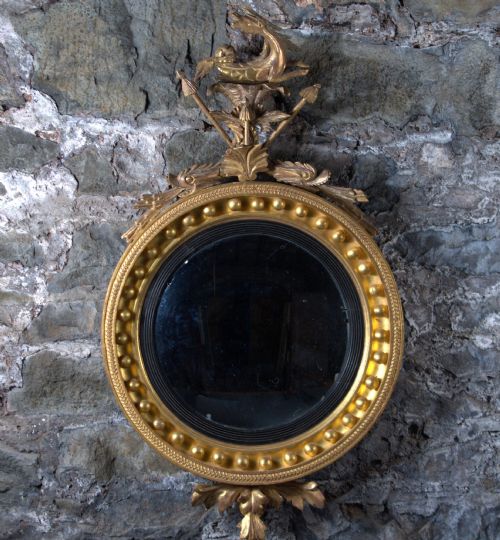
The convex mirror, often called a butler's mirror or bull's-eye, curves outward to reflect a wide, distorted panorama of the room. These circular frames frequently feature decorative crests like eagles or dragons, or sit within simpler moulded rims intended for halls and reception rooms.
How they were made
Makers shaped the circular frames from solid wood or built up intricate relief ornament using layers of gesso applied over a wooden base. This plaster-like compound allowed carvers to achieve crisp surface details before applying gold leaf or liquid gilt.
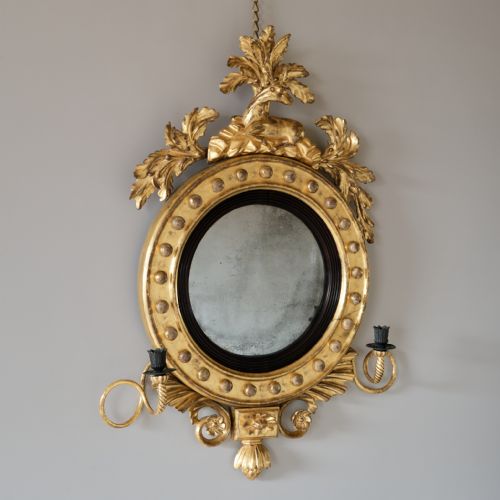
The curved glass was blown or cast to create the characteristic convex form, sometimes paired with an ebonised wood slip inside the main frame to create depth. Surfaces were finished in gold leaf or paint, depending on the period and regional workshop traditions.
Listings span the Georgian, Regency, Victorian, and Art Deco periods, predominantly featuring circular convex forms in giltwood and gesso.
What varies in quality
The quality of a gilded round wall mirror rests on the crispness of the carved or moulded gesso detail and the depth of the gilding. Early pieces show sharp definition in decorative motifs like foliage or crests, whereas worn surfaces or heavy overpainting tend to flatten the visual impact.
The condition and clarity of the original convex glass also influence the character of the piece. Retaining the early mirror plate with its natural foxing and distortion preserves the authenticity of the object more effectively than a modern replacement.
The Gilded Round Wall Mirror Glossary
- Convex glass
- A curved mirror glass that swells outward to capture a wide-angle reflection of the surrounding interior. This form was especially popular during the Regency period.
- Gesso
- A mixture of chalk, gypsum, and binder applied to wood frames to create a smooth surface for gilding. It accepts fine carving and moulding work.
- Giltwood
- Timber that has been coated in thin sheets of gold leaf or gold paint. It provides a warm, reflective metallic sheen.
- Ebonised slip
- A thin, dark inner moulding typically finished to imitate ebony. It creates a visual border between the convex glass and the outer gilt frame.
- Surmount
- An ornamental crest or decorative fixture positioned at the top of a mirror frame, such as a carved eagle or floral motif.
Gilded Round Wall Mirror: Frequently Asked Questions
Where should I hang a convex mirror?
These mirrors function effectively in hallways, dining rooms, and above mantelpieces where their wide-angle reflection can open up the space.
Because they gather and throw light from multiple angles, placing them opposite a window yields the strongest visual effect.
How do I identify a Regency convex mirror?
Regency examples typically feature circular frames with reeded ebony inner slips and heavy gilded mouldings. They frequently incorporate ball ornaments around the outer rim or carry a spread eagle surmount.
Construction details, timber shrinkage, and the characteristics of the original mirror plate help confirm the period.
What is a butler's mirror?
A butler's mirror is a traditional term often applied to convex wall mirrors used historically in service rooms or halls. The curved glass allowed staff to monitor activity across a room from a single vantage point.
Today, the term describes these round, convex-glassed pieces regardless of their original domestic placement.
Why do some mirrors have dark spots?
Dark spots, known as foxing, occur naturally as the silvering behind the glass ages and reacts with moisture over decades. This oxidation process is a standard characteristic of antique mirror plates.
Many collectors value original foxing because it proves the glass is contemporary with the frame.