
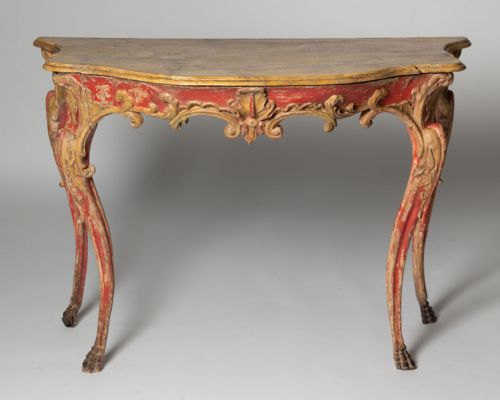

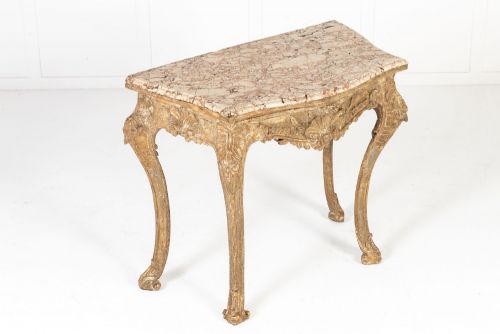


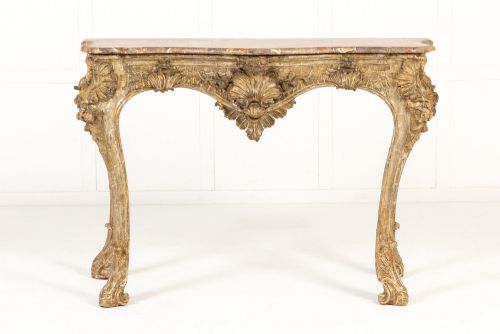
Gilded Rococo Hall Table
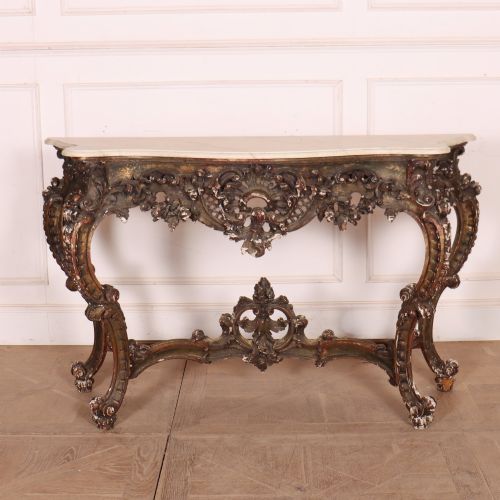
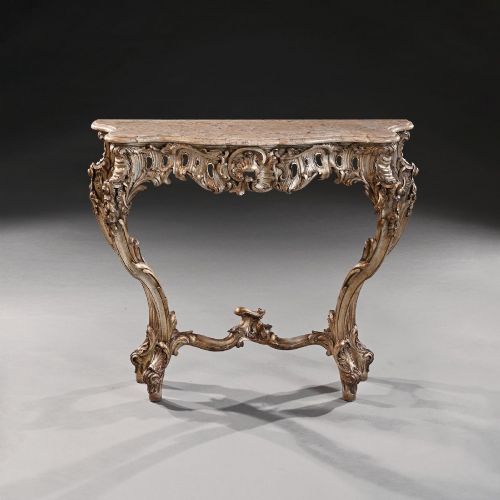
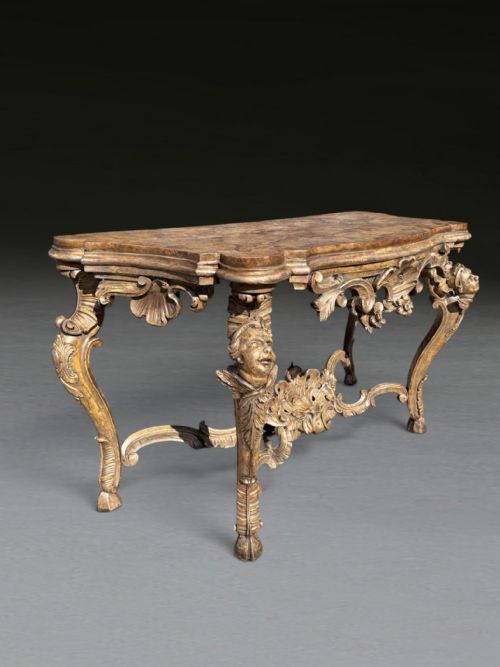
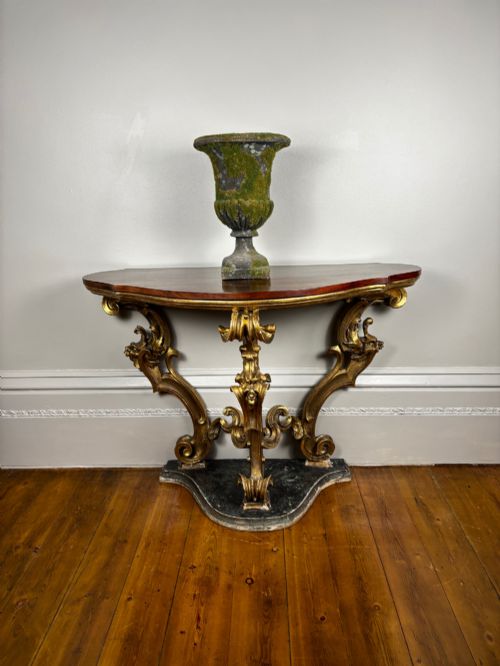
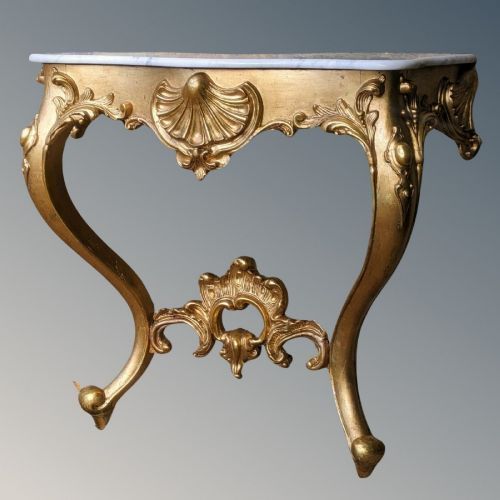
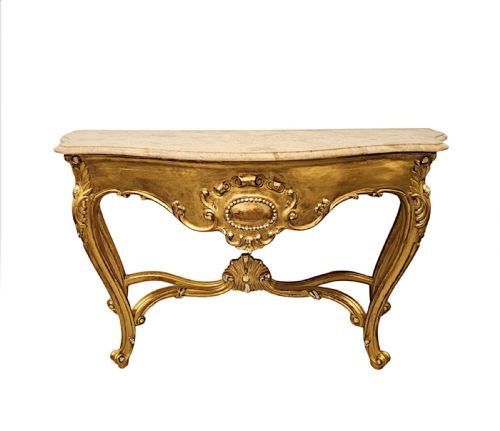
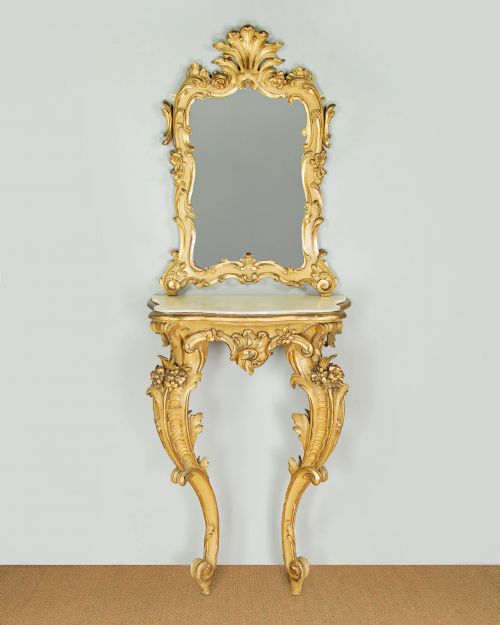
A gilded rococo hall table brings dramatic French and Italian curves, carved giltwood and marble into an entrance space.
Gilded Rococo Hall Table
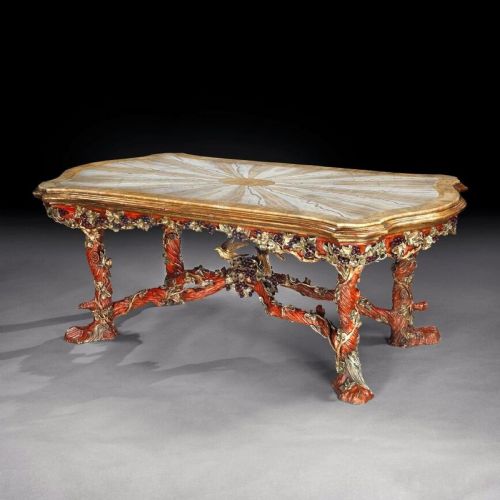
A gilded rococo hall table comprises ornate console tables, centre tables, and console table and mirror sets designed for placement in a hallway or principal room. The forms span the eighteenth century, nineteenth century, Victorian era, and early twentieth century, originating primarily from France, Italy, and Germany.
Buyers encounter console tables and centre tables most frequently on this page, often featuring shaped marble or onyx tops paired with carved giltwood frames. Pieces range from small wall-anchored consoles to grand pairs and matching mirror combinations.
Origins heavily reflect Italian and French regional expressions of the style, including Venetian, French Rococo, and Rococo Revival interpretations. These tables serve as focal entrance furniture designed to display decorative objects beneath a wall mirror.
Materials and construction methods
Makers shaped these tables from carved wood, giltwood, and gesso, applying gold leaf, silver gilt, and paint to the decorative frames. Structural integrity relies on traditional joinery supporting heavy stone tops.
Surfaces feature shaped marble, onyx, and glass tops fitted to hand-carved wooden bases finished with intricate scrolling ornament. Polychrome highlights and parcel gilt details accent the primary carved wooden structures.
Listings feature periods spanning the eighteenth century through the early twentieth century, incorporating Victorian and revival styles.
Assessing quality in carved tables
Quality separates through the depth and crispness of the hand-carving within the wood and gesso ornamentation, distinguishing fluid sculptural forms from softer, less detailed moulding. The execution of the gilding and the quality of the prepared gold leaf or silver gilt layer dictate the visual richness of the surface.
The selection and finish of the fitted stone top, whether marble or onyx, contribute significantly to the standing of the piece, alongside the integrity of the underlying wooden frame and original painted or gilt surfaces.
Amleto Bertoni
The Gilded Rococo Hall Table Glossary
- Console table
- A table designed to stand against a wall, traditionally supported by two front legs and fixed with brackets to the wall at the back.
- Giltwood
- Timber coated with gold leaf or powder over a prepared gesso ground. This technique provides the luminous metallic finish characteristic of these decorative tables.
- Gesso
- A plaster-like mixture applied to wood surfaces as a smooth base for gilding and painting. It allows craftsmen to carve intricate relief details before applying gold leaf.
- Rococo
- An exuberant design style originating in France characterised by asymmetrical C-scrolls, shell motifs, and naturalistic plant forms. It dominates the ornamentation of these tables across various revival periods.
- Centre table
- A freestanding table designed to be viewed from all sides, placed in the middle of a room rather than against a wall.
Gilded Rococo Hall Table: Frequently Asked Questions
Where should I place a console table?
These tables fit naturally in entrance halls, corridors, or principal living spaces where wall space accommodates their proportions. Placing a matching wall mirror above the console completes the traditional arrangement seen in historic interiors.
Because many console tables rely on wall brackets for structural support, verify installation requirements before positioning them in freestanding locations.
How do I clean a marble top?
Wipe the marble or onyx surface gently with a soft, damp cloth and mild neutral soap to preserve the polished stone finish. Avoid acidic cleaners, vinegar, or harsh abrasives that etch or dull the natural stone.
Dry the surface thoroughly after cleaning to prevent water spotting on older marble surfaces.
Are these tables freestanding?
Console tables often require attachment to the wall using concealed brackets because their front legs alone do not support the weight of the heavy stone tops. Centre tables, by contrast, are fully freestanding and finished on all sides for placement in the middle of a room.
Check the base construction of each specific table to determine its structural support requirements.
How do I distinguish 18th century pieces?
Eighteenth-century examples display hand-carved wooden construction methods, aged gesso layers, and wear patterns characteristic of age. Wood shrinkage, hand-applied gold leaf, and specific regional carving traits help differentiate period originals from later nineteenth-century revivals.
Examining the underside and joinery reveals the age of the timber and the manufacturing techniques employed by the workshop.