





Gilded Porcelain Statuette
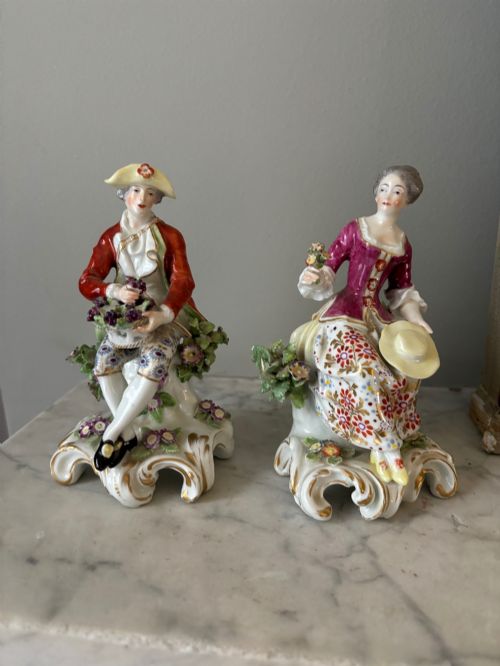
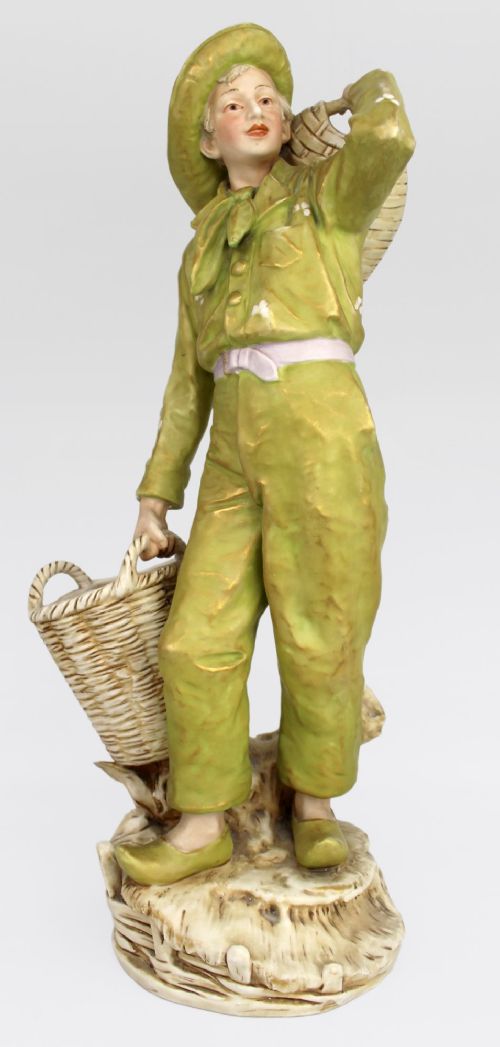
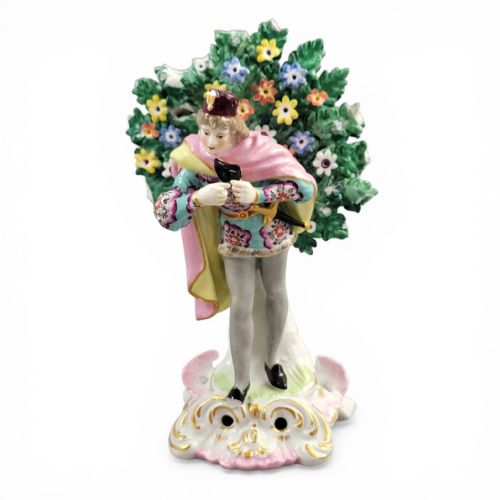
These gilded porcelain statuette examples bring together eighteenth-century manufactories and nineteenth-century revival pieces modelled as figures, cherubs, and allegorical groups.
Gilded Porcelain Statuette
A gilded porcelain statuette represents human, mythological, or allegorical subjects shaped in clay and finished with metallic highlights. These objects function primarily as decorative cabinet pieces rather than utilitarian items.
The pieces appearing on this page span several centuries, with a strong representation of eighteenth-century English and continental workshops alongside nineteenth-century Paris and German reproductions. Figurines, pairs of pastoral figures, and mythological groups dominate the available forms.
How They Were Made
Potters utilised hard-paste and soft-paste porcelain pastes, shaping them in moulds or modelling them by hand before initial firing. Enamel colours were then applied by brush and fixed in a second kiln firing.
Gold leaf, gilt, and gilding were brushed onto the edges of garments, bases, and decorative accessories before a final low-temperature fixation. Artisans then polished or burnished the metallic areas to create contrast against the white glazed porcelain body.
Several figures depict musicians and dancers frozen mid-step, bringing silent eighteenth-century performance directly onto the collector's shelf.
What Varies in Quality
The application of enamel and gilding influences the overall standard of a piece. Controlled brushwork and thick, burnished gold highlights elevate an example above flat, hastily painted surfaces.
Edme Samson·Meissen·Royal Dux Bohemia·Royal Worcester·Derby Porcelain·Chelsea Porcelain·Bow Porcelain·La Coutille Factory·Letu and Mauger·Volkstedt·Bloor Derby·Sitzendorf·Ludwigsburg·Carl Thieme·Ernst Wahliss·Helena Wolfsohn
The Gilded Porcelain Statuette Glossary
- Hard-paste porcelain
- A dense, vitrified ceramic composition fired at very high temperatures. It resists scratching and requires high heat for its glaze to mature.
- Soft-paste porcelain
- An artificial ceramic body containing glass frit and white clay, fired at lower temperatures than hard-paste. It yields a warmer, softer glaze texture.
- Gilt
- A thin layer of gold applied to the porcelain surface for decorative highlights. This metallic addition catches the light on garments and bases.
- Enamel
- Vitreous coloured paints fused to the glazed porcelain body during firing. These mineral pigments provide the flesh tones, clothing colours, and floral details.
- Biscuit porcelain
- Unglazed ceramic fired once to a porous state, leaving a matte finish resembling marble. Figures in this state rely entirely on modelled form rather than glaze and paint.
Gilded Porcelain Statuette: Frequently Asked Questions
How do I identify a reproduction figure?
Nineteenth-century factories frequently copied eighteenth-century models, adopting historical marks to indicate their inspiration rather than to deceive. Examining the paste composition, weight, and the crispness of the enamel work helps separate earlier originals from later continental interpretations.
Studying the wear on the base and the consistency of the glaze provides further context regarding the manufacturing period. Workshops such as those in Paris produced skilled homages that require careful comparison with documented pieces.
Were these figures meant for display?
These statuettes were designed specifically for display on mantelpieces, side tables, and within dedicated porcelain cabinets. Their intricate hand-painted details and gilded highlights were intended to be viewed closely under domestic lighting.
Throughout the eighteenth and nineteenth centuries, wealthy households arranged pastoral and mythological figures in symmetrical pairs or larger decorative groupings. They served as conversation pieces that reflected the refined tastes of their owners.
What do allegorical figures represent?
Allegorical figures often personify abstract concepts such as the Four Seasons, the elements, or specific virtues through symbolic clothing and attributes. A figure holding wheat sheaves or flowers typically represents Autumn or Spring.
Mythological subjects draw from classical stories, portraying deities like Venus, Diana, or Zeus with their traditional animals and objects. These narratives provided intellectual amusement for collectors in the Georgian and Victorian eras.