

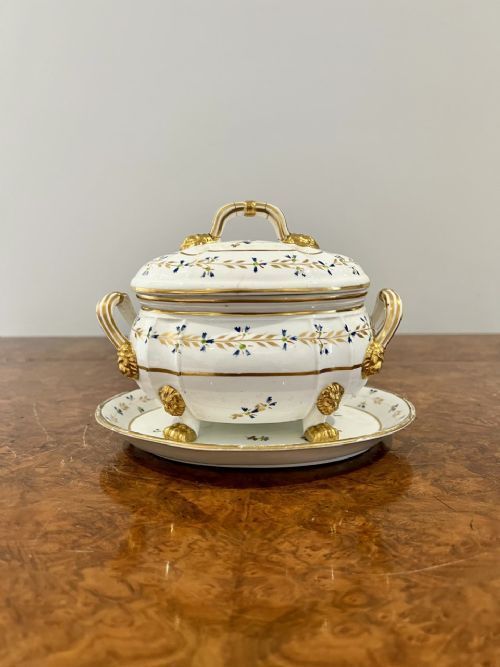


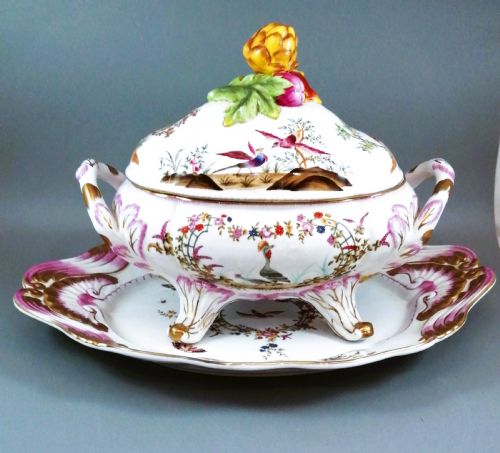


Gilded Porcelain Soup Dish
These gilded porcelain soup dish examples combine rich metallic leaf with fine ceramic bodies for grand dining tables.
Gilded Porcelain Soup Dish
A gilded porcelain soup dish is a refined piece of tableware designed for serving broth or holding a place setting at formal dinners. When you search for a gilded porcelain soup dish, you encounter items intended to add lustre and status to the dining room.
The pieces appearing on this page span several distinct periods including the eighteenth century, the regency era, the nineteenth century, and the late Victorian period. Forms range widely from soup plates and sauce tureens with covers to large serving tureens and saucers.
Makers and origins include English manufactories such as Worcester, Crown Derby, Coalport, Masons, and Staffordshire alongside continental European workshops. This variety means you find both delicate soft paste bodies and robust ironstone forms.
How they were made
Makers shaped these wares from porcelain or ironstone, applying glaze and firing them in kilns to create durable ceramic bodies. Many pieces also incorporate enamel painting alongside the ceramic base.
Gold leaf and gilding were applied by hand to rims, handles, and borders, often over a prepared ground to catch the candlelight. Skilled artisans painted intricate motifs, armorials, and Chinoiserie patterns before a final low temperature fix.
Gilded Porcelain Soup Dish Retail Price Guide 2026
Typical asking prices for gilded porcelain soup dish among the pieces listed under this phrase on Sellingantiques today, from the lower quarter to the upper quarter. They describe what is for sale here now, not the wider market.
One cheerful Victorian entry captures a cabbage tureen made by Turner in eighteen ninety three.
What varies in quality
The refinement of the ceramic body and the purity of the porcelain paste separate standard wares from exceptional examples. Early soft paste bodies and crisp ironstone castings show distinct levels of technical mastery.
The depth and weight of the gold leaf application define the visual distinction of the piece. Hand painted details, armorial crests, and complex enamel work elevate certain tureens and plates far above mass production.
Crown Derby·Coalport Porcelain·Grainger and Co Royal Worcester·Flight Barr and Barr
The Gilded Porcelain Soup Dish Glossary
- Gilding
- The application of gold leaf or gold paint to the surface of porcelain. This technique creates reflective metallic highlights along rims and handles.
- Soft-Paste Porcelain
- An artificial ceramic composition fired at lower temperatures than hard paste. It possesses a warm milky tone and a softer surface texture.
- Ironstone
- A dense, durable ceramic perfected in the nineteenth century. It bridges the gap between earthenware and true porcelain.
- Armorial
- A design featuring a coat of arms or family crest. These bespoke motifs indicate high status commissions for wealthy patrons.
- Tureen
- A deep covered vessel used for serving soup or sauces. They often rest upon matched ceramic stands.
Gilded Porcelain Soup Dish: Frequently Asked Questions
What is a gilded porcelain soup dish?
A gilded porcelain soup dish is a ceramic bowl or plate intended for serving broth, decorated with gold leaf or metallic paint. These items were produced by factories in England and on the continent during the eighteenth and nineteenth centuries.
Such vessels formed part of larger dining services intended to display wealth and status during formal meals. They combine utilitarian ceramic forms with decorative metalwork.
How were these dishes used originally?
These dishes served soup, broth, or sauces at formal dining tables in wealthy households. Tureens held the main supply at the table while individual plates received the portions.
The gold decoration was designed to glint under candlelight during evening banquets. They were handled with care by domestic staff and reserved for important guests.
How do I date a piece?
Dating relies on identifying factory marks stamped or painted on the underside of the ceramic body. Stylistic clues such as Regency shapes or Victorian revival patterns also help narrow the timeframe.
The type of ceramic paste, whether soft paste porcelain or heavy ironstone, provides further indication of the manufacturing period.
How do I care for antique porcelain?
Antique porcelain requires gentle hand washing in warm water with mild soap. Avoid modern dishwashers and harsh abrasive sponges that can wear away the fragile gold leaf.
Store pieces securely where they will not suffer impacts to their delicate rims and handles. Proper physical support prevents stress on historic ceramic bodies.