


Gilded Porcelain Display
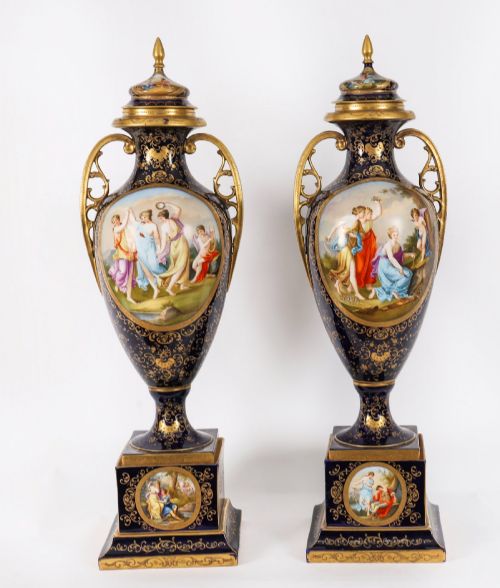
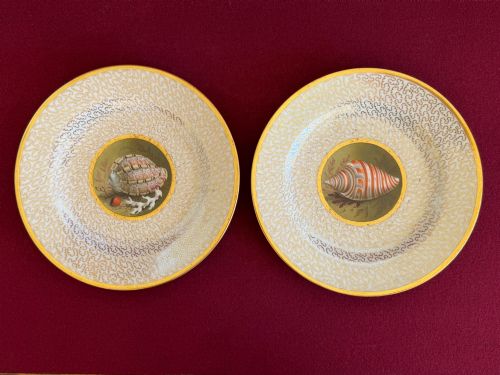
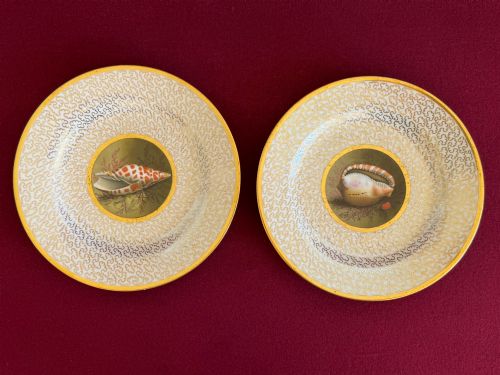
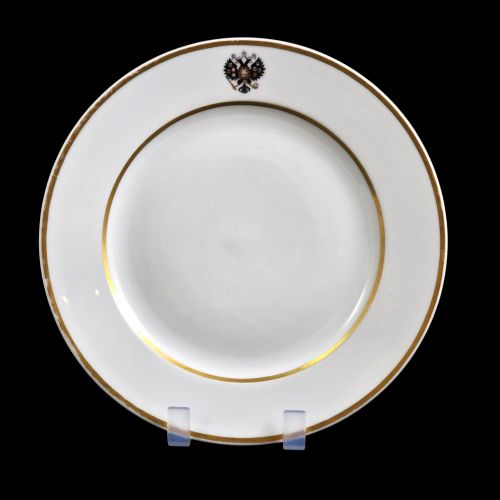
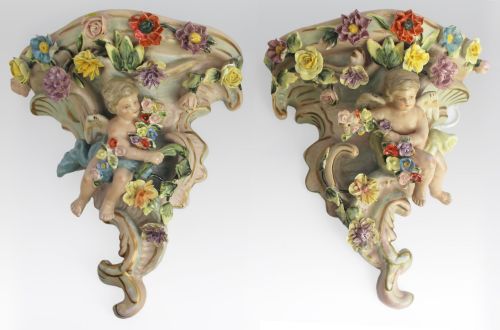
These gilded porcelain display pieces bring rich handpainted colour and metallic leaf into a room, catching the eye on a cabinet shelf or wall bracket.
Gilded Porcelain Display
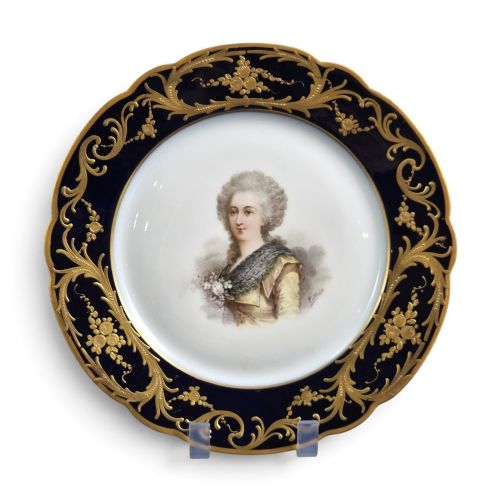
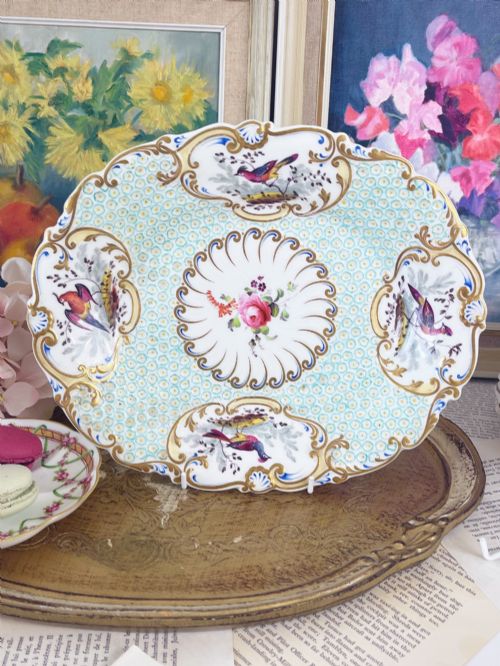
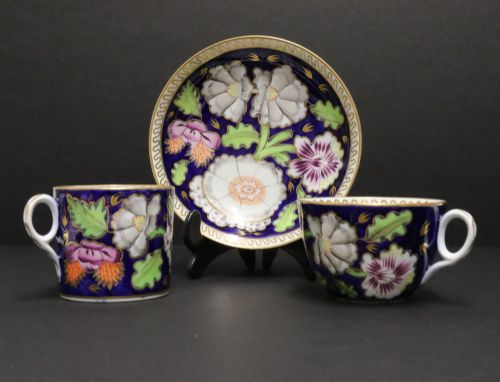
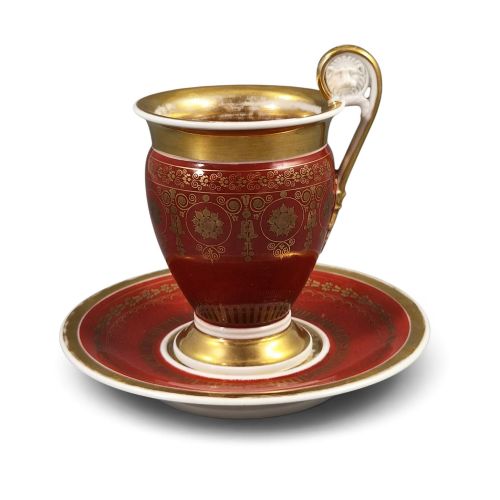
When searching for gilded porcelain display pieces, collectors encounter decorative plates, cabinet cups, bowls and chargers designed primarily for visual appreciation rather than daily dining. These ornamental items span the nineteenth and twentieth centuries, originating from English factories, continental European manufactories and Japanese kilns.
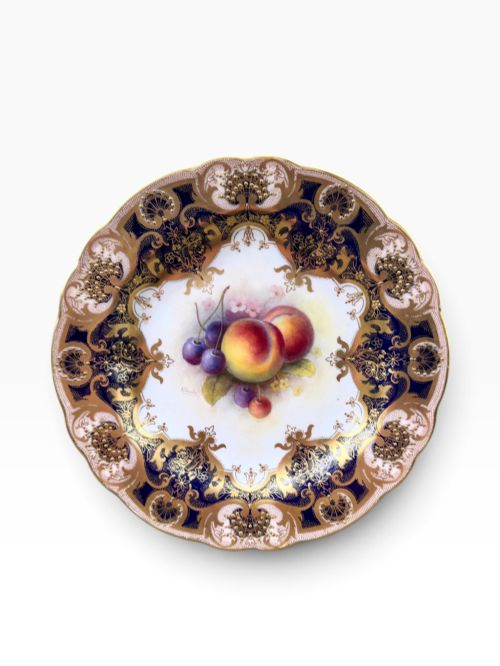
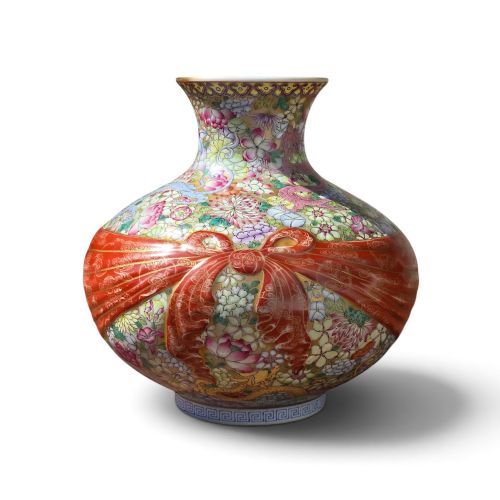
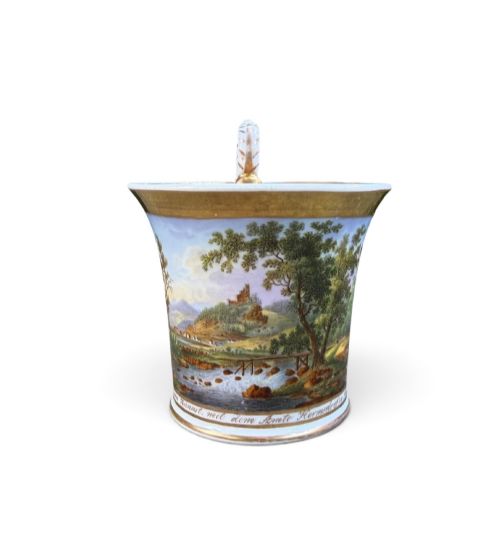
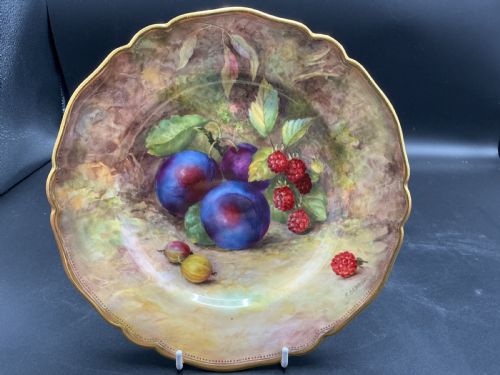
Cabinet plates and painted fruit services dominate the selection, often bearing detailed handpainted motifs such as birds, flowers and topographical scenes. Alongside plates, the form extends to vases, comports and wall brackets finished with gold leaf or heavy gilt detailing.
How they were made
The foundation of these items rests on hard-paste porcelain, bone china or earthenware, shaped into vessels or flat plates before receiving an initial kiln firing. Artisans then applied enamel colours and detailed handpainting, incorporating botanical subjects, portraits or intricate patterns.
Gold leaf, gilding and liquid gold accents were meticulously brushed or tooled onto the surface, often fired a final time to bond the metal to the glaze. This combination of vitreous body, coloured enamel and metallic highlighting created the characteristic reflective sheen.
Several cabinet plates bear the signatures of artists who clearly preferred painting squirrels and fairies over formal botanical studies.
What varies in quality
The standard of painting drives the distinction between average production and exceptional pieces, with named artists and signed works commanding greater attention from collectors. Precision in the brushwork, particularly in complex subjects like fruit, birds or figures, separates factory work from master painter output.
The application of the gilding itself reveals differences in skill, ranging from flat, uniform gold washes to heavily chased, burnished leaf that catches the light from multiple angles. The complexity of the porcelain body, such as pierced borders or moulded relief elements, also indicates higher manufacturing ambition.
Royal Worcester·Royal Crown Derby·Wedgwood·Minton·Meissen·Sèvres
The Gilded Porcelain Display Glossary
- Cabinet plate
- An ornamental plate intended for display on a wall or within a glass-fronted cabinet rather than for table use. These pieces often feature elaborate painted scenes and gilded borders.
- Gilding
- The application of gold leaf or powdered gold suspended in a medium to the surface of porcelain. It provides the metallic embellishment characteristic of high-status ceramics.
- Imari
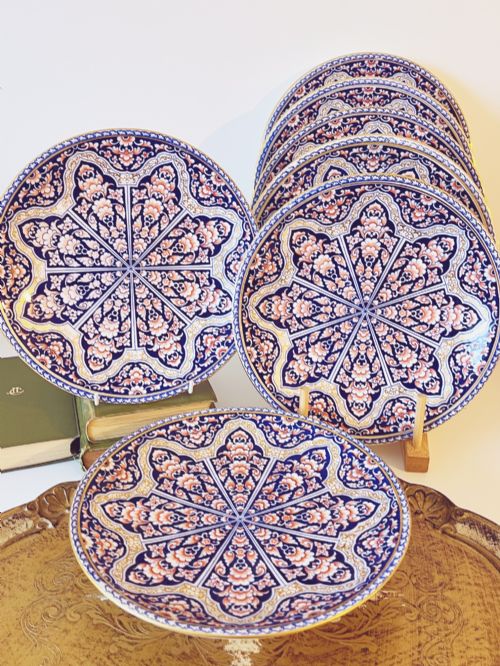
- A style of Japanese porcelain featuring a distinctive palette of underglaze blue, iron red and abundant gold. Exported widely to Europe, it strongly influenced Western ceramic decoration.
- Comport
- A raised dish or bowl used as the centrepiece of a dessert service. They elevate fruit or sweetmeats above the level of flat plates on a dining table.
- Aesthetic Period
- A late nineteenth-century design movement that emphasised visual beauty over narrative meaning. It drew heavy inspiration from Japanese art and natural forms.
Gilded Porcelain Display: Frequently Asked Questions
What is a cabinet plate?
A cabinet plate is a decorative ceramic dish meant strictly for display rather than dining use. These items typically feature elaborate handpainted artwork and heavy gilding.
Such plates were housed in glass display cabinets or mounted on walls to showcase wealth and artistic taste. They rarely show utensil marks because they avoided everyday service.
How do I identify Imari porcelain?
Imari porcelain is instantly recognisable by its distinct palette combining underglaze blue, rich iron red and extensive gilding. The patterns often incorporate dense floral and geometric arrangements.
Originating in Japan for export markets, this style inspired numerous European factories to produce their own imitation wares during the nineteenth century.
What is a dessert service?
A dessert service is a matched set of ceramic tableware comprising a central comport accompanied by several smaller plates. They were brought out at the conclusion of a formal meal for serving fruit and sweet treats.
Many surviving sets feature elaborate gilding and individual handpainted motifs on every single plate, making complete matched groupings desirable for display.
How should I display gilded porcelain?
Gilded porcelain display items look best positioned away from direct, harsh sunlight to prevent the enamel colours from fading over time. Secure wall brackets or stable plate stands ensure the pieces remain safe from accidental knocks.
Displaying them in enclosed cabinets also protects the delicate gold leaf and painted surfaces from household dust and atmospheric grease.