

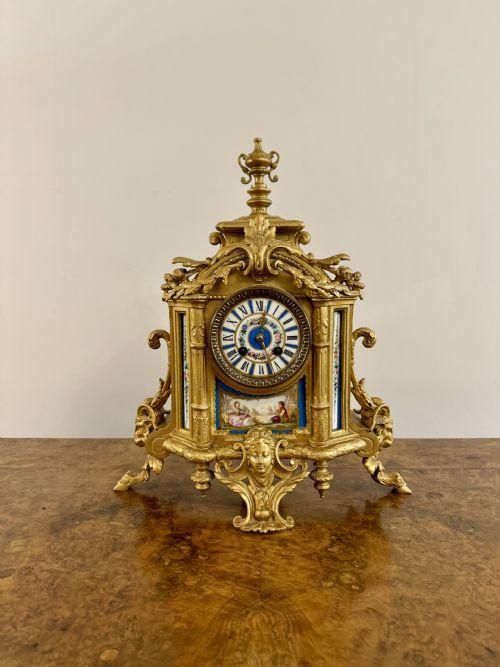

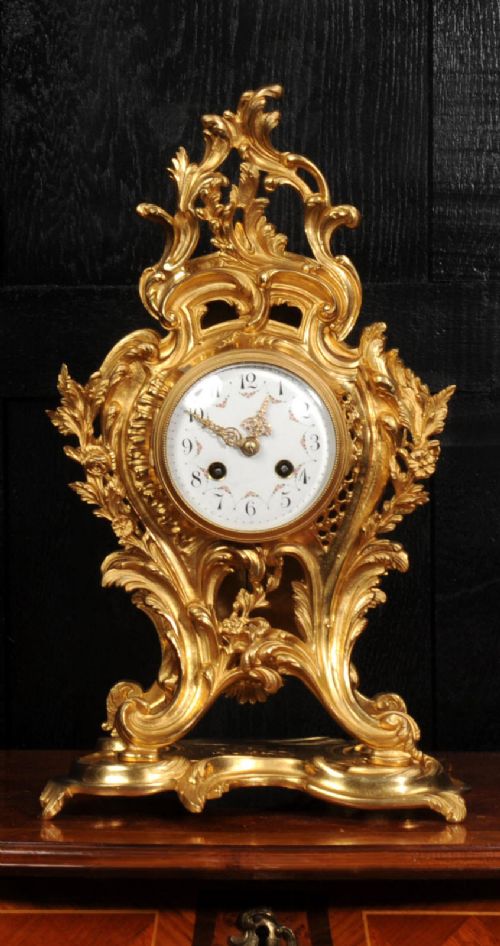


Gilded Metal Mantel Clock
These gilded metal mantel clock examples combine architectural presence with decorative dial work, offering striking Victorian and Regency presence for a mantelpiece.

Gilded Metal Mantel Clock
A gilded metal mantel clock brings together metallic lustre and sculptural form, appearing frequently in French Rococo Revival, Napoleon III, and Louis XVI revival styles across the nineteenth century. These pieces range from compact boudoir clocks to substantial clock garnitures and portico clocks flanked by porcelain panels or figural motifs.
The objects span periods from the Regency era through to the late Victorian decades, with makers incorporating enamel dials and glazed bezels. Many examples feature central clock housings supported by bronze, ormolu, and gilt metal mounts, sometimes accompanied by matching garniture sets.
Materials and construction
Makers shaped these clocks using gilt bronze, ormolu, and gilt metal, casting intricate mounts in asymmetrical Rococo or restrained Neoclassical patterns. These metallic surfaces often complement contrasting elements of white enamel dials, marble plinths, and painted porcelain panels.
Internal movements rely on traditional engineering, including fusee mechanisms within English Regency designs and robust French wheel trains. Cases are assembled with heavy cast components, secured via threaded fixings behind glazed bezels and protective back doors.
One petite boudoir clock carries a personal inscription, having been presented by Sporting Sketches in the late nineteenth century.
Distinctions in execution
The refinement of the cast ornament defines the superior examples, where hand-chased details in the ormolu remain crisp and deep rather than soft or flat. High-grade specimens integrate signed movements by established makers with complete, matching garniture sets and undamaged porcelain components.
Proportion and structural balance also separate standard production from exceptional work, particularly in architectural portico models and figural compositions like Diana the Hunter. The preservation of the original fire gilding or patination dictates the visual impact of the metalwork.
John Barwise of London·PH Mourey·Leroy and Fils·Japy Fils·Bently and Beck London
The Gilded Metal Mantel Clock Glossary
- Ormolu
- Finely ground high-carat gold applied to a bronze base using a mercury amalgamation technique, producing a rich metallic sheen. This finish is typical of superior French decorative items from the eighteenth and nineteenth centuries.
- Garniture set
- A decorative grouping consisting of a central clock flanked by matching ornamental pieces such as urns or candelabra. These sets were designed to create a balanced arrangement on a mantelpiece.
- Fusee
- A conical pulley used in clock movements to maintain even driving force as the mainspring unwinds. This mechanical addition improves timekeeping accuracy across the power reserve.
- Portico clock
- A clock case styled to resemble an architectural portico, supported by columns framing a suspended pendulum. This neoclassical form gained popularity during the Regency and Victorian periods.
- Boudoir clock
- A small, intimate timepiece designed for private rooms rather than principal reception spaces. These smaller items often feature delicate gilt ormolu mounts and advertising or presentation inscriptions.
Gilded Metal Mantel Clock: Frequently Asked Questions
What is a clock garniture?
A clock garniture is a matching set comprising a central mantel clock accompanied by two flanking decorative objects, such as vases, urns, or candelabra. These sets were designed as a cohesive decorative scheme for a mantelpiece.
The matching pieces repeat the materials, gilding style, and decorative motifs of the clock case, often incorporating porcelain panels or sculptural figures to unify the mantel display.
How do French and English movements differ?
French movements of the nineteenth century typically utilised standard spring-driven or weight-driven platforms with rack striking, housed in ornate ormolu and porcelain cases. English examples from the Regency period frequently employed chain fusee movements.
Fusee movements regulate the power delivery from the mainspring through a conical pulley, reflecting a different mechanical priority focused on precision timekeeping within architectural wooden or bronze cases.
How should I clean gilded metal?
Gilded metal and ormolu require gentle dusting with a soft, dry brush to remove particulate matter without abrading the delicate metallic surface. Moisture and chemical cleaners must be avoided entirely.
Harsh commercial polishes will strip away the historic gilding or original patination, permanently damaging the surface finish and reducing the visual depth of the cast ornamentation.
Where were these clocks displayed?
These clocks were primarily positioned on drawing room mantelpieces, where their reflective gilt surfaces caught the light from windows and firelight. Larger portico clocks and garniture sets occupied prominent positions in formal reception rooms.
Smaller boudoir clocks were intended for private chambers, dressing rooms, or desk placement, reflecting their more intimate scale and portable nature.