
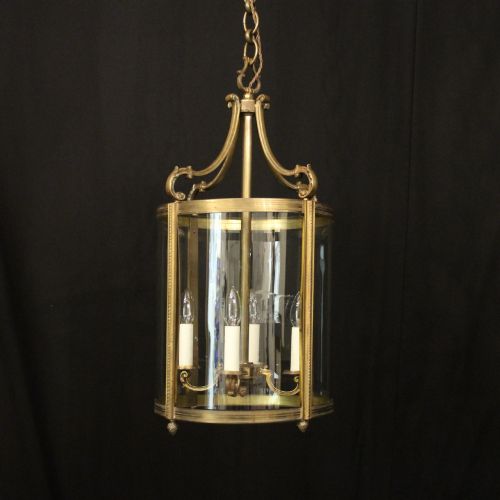
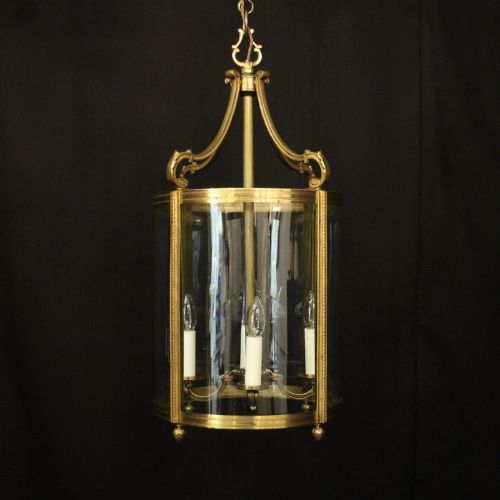


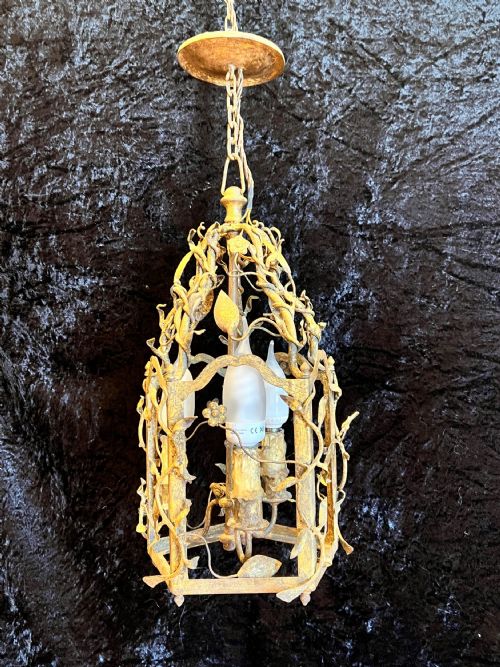

Gilded Metal Lantern Light
These gilded metal lantern light fixtures bring warmth and decorative presence to entrance halls and high-ceilinged rooms alike.
Gilded Metal Lantern Light
A gilded metal lantern light is typically encountered as a hall lantern, pendant light, or ceiling light designed to illuminate entrance spaces. The selection ranges widely from French Neoclassical and Louis XVI style fixtures to Victorian and Gothic Revival pieces.
Most examples originate from French workshops, with distinct groups spanning the nineteenth and early twentieth centuries, including Edwardian variations. Buyers will frequently find four-light configurations, convex glass designs, and hexagonal shapes modelled after palace lanterns.
While many pieces employ gilt or gilded bronze, variations extend to silvered bronze, toleware, and wrought iron frameworks. Each form serves the practical function of hanging illumination while maintaining a strong decorative character rooted in historical revival styles.
Materials and construction methods
The primary structural frameworks rely on cast or forged metals such as bronze, brass, and iron, finished with applied gilding or silvering. Artisans shaped these metals into complex geometric or organic frames, utilising traditional foundry techniques.
Glazing represents a crucial element, featuring bevelled glass, convex panes, or tinted elements like dimpled red glass held securely within the metal armature. These transparent or diffusing panels moderate the internal light source while protecting the bulbs or candles within.
Materials recorded across current listings include gilded bronze, gilt bronze, gilded brass, wrought iron, and silvered bronze.
Assessing quality in period lighting
The distinction between standard and superior pieces rests upon the crispness of the metal casting and the depth of the original gilding. Heavier gauge bronze frames and meticulously bevelled glass indicate a higher standard of manufacture.
Design complexity also separates pieces, with customized Ormolu mounts and detailed adherence to historical precedents, such as Versailles-inspired patterns, commanding greater attention. The integration of structural components demonstrates the maker's underlying skill.
The Gilded Metal Lantern Light Glossary
- Ormolu
- Gilded bronze applied to ornamental furniture and lighting fixtures. This technique involves an amalgam of mercury and gold applied to a bronze base.
- Convex glass
- Curved glass panes that project outward from the lantern frame. This shape disperses light more broadly across an entrance hall.
- Toleware
- Enamelled and painted sheet metal used in decorative objects and lighting. It offers a colourful alternative to traditional polished or gilt bronze.
- Bevelled glass
- Glass panes with edges cut and polished at an angle. This treatment creates prismatic light effects when illumination passes through.
- Hall lantern
- A ceiling-hung lighting fixture specifically scaled for corridors and entryways. These pieces provide downward and ambient illumination.
Gilded Metal Lantern Light: Frequently Asked Questions
Where should I hang a hall lantern?
These fixtures suit entrance halls, vestibules, and stairwells with sufficient vertical clearance. They provide a focal point while casting ambient light across transit spaces.
Ensure the drop of the chain matches your ceiling height so the base of the lantern sits safely above head height.
How do I date a gilded lantern?
Dating relies on stylistic markers, construction methods, and material patination across nineteenth and early twentieth-century examples. French Neoclassical and Gothic Revival pieces carry distinct decorative vocabularies tied to specific design eras.
Examining the casting quality and glass type helps narrow the period of manufacture.
Can these lights use modern bulbs?
Most antique lanterns accommodate modern electrical wiring and standard bulb fittings installed by a qualified electrician. Internal brass or bronze clusters are typically adapted safely during restoration.
Consider lower-output LED bulbs to replicate the soft warmth of historical illumination.
What maintenance do gilt surfaces need?
Gilded bronze and brass require gentle dusting with a soft, dry cloth to prevent dust accumulation. Avoid abrasive cleaners or chemical polishes that can strip the delicate gilt layer.
Glass panels can be cleaned with standard glass cleaner applied to a cloth rather than sprayed directly onto the metal.