


Traditional Entryway Lantern
These traditional entryway lantern fixtures cast a welcoming glow from ceilings and walls, shaped by centuries of craftsmanship in brass, bronze, copper and iron.
Traditional Entryway Lantern
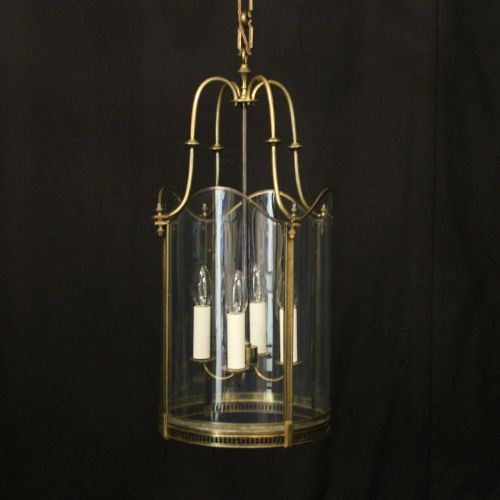
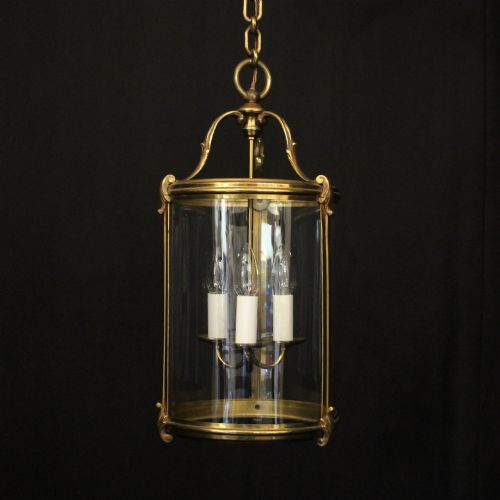
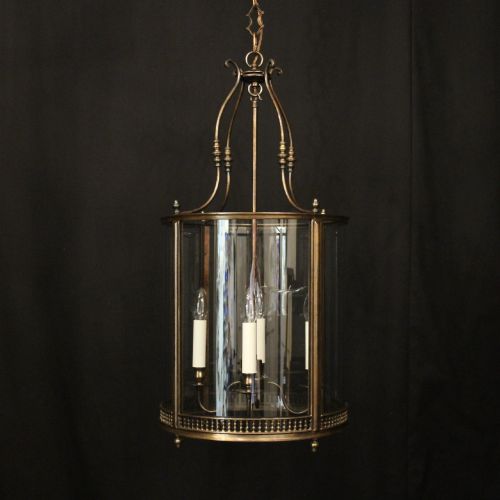
A traditional entryway lantern brings architectural presence to a hall, porch or vestibule, often taking the form of a ceiling-hung hall lantern or wall sconce. These pieces illuminate thresholds with enclosed glass panels held by metal frames.
The selections span the nineteenth century, the Edwardian era and the early decades of the twentieth century, with French and English examples appearing frequently. Convex glass forms and multi-light configurations shape the character of these hallway fixtures.
Makers drew upon diverse aesthetic traditions, ranging from French Louis XV and Neo-Classical idioms to English Regency and Arts and Crafts designs. Buyers encounter everything from restrained single-light brass lanterns to large gilded bronze and wrought iron creations.
Materials and construction methods
Workshops shaped these fixtures from cast and sheet metals, employing brass, copper, wrought iron and gilded bronze. Metal frames were soldered, riveted or joined to house panes of flat and convex glass securely.
Gilding and patination techniques finished the metallic surfaces, enhancing the visual weight of bronze, brass and iron. Skilled metalworkers formed intricate scrollwork and decorative mounts by hand, particularly on French chateau and Neoclassical models.
Materials represented across the inventory include brass, wrought iron, copper, gilt brass, gilded bronze and cut glass.
Distinctions in construction and material quality
Quality rests in the heaviness of the metal casting and the crispness of chased details on bronze and brass frames. Thicker gauge iron and substantial bronze mounts distinguish superior examples from simpler utilitarian pieces.
The treatment of the glass panels and the integrity of the original surface finishes separate standard production from exceptional craftsmanship. Hand-cut glass elements and intact gilding reflect greater workshop investment during the period.
The Traditional Entryway Lantern Glossary
- Hall lantern
- A ceiling-hung light fixture designed specifically for corridors, vestibules and entrance halls. These fixtures typically feature enclosed glass sides and a suspension chain or rod.
- Convex glass
- Curved glass panels that project outward, frequently seen on French hall lanterns of the early twentieth century. This shaping diffuses light outward across the entryway.
- Gilt bronze
- Bronze metal treated with a fine layer of gold leaf or mercury gilding, known in French asormolu. It provides a luminous, corrosion-resistant surface on high-status lighting.
- Wall sconce
- A light fixture affixed directly to a vertical wall surface rather than suspended from a ceiling. These provide directional illumination in narrow passages and entries.
Traditional Entryway Lantern: Frequently Asked Questions
Where should a hall lantern be hung?
These fixtures suit entryways, corridors and high-ceilinged porches where they serve as a primary focal point.
Ensure adequate clearance beneath the lowest point of the lantern for comfortable passage through the doorway or hall.
How do French and English lanterns differ?
French models frequently employ gilded bronze, brass and convex glass within decorative Louis XV or Neo-Classical frameworks.
English examples tend to favour structured brass, copper and iron designs drawing on Regency or Arts and Crafts traditions.
Are these lanterns wired for electricity?
Most antique lighting encountered today has been adapted for modern electrical supplies during its history.
Buyers should inspect the internal wiring setup and consult a qualified electrician to ensure compatibility with current domestic standards.
How do I date a brass lantern?
Dating relies on stylistic clues, manufacturing techniques and material composition associated with periods like the Edwardian era or the 1920s and 1930s.
Examine the assembly methods, screw types and framing details for consistency with known historical production eras.