




Gilded Mahogany Wall Mirror
A gilded mahogany wall mirror brings depth and warmth to a room through the contrast of dark timber and bright gold leaf.
Gilded Mahogany Wall Mirror
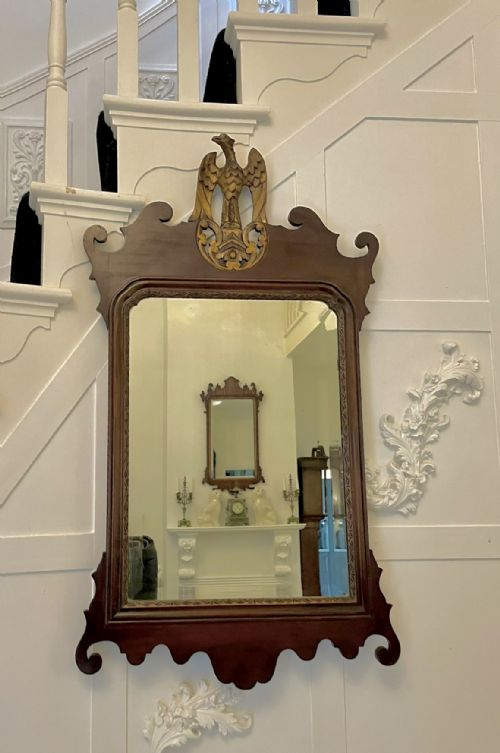
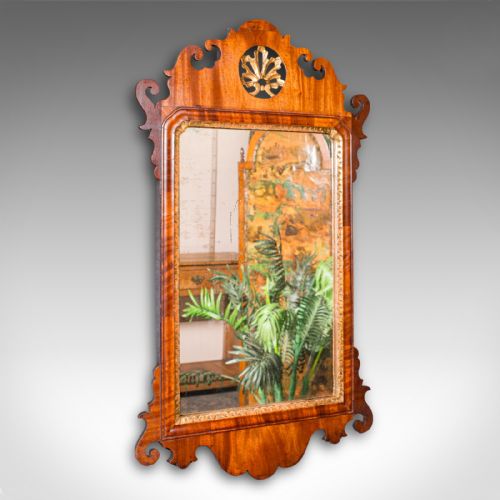
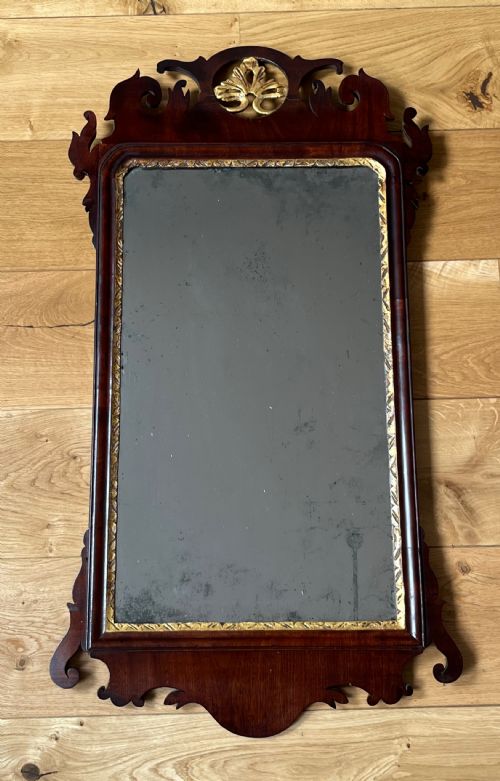
A gilded mahogany wall mirror is a timber-framed looking glass finished with applied gold leaf, gesso, or parcel-gilding accents. These pieces combine the rich, dense grain of mahogany with reflective surfaces designed to bounce light across an interior.
Buyers encounter examples spanning the eighteenth and nineteenth centuries, alongside later revivals from the Victorian and Edwardian eras. Common forms include fretwork frames, architectural pier mirrors, and swan neck pediment designs.
Originating largely from British workshops, though occasionally drawing on Swedish design, these mirrors served grand reception halls, morning rooms, and domestic bedrooms. The tradition extends from authentic Georgian pieces through to later revival interpretations.
How they were made
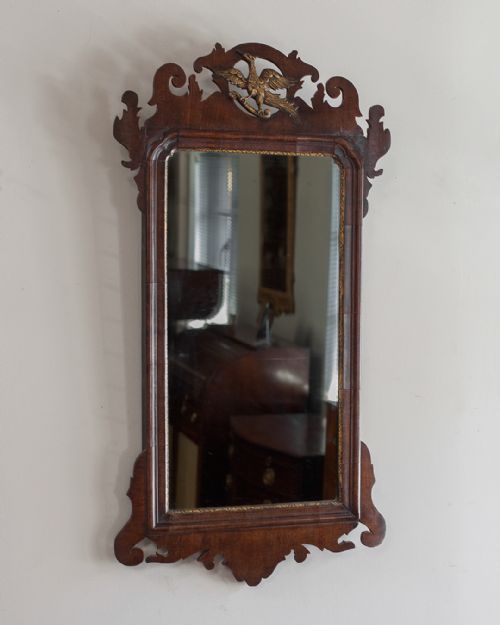
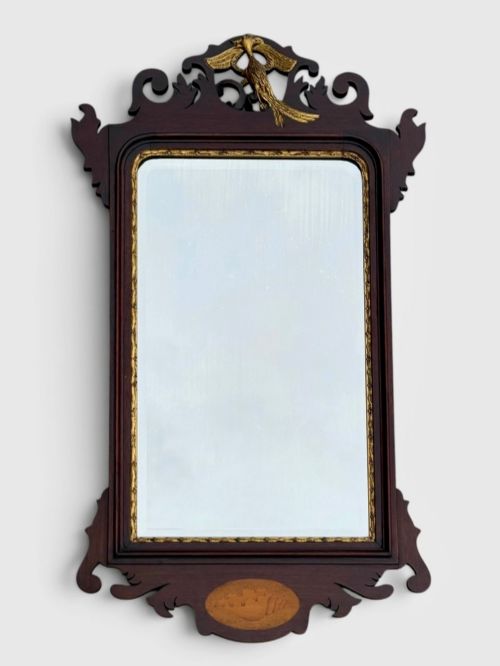
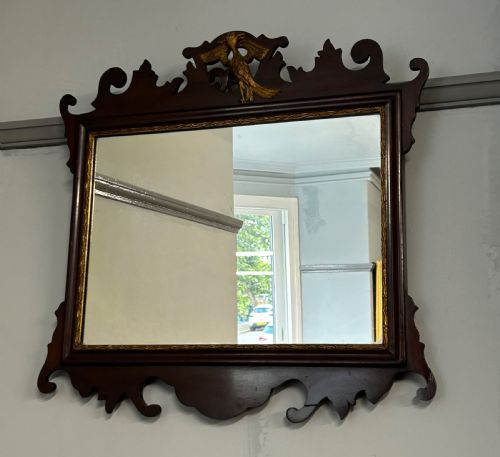
Craftsmen built the structural frames from solid mahogany or walnut, frequently employing fret-cut techniques to shape intricate outlines like scrolls and birds. Timber preparation relied on traditional joinery methods suited to supporting heavy glass plates.
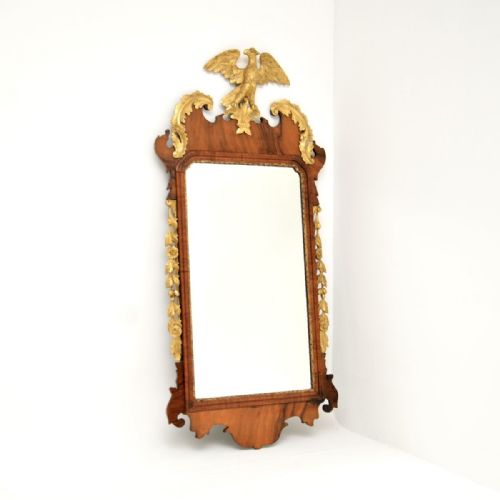
Giltwood and parcel-gilt details were achieved by applying fine gold leaf over a prepared layer of gesso upon carved wooden elements. This combination created the characteristic interplay between polished dark wood and shimmering metallic highlights.
Some fretwork frames conceal minor asymmetry in the carving, reminding you that human hands shaped the timber long before power tools existed.
What varies in quality
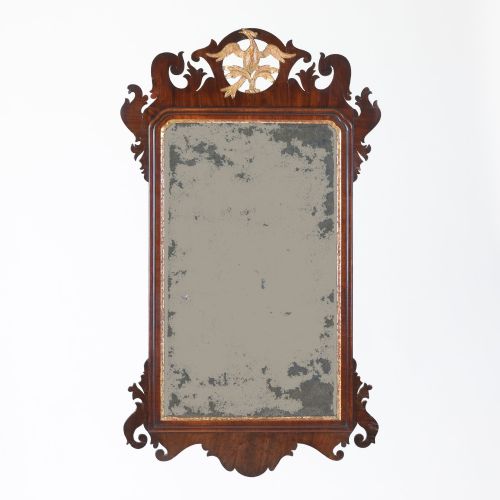
The sophistication of the carved detailing dictates much of the distinction between standard items and exceptional works. Pierced fretwork frames with crisp edges and carefully rendered motifs display superior hand-carving skill.
The integrity of the gilding and the preservation of the original mirror glass significantly influence the character of the piece. Surfaces that retain their early gold leaf without excessive modern intervention command greater appreciation.
The Gilded Mahogany Wall Mirror Glossary
- Parcel-gilt
- Partially gilded, where gold leaf is applied only to specific carved details rather than the entire frame. This technique highlights particular decorative motifs against the dark mahogany background.
- Gesso
- A plaster-like mixture applied to wood surfaces as a smooth base for holding gold leaf. It allows carvers to achieve sharp, intricate relief work before gilding.
- Fretwork
- Openwork ornamentation cut from thin boards using a fine saw. It defines the scrolling outlines typical of many eighteenth-century frames.
- Pier mirror
- A large looking glass designed to hang on the wall space between windows. These tall pieces were often paired with console tables below.
- Swan neck pediment
- A broken scroll top ending in inward-curving volutes, frequently centred with a carved finial or ornament. It appears on architectural wall mirrors from the Georgian period.
Gilded Mahogany Wall Mirror: Frequently Asked Questions
Where should I hang a gilded mahogany wall mirror?
These mirrors suit principal reception rooms, hallways, and above mantelpieces where they can capture and reflect natural light. Their warm timber tones pair effectively with period and traditional interior schemes.
Ensure the wall construction safely supports the weight of the timber and glass frame, particularly for larger monumental or pier formats.
How do I distinguish an eighteenth-century mirror from a later revival?
Look closely at the construction techniques, timber patination, and the characteristics of the mirror plate itself. Eighteenth-century pieces often show hand-cut joinery and subtle signs of age in the wood grain.
Revival pieces from the Victorian or Edwardian eras generally exhibit machine precision or different secondary woods beneath the mahogany veneer.
What is a Ho-Ho bird on these mirrors?
The Ho-Ho bird is a stylized phoenix motif frequently carved into the crests of fretwork frames during the Georgian period. It adds an exotic flourish inspired by contemporary tastes in ornamentation.
This carved element serves as a key stylistic indicator for Chippendale and mid-eighteenth-century design influences.
How do I clean and care for the gilt surface?
Dust the carved frame gently with a soft, dry brush to prevent accumulation without disturbing the delicate gold leaf. Avoid liquid cleaners or chemical polishes on the gilded areas.
Clean the mirror glass using a minimal amount of glass cleaner applied to a cloth rather than sprayed directly, protecting the surrounding timber and gesso.