


Gilded Lacquer Wall Mirror
A gilded lacquer wall mirror brings rich texture and intricate orientalist detail to a room, offering deep colour and reflective light.
Gilded Lacquer Wall Mirror
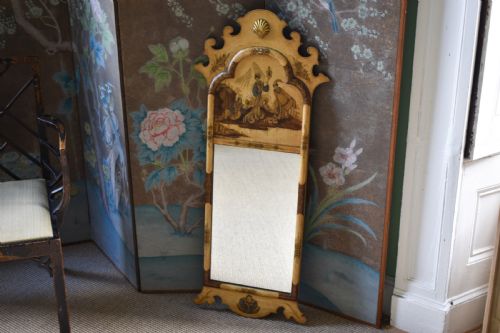
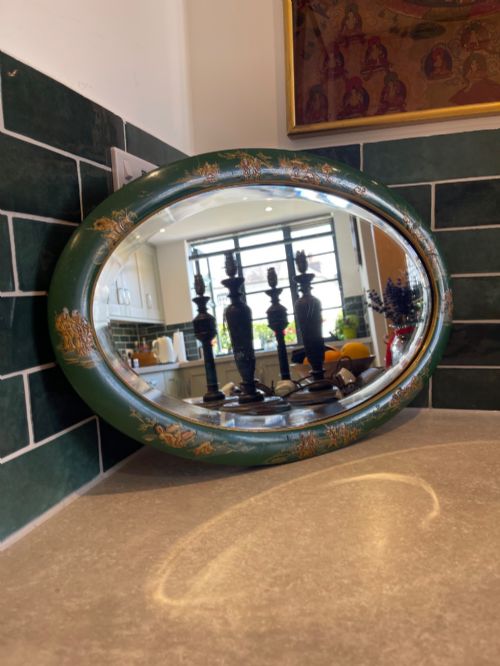
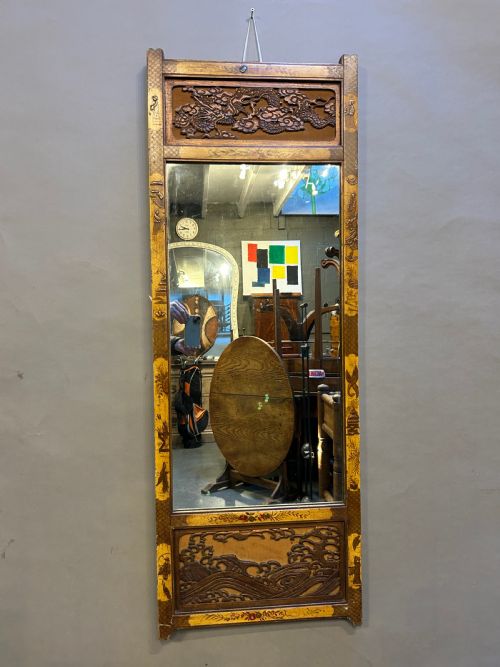
When you search for a gilded lacquer wall mirror, you are looking at decorative wall hanging pieces that combine dark lacquered surfaces with gilded highlights. These items appear in various forms including oval wall mirrors, pier wall mirrors, and small framed hanging glasses.
The pieces on this page span several distinct periods and revivals, stretching from the late nineteenth century through the Edwardian era into the nineteen-twenties and thirties. Many adopt earlier aesthetics, drawing heavily on Queen Anne, George I, and George II revival styles to create classic decorative focal points.
You will most commonly encounter chinoiserie and japanned decoration on these items, usually rendered in black or scarlet lacquer enriched with gold leaf. Their origins encompass nineteenth-century craftsmanship alongside Edwardian interpretations, providing robust stylistic variety for domestic interiors.
How they were made
The construction of these pieces relies on wood carcasses built to support heavy mirror glass and layered lacquer finishes. Artisans applied successive coats of lacquer to the wooden frames before adding intricate decorative motifs.
Gilding and gold leaf feature prominently across the mouldings and raised pictorial elements, catching the light against dark or red backgrounds. Carved details in the wood work alongside painted japanned scenes to create depth and textural contrast.
Every gilded lacquer wall mirror carries a tiny painted pagoda designed to give your hallway an unexpected glimpse of distant mountains.
What varies in quality
Quality rests primarily in the finesse of the lacquer work and the crispness of the carved or moulded wooden details. Finer examples display meticulous execution in their japanned scenes, whereas simpler pieces show more generalized decoration.
The integration of the gilt elements relative to the dark lacquer ground also distinguishes the better items from standard production. The depth of the colour, whether scarlet or black, contributes significantly to the visual presence of the frame.
The Gilded Lacquer Wall Mirror Glossary
- Japanned
- European imitation of East Asian lacquerwork using specialised varnishes and metallic powders. This technique produces a hard, glossy finish suited to decorative furniture and frames.
- Pier mirror
- A tall mirror designed specifically to hang on the wall between two windows. These pieces often anchor the decorative scheme of a formal reception room.
- Gilt wood
- Timber frames treated with a thin layer of gold leaf or metallic powder. This method brightens the architectural profile of the mirror.
Gilded Lacquer Wall Mirror: Frequently Asked Questions
Where should I hang a gilded lacquer wall mirror?
These mirrors suit spaces where reflected light can illuminate their dark lacquered surfaces and gold details. Placing one above a mantelpiece or in an entrance hall allows the intricate chinoiserie decoration to stand out.
Because many examples utilise striking black or scarlet grounds, they work well against neutral or softly coloured walls. Ensure the hanging height places the glass at a comfortable level for daily use.
How do I care for lacquer and gilt frames?
Dust the frame gently with a dry, soft cloth to prevent the accumulation of particles on the delicate lacquer surface. Avoid using liquid cleaners, chemical polishes, or abrasive materials that might damage the gold leaf.
Keep the mirror away from direct sunlight and fluctuating moisture levels to protect the wood and the integrity of the finish. Gentle handling preserves both the structure and the decorative painted scenes.
What is the difference between black and scarlet japanning?
Black japanning provides a dark, glossy background that makes gold leaf and painted chinoiserie details appear subdued yet intricate. It is a traditional choice found across numerous revival periods.
Scarlet japanning introduces a vibrant red ground that offers a much bolder visual statement within a room. Both finishes involve layered application techniques, but red versions tend to draw immediate focus.
How do I identify a revival style piece?
Revival pieces draw upon the distinct design vocabulary of earlier eras such as the Queen Anne or George II periods. They combine eighteenth-century architectural silhouettes with later nineteenth or twentieth-century manufacturing methods.
Examining the construction of the wooden frame and the condition of the mirror glass helps determine the likely period of manufacture. Stylistic cues like heavy scrolling and classical pediments often point directly to these historical revivals.