






Gilded Glass Vitrine
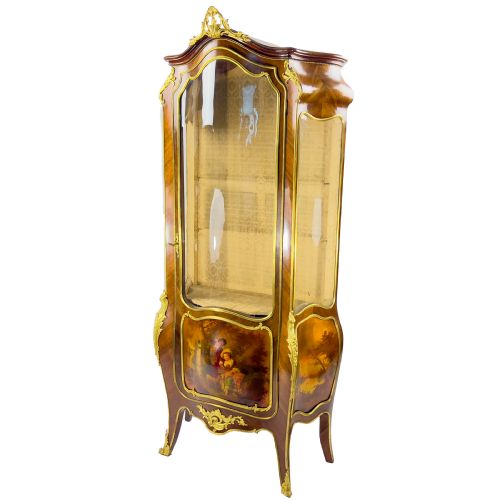
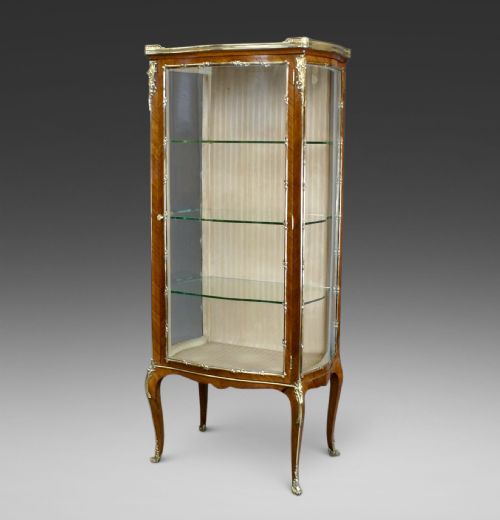
These gilded glass vitrine pieces are decorative display cabinets designed to showcase fine objects, bringing French style into a room.
Gilded Glass Vitrine
When you search for a gilded glass vitrine, you encounter French and Continental display cabinets largely originating from the nineteenth century. These pieces combine glazed sides with gilded bronze or giltwood mounts to present porcelain, silver, and curiosities.
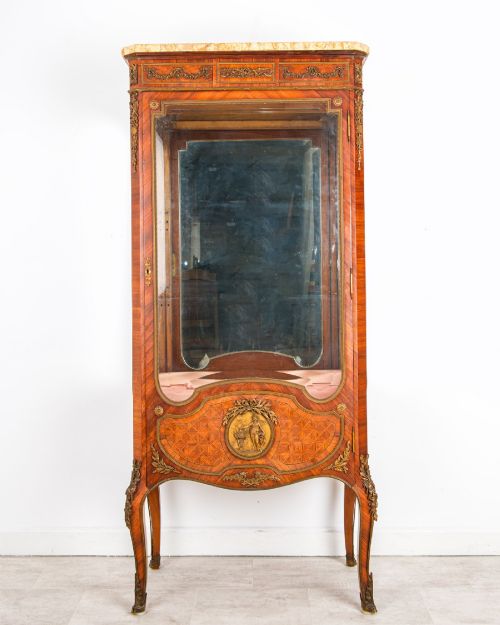
The versions most common on this page adopt Louis XV and Rococo revival styles alongside Edwardian interpretations. Cabinets range from bow-ended shop display counters and cylindrical pedestals to large kingwood and mahogany cabinets fitted with marble tops.
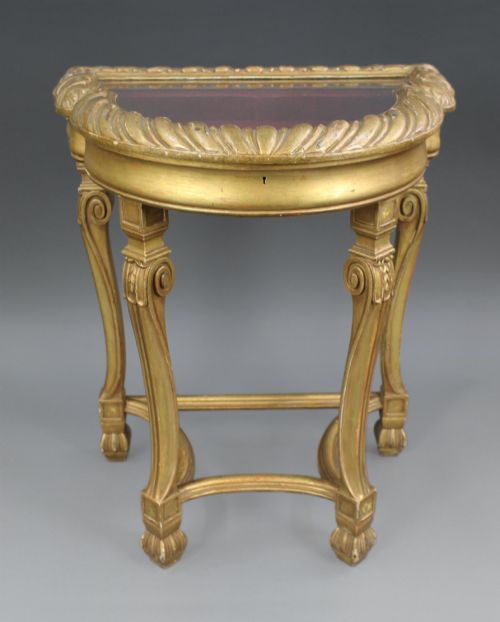
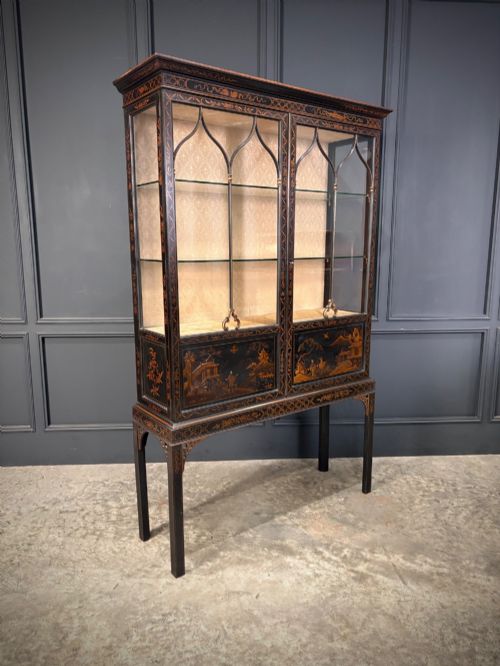
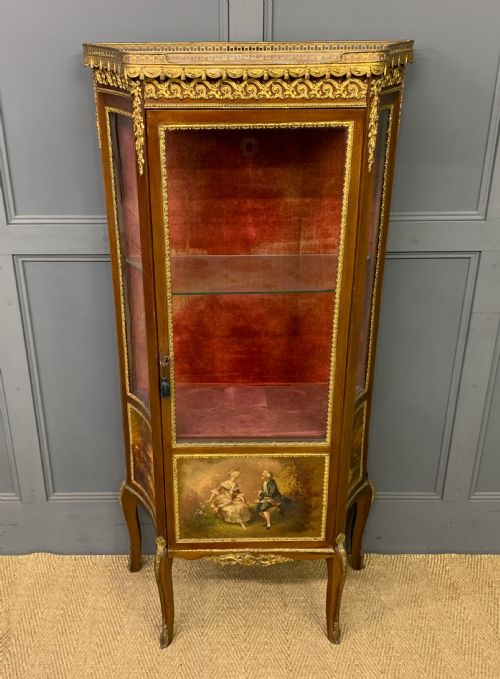
Makers and workshops of the period utilised decorative techniques such as Vernis Martin painted panels and Chinoiserie lacquer work. The selection spans freestanding cabinets, bijouterie tables, and specialised display furniture designed for prominent interior placement.
How they were made
Cabinet makers built these structures using dense timbers including mahogany, kingwood, walnut, and rosewood as a foundation. Fine veneers were applied to curved and serpentine carcases, often accompanied by solid giltwood framing.
Mounts of ormolu and gilt bronze were cast and chased to embellish corners, feet, and cornices. Glass panes were fitted into doors and sides, while interiors were frequently lined with velvet or fabric to protect displayed items.
Painted panels executed in the Vernis Martin technique or Chinoiserie lacquer added narrative scenes to the lower sections. Marble tops completed the uppermost surface on many nineteenth century examples.
Gilded Glass Vitrine Retail Price Guide 2026
Typical asking prices for gilded glass vitrine among the pieces listed under this phrase on Sellingantiques today, from the lower quarter to the upper quarter. They describe what is for sale here now, not the wider market.
Current listings feature nineteenth century French and Edwardian pieces, utilising glass, ormolu, kingwood, marble, and gilt bronze.
What varies in quality
The refinement of the cast ormolu mounts dictates much of the visual standard, separating sharp, hand-chased bronze work from softer castings. Heavier use of solid giltwood and select kingwood veneers elevates the standing of an individual piece.
The integration of hand-painted Vernis Martin panels requires notable artistic competency, where detailed figural scenes distinguish superior examples from simpler decorative surfaces. Structural joinery suited to complex serpentine shapes and bowed glass panels further determines the calibre of the cabinet.
Maison Krieger·François Linke·Angela Kaufman
The Gilded Glass Vitrine Glossary
- Vitrine
- A glass-fronted display cabinet intended for the exhibition of small valuable objects or porcelain. These enclosures became popular in nineteenth century salons and drawing rooms.
- Ormolu
- Gilded bronze applied as decorative mounts to furniture. The technique involves coating metal with a gold amalgam and heating it.
- Vernis Martin
- A simulated Japanese lacquer developed by the Martin brothers in eighteenth century France. The technique was later revived on nineteenth century display cabinets.
- Kingwood
- A dense, richly figured Brazilian wood utilised as a veneer in fine cabinet making. It displays dark violet-brown tones with lighter golden stripes.
- Bijouterie table
- A glass-topped display table designed for holding jewellery and small ornaments. These pieces often feature hinged lids and velvet-lined interiors.
- Chinoiserie
- European artistic style reflecting Chinese motifs and decorative patterns. This aesthetic appears on lacquered panels within Edwardian and nineteenth century furniture.
Gilded Glass Vitrine: Frequently Asked Questions
What were gilded glass vitrines used for?
These cabinets served to display porcelain, silver, miniatures, and precious curiosities collected by prosperous households. The glazed panels and internal shelving allowed owners to exhibit valuable possessions while protecting them from dust.
In domestic interiors, they occupied prominent positions in drawing rooms and salons to demonstrate taste and social standing. Some variations functioned as commercial shop counters or specialised bijouterie tables for closer inspection of smaller items.
How do I style a vitrine in a modern room?
A vitrine brings warmth and texture to a room through its combination of polished timber, glass, and gilded mounts. Placing objects of varying height and material on the shelves prevents the interior from appearing cluttered.
Lighting within the room interacts with the glazed sides and mirrored or fabric-backed interiors to create depth. Keeping the displayed collection curated allows the cabinet itself to remain the primary decorative focus.
How can I tell Louis XV style from Edwardian pieces?
Louis XV and Rococo revival pieces from the nineteenth century feature exuberant serpentine curves, asymmetrical ormolu mounts, and elaborate Vernis Martin painted panels. The timber selection often emphasises rich kingwood or heavily carved giltwood.
Edwardian interpretations tend toward lighter structures, sometimes incorporating Chinoiserie lacquer or more restrained decorative application. Construction details and timber preparation help distinguish nineteenth century continental workmanship from later British adaptations.
What is the difference between a vitrine and a bookcase?
A vitrine prioritises display through glazed sides and doors that permit light to enter from multiple angles. The interior is structured specifically for decorative objects, porcelain, and small artefacts rather than large volumes.
Bookcases generally feature wooden sides and heavier shelving designed to bear the weight of rows of books. While some crossover exists in transitional hybrid furniture, display cabinets emphasise transparency and ornamental framing.