


Gilded Glass Top Table
These gilded glass top table pieces combine reflective surfaces and gold-finished frames, offering a striking centrepiece for formal rooms.
Gilded Glass Top Table
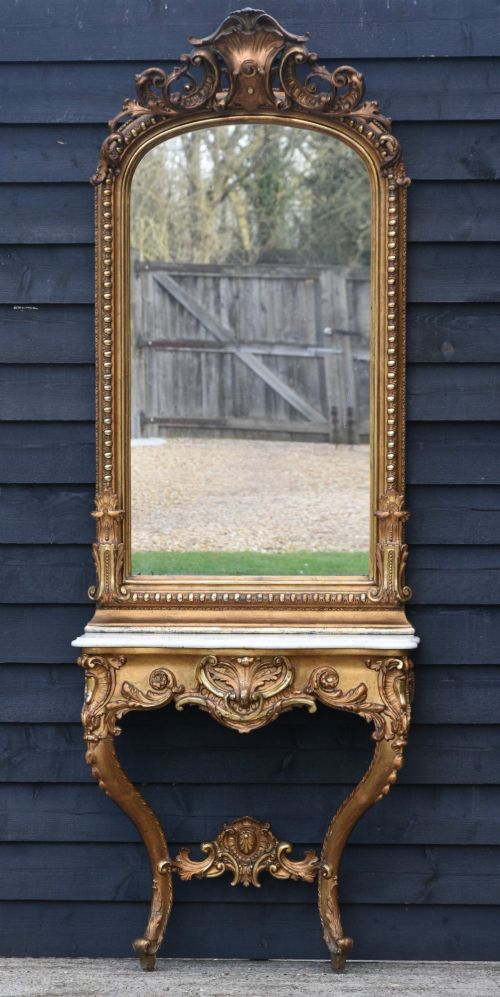
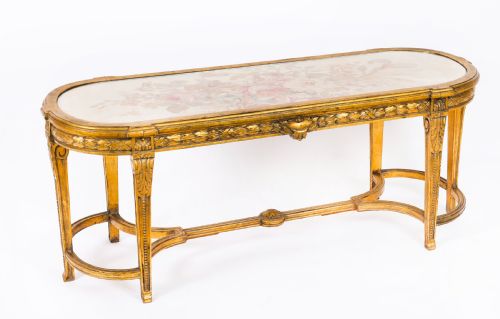
Console tables paired with mirrors dominate the older nineteenth-century examples, whilst smaller occasional and coffee tables emerge from the twentieth-century periods. These items incorporate materials such as marble, wood, and tapestry textile alongside the defining glass tops and gilded frames.
Originating predominantly from French and Italian workshops, these pieces serve functional and decorative purposes within interiors. Buyers encounter substantial console tables with marble surfaces as well as compact nests of tables and brass or ormolu-mounted occasional pieces.
How they were made
Construction relies upon wood, brass, and giltwood frameworks that support glass, marble, or mirrored surfaces. Artisans applied gold and silver leaf or gilt to carved wooden frames, often incorporating intricate Rococo or Neoclassical motifs.
Metalwork components utilise ormolu, gilded bronze, and brass to mount glass panels and reinforce wooden structures. The integration of inset marble tops and plate glass surfaces requires precise joinery and stone-cutting techniques visible in console and occasional tables.
Keep an eye out for whimsical wheatsheaf-based occasional tables that bring a touch of agricultural charm indoors.
What varies in quality
The refinement of the carved wooden or cast metal frames dictates the visual success of each piece. Crisp detailing in the giltwood ornamentation and balanced proportions in console and mirror sets elevate the work.
The choice of secondary materials, such as heavy inset marble slabs rather than lighter surfaces, marks the distinction between standard and superior pieces. Original plate glass tops and intact ormolu mounts further separate high-tier examples from later adaptations.
The Gilded Glass Top Table Glossary
- Giltwood
- Wood that has been coated with gold leaf or a gold-coloured finish. This material forms the decorative frames characteristic of many nineteenth-century console tables.
- Ormolu
- Gilded bronze used for decorative mounts and hardware. It appears frequently on nineteenth-century bijouterie and occasional tables.
- Console Table
- A table designed to be fixed against a wall, often supported by ornate brackets or legs. These frequently appear paired with matching pier mirrors.
- Trumeau
- A decorative wall mirror or panel placed above a mantelpiece or console table. Examples in this category often feature painted wood and matching console bases.
- Bijouterie Table
- A glazed display table designed for showcasing small valuable items and curiosities. Victorian versions commonly utilise rosewood and ormolu mounts.
Gilded Glass Top Table: Frequently Asked Questions
What is a console table and mirror set?
A console table and mirror set comprises a wall-fixed table paired with a matching vertical mirror, designed to sit together as a unified decorative scheme. These combinations date largely to the nineteenth century and typically feature elaborate carved and gilded frames.
Such sets were traditionally placed in reception rooms and hallways to reflect light and enhance the sense of space. The tables frequently incorporate marble tops or glass surfaces alongside gilded woodwork.
How do I distinguish Art Deco tables?
Art Deco tables from the twentieth century lean towards geometric forms and streamlined designs, contrasting with the ornate curves of earlier Rococo Revival pieces. They often utilise nests of tables or simpler occasional formats.
These later pieces discard heavy carving in favour of clean lines whilst maintaining functional surfaces. Materials from this period reflect modern manufacturing trends of the early twentieth century.
Where were these tables made?
The pieces originate primarily from French and Italian workshops, reflecting regional stylistic preferences such as French Rococo and Italian Neoclassical designs. Makers across these regions utilised local timbers, marble, and traditional gilding methods.
British and broader European influences also appear, particularly in Victorian and Edwardian occasional tables. The geographical origin often dictates the specific decorative vocabulary found on the frames.
How should I care for a gilded surface?
Gilded surfaces require gentle dusting with a soft, dry cloth to prevent abrasion of the delicate gold leaf layer. Moisture and harsh cleaning chemicals must be avoided entirely to preserve the finish.
Glass and marble tops can be cleaned with appropriate standard solutions while taking care not to let liquids seep onto the surrounding gilt wood or bronze mounts.