


Gilded Glass Bottle
A gilded glass bottle brings together bright metal leaf and coloured or clear vessels, offering a functional object with decorative presence.
Gilded Glass Bottle
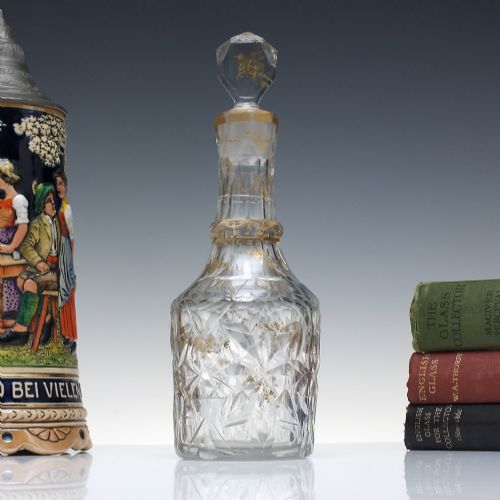
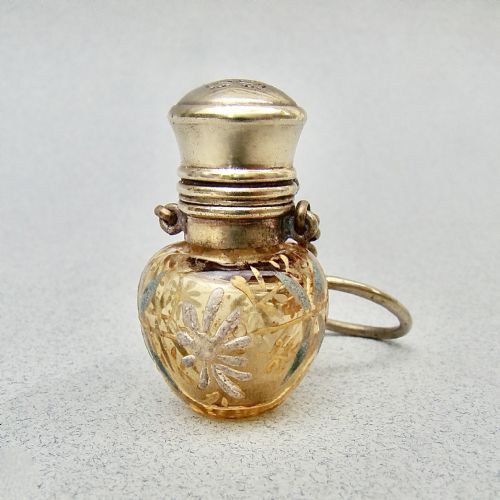
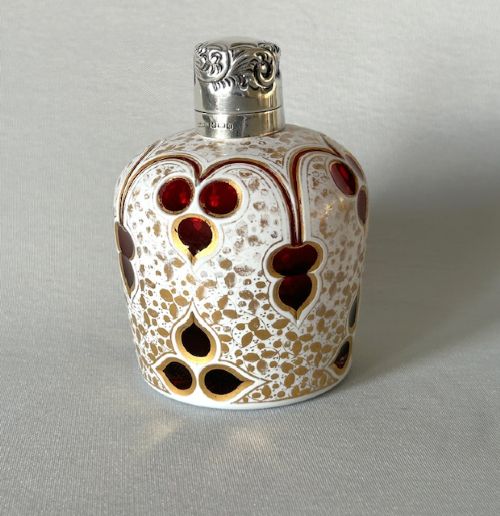
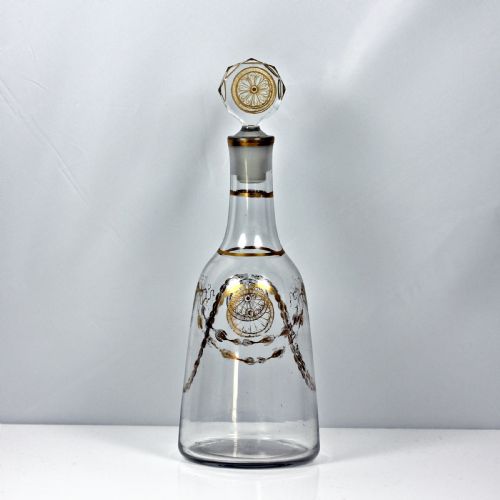
When you search for a gilded glass bottle, you encounter a range of forms spanning decanters, scent flasks and chemist jars. The pieces vary from small perfume bottles with metal mounts to large apothecary carboys and campaign decanters.
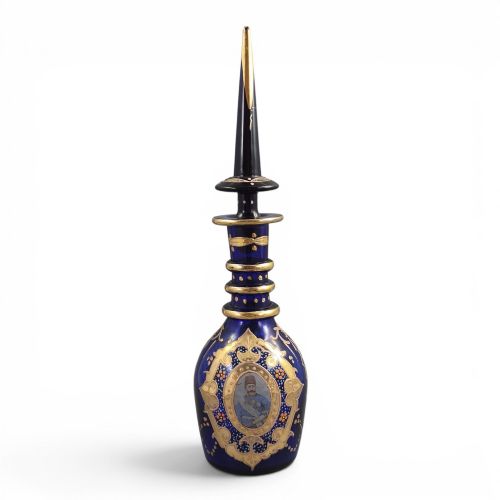
Most examples on this page date from the Georgian, Victorian and Edwardian periods, with notable French and Bohemian items among them. You find items produced for specific markets, including Persian export decanters and chatelaine scent flasks.
The selection includes matched pairs, individual scent containers, and larger storage jars designed for chemist shops or domestic cabinets. These items reflect both functional utility and decorative display across different centuries.
Hand application and material depth
The standard of a gilded glass bottle rests on the precision of the gilding and the clarity of the underlying glass. Finer pieces display crisp hand-applied gold leaf that follows the cut facets or painted enamel motifs without blurring.
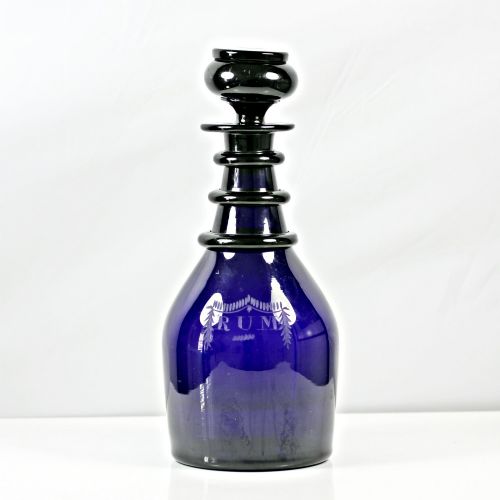
Weight, metal mount quality, and the preservation of the original gilding distinguish superior examples. Pieces with intact stoppers, clear coloured glass such as Bristol blue, and documented workshop origins hold greater integrity.
An 18th-century officer's campaign set tucked four decanters into a portable case, ensuring no gentleman faced the field without his port.
James Giles·Moser·René Lalique·Baccarat
The Gilded Glass Bottle Glossary
- Carboy
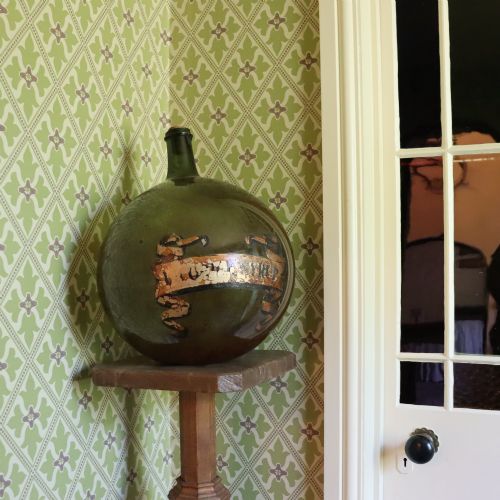
- A large glass vessel with a narrow neck, typically used in apothecary settings for holding liquids. These large jars often sat in windows or on dispensary counters.
- Chatelaine scent bottle
- A small perfume container attached to a belt hook by a short chain, worn by women in the Victorian era. They allowed the owner to carry scent easily during daily routines.
- Bristol blue
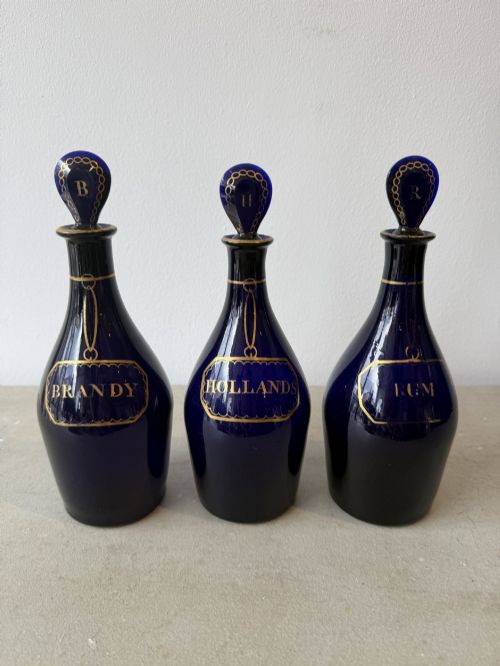
- A deep cobalt-coloured lead crystal glass produced in England during the late 18th and 19th centuries. This rich hue was frequently paired with gold leaf decoration on decanters and apothecary items.
- Peachblow glass
- A type of art glass known for its shaded pink and cream coloration, popular in the late 19th century. Items in this material often appear with delicate gilding.
- Mell decanter
- A specific Georgian decanter shape characterised by a tapering body and a wide base. These vessels were designed to remain stable on shipboard or dining tables.
Gilded Glass Bottle: Frequently Asked Questions
Are stoppers usually original to these bottles?
Many decanters and scent bottles retain their original hand-ground stoppers, which fit snugly into the specific neck.
Replacements do occur, so check whether the number of neck rings matches the stopper ground edge.
What is the difference between an apothecary jar and a scent bottle?
Apothecary jars are larger utility vessels made for storing chemical preparations, tinctures, or dry ingredients in a dispensary.
Scent bottles are personal pocket or dressing table containers designed to hold small quantities of perfume.
How can I tell a Georgian decanter from a Victorian one?
Georgian decanters often feature deep hand-cut flutes, three ring necks, and pontil marks on the raw base.
Victorian examples frequently introduce coloured glass varieties like cranberry or opaline alongside enamelled and gilded floral patterns.