
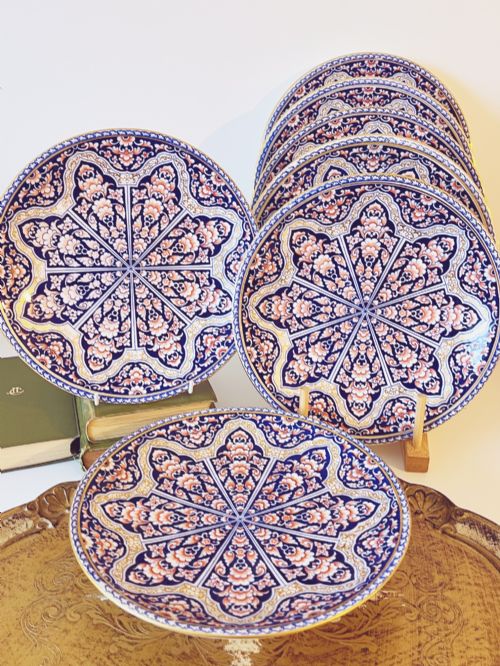
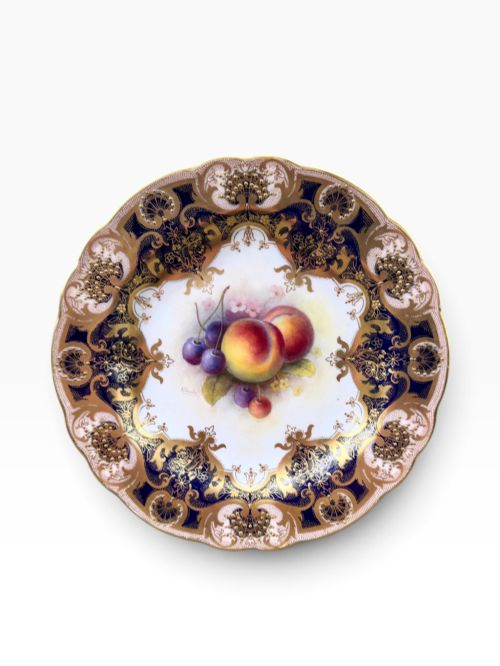
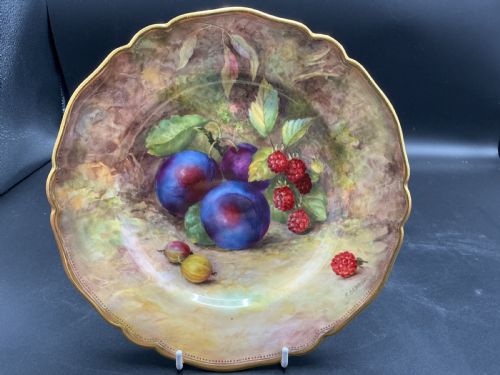
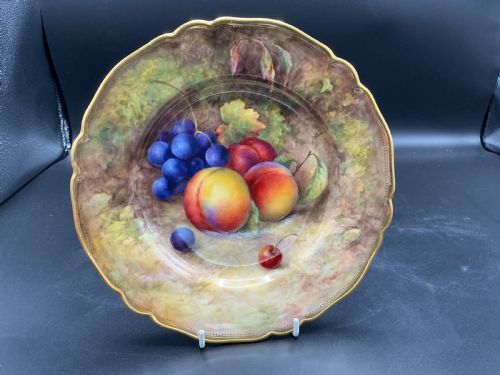
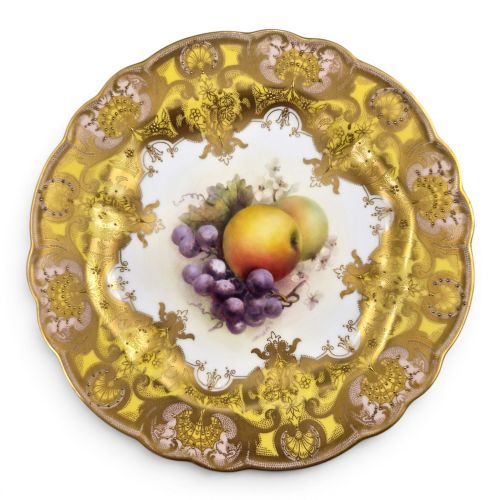
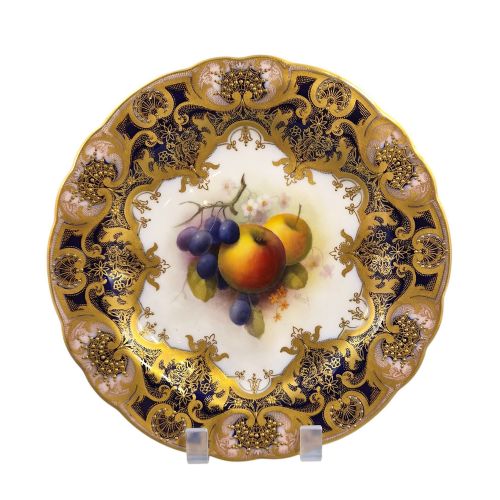
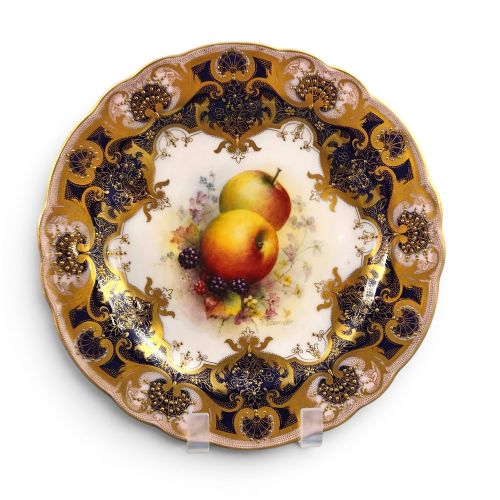
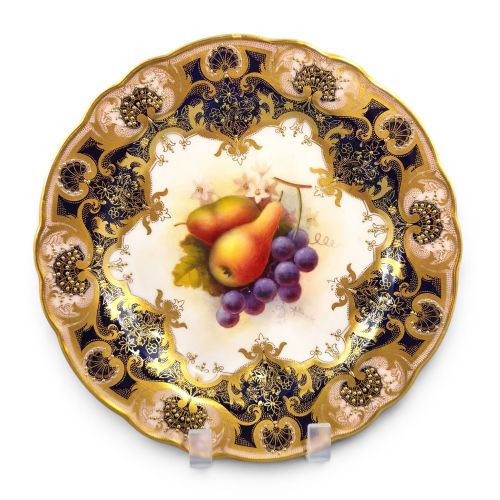
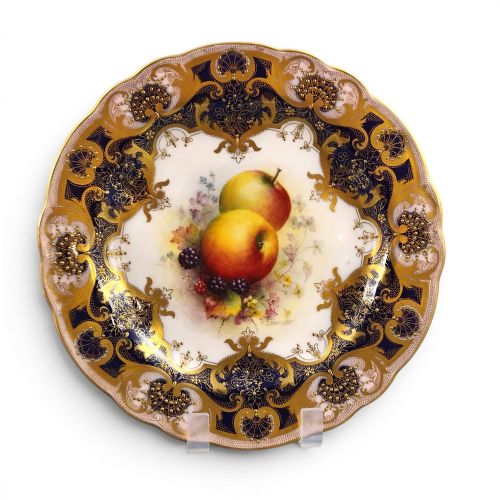
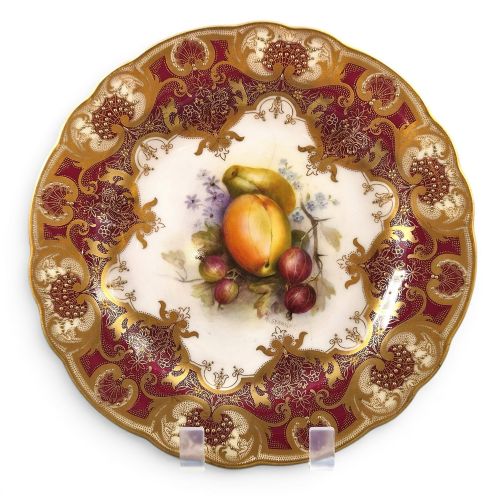
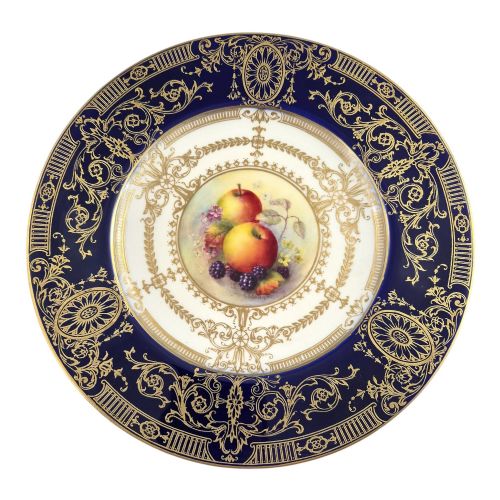
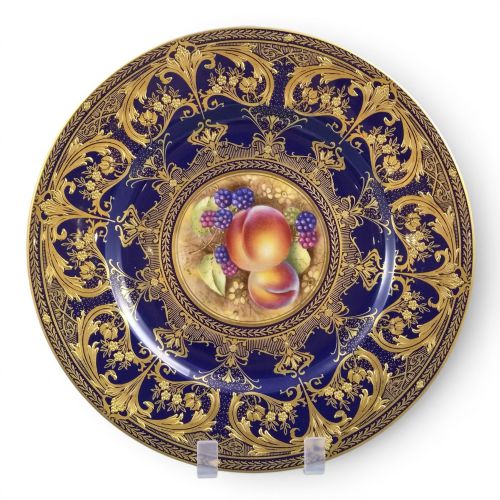
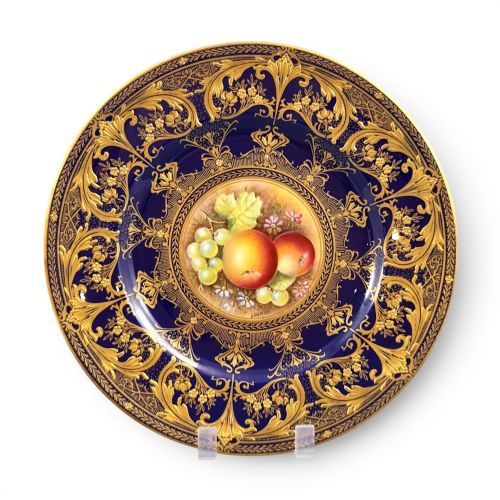


Gilded Fruit Display Plate
A gilded fruit display plate brings rich, hand-painted orchard scenes and gleaming borders straight to the table or cabinet.
Gilded Fruit Display Plate
A gilded fruit display plate serves as a decorative or service piece designed to showcase hand-painted botanical studies alongside metallic embellishment. When searching for a gilded fruit display plate, collectors frequently encounter English porcelain works spanning the Georgian era through the mid-twentieth century.
Pieces from this selection bridge formal dining traditions and fine art display. Makers utilised rich enamel colours and gold leaf to frame detailed studies of apples, peaches, and grapes.
How They Were Made
Craftsmen shaped fine bone china and porcelain before applying detailed hand-painted enamel illustrations of fruit. Artists signed many of these botanical studies directly onto the glazed ceramic surface.
Workers applied gold leaf and gilding by hand to the borders, rims, and rope edges of the plates. Firing processes fixed both the painted pigments and the metallic lustre firmly to the earthenware body.
What Varies in Quality
The distinction between standard service wares and top-tier pieces rests upon the renown of the artist who painted the fruit. Signed works by established porcelain painters command greater attention from collectors than unsigned factory productions.
The density and crispness of the hand-applied gilding alter the visual weight of each plate. Elaborate rope-edge moulding and heavily chased gold leaf elevate the piece from simple utility to high decorative art.
Royal Worcester·Derby Porcelain·Kornilov Brothers·Masons Ironstone·Royal Crown Derby
The Gilded Fruit Display Plate Glossary
- Cabinet plate
- A decorative ceramic dish intended for display in a cabinet rather than for serving food at the table. These items typically feature intricate hand-painted central motifs.
- Comport
- A raised dish or bowl used in a dessert service to hold fruit or sweetmeats above the level of the table. It stands upon a central foot or pedestal.
- Gilding
- The application of gold leaf or powdered gold to the surface of porcelain. This technique creates reflective metallic borders and accents.
- Bone china
- A type of soft-paste porcelain containing animal bone ash, which increases strength and translucency. British potteries utilised this body extensively for fine dessert services.
- Enamel
- Opaque vitreous glass fused to the ceramic surface during firing to create permanent coloured designs. Artists layered these pigments to render realistic fruit studies.
Gilded Fruit Display Plate: Frequently Asked Questions
What is a gilded fruit display plate?
A gilded fruit display plate is a decorated ceramic dish featuring hand-painted botanical art and metallic gold borders. These items range from single cabinet plates to comprehensive dessert services.
Craftsmen produced them primarily for visual display within dining rooms and drawing rooms. They celebrate traditional British porcelain artistry and natural history illustration.
How were these plates used historically?
Wealthy households utilised these pieces during the dessert course of formal dinners to serve fresh fruit and sweetmeats. Comports and matching plates presented the harvest in an elevated, artistic manner.
Over time, many fine service pieces transitioned from the dining table to glass-fronted display cabinets. Collectors preserved them strictly as decorative works of art rather than functional tableware.
How can I tell different periods apart?
Examine the back of the ceramic for factory backstamps, impressed date marks, and registration numbers. Georgian and Victorian pieces often display hand-written pattern numbers alongside painter marks.
Stylistic shifts also indicate the era of manufacture, moving from ornate nineteenth-century Neo-Rococo rope edges to clean mid-century forms. Signatures from recorded porcelain artists help narrow down production to specific decades.