
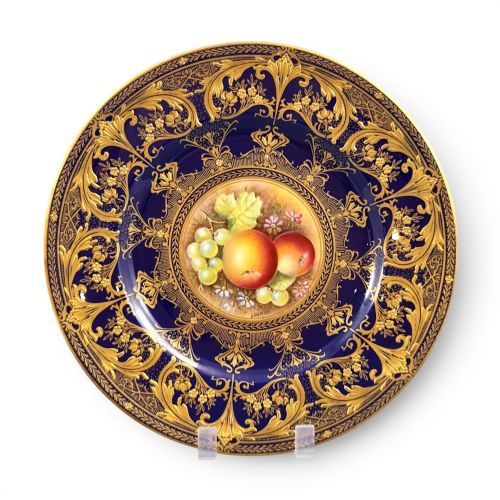


Gilded Fruit Cabinet Plate
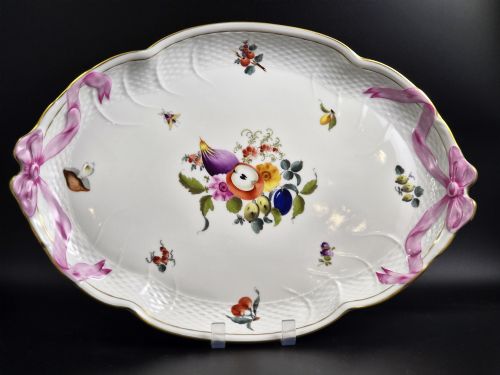
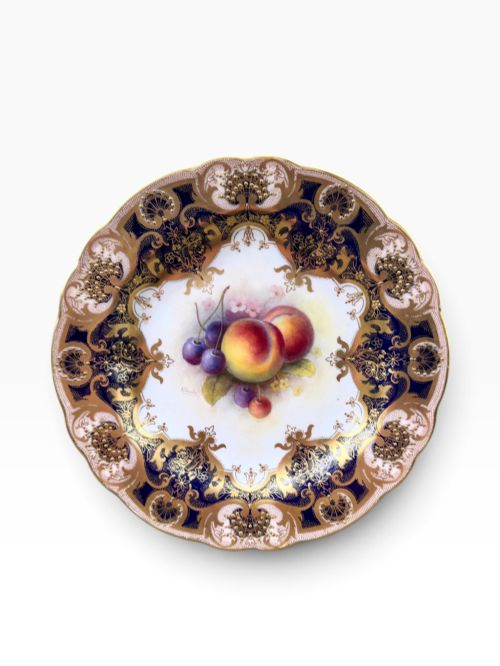
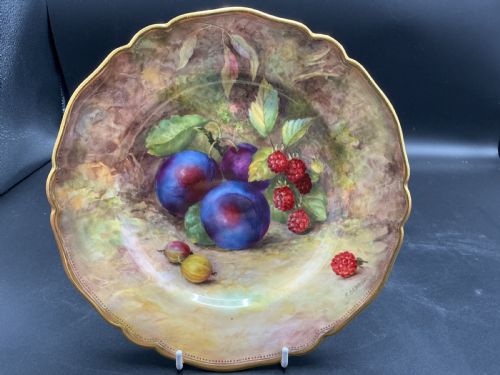
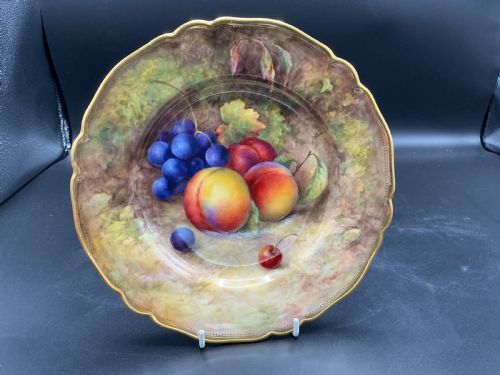
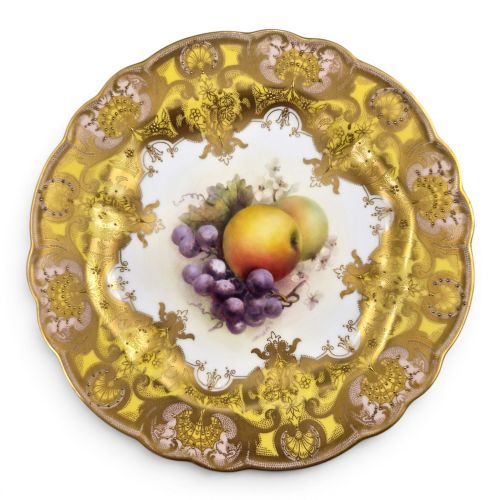
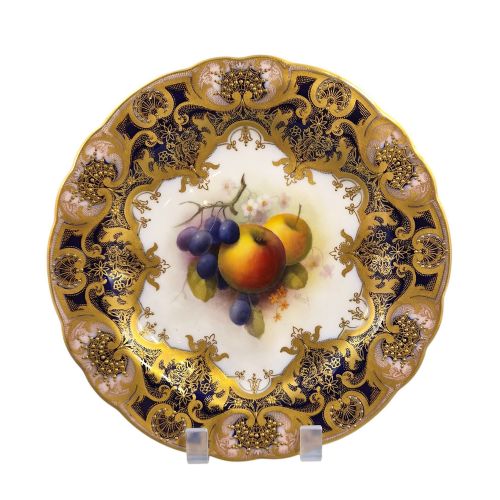
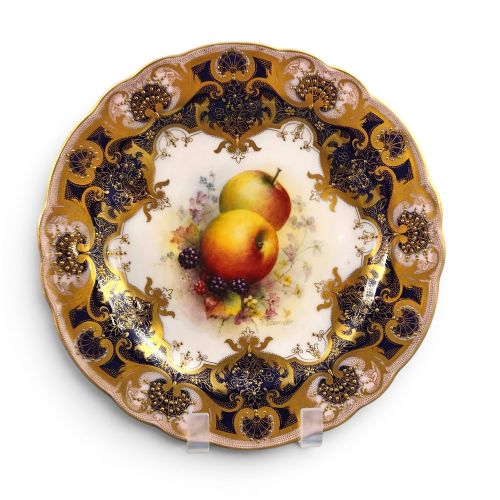
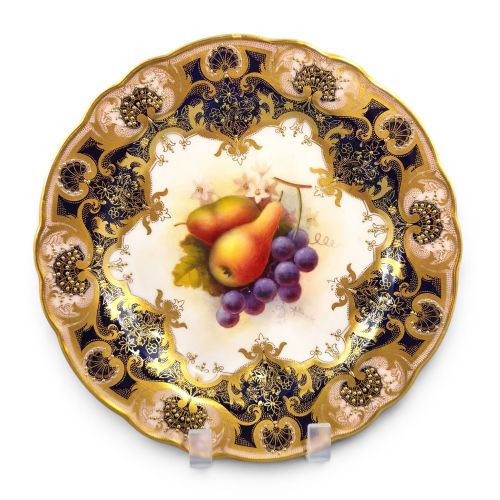
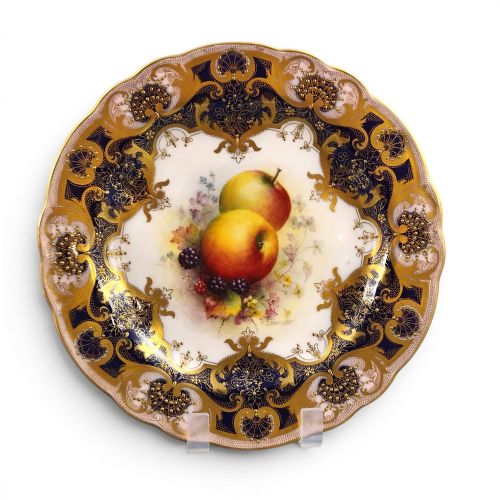
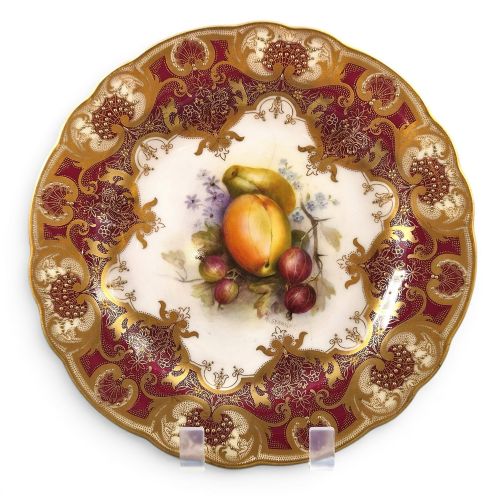
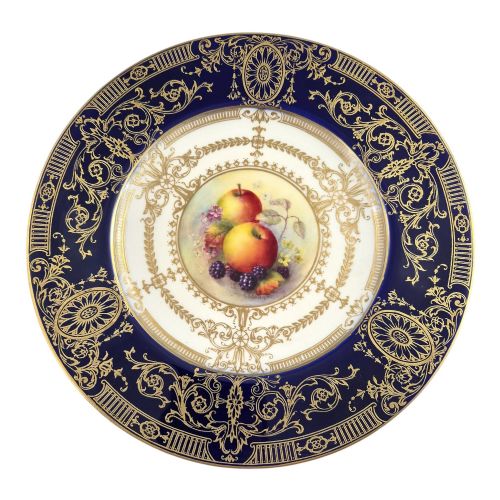
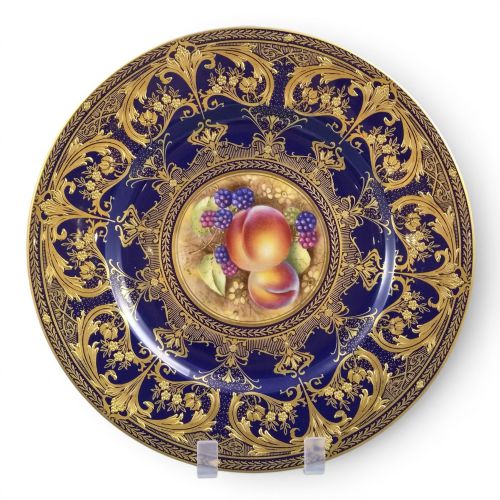
A gilded fruit cabinet plate brings hand-painted orchard studies and rich metallic border work together for display in the dining room.
Gilded Fruit Cabinet Plate
A gilded fruit cabinet plate is a decorative ceramic dish created primarily for display rather than everyday dining use. When you search for this phrase, you encounter pieces designed to showcase botanical studies of fruit framed by elaborate metallic borders.
The pieces on this page span several eras from the eighteenth century through the mid twentieth century. Most examples you meet here originate from the Royal Worcester factory, alongside works from Derby, Copeland, and Mason's Ironstone.
Forms include standard cabinet plates, large rope edge plates, and dessert plates. They range from early painted saucer dishes to mid twentieth century dinner plates bearing artist signatures.
How They Were Made
Potters shaped these objects using porcelain, bone china, and ironstone as a base body. Artisans then applied enamel paints by hand to create detailed studies of apples, pears, peaches, and berries.
Makers finished the rims and borders using gold leaf, gilding, and gilt enamel. This metalwork was fired onto the ceramic surface to frame the central fruit painting with reflective sheen.
Materials across the listings include porcelain, bone china, enamel, gold leaf, and ironstone.
What Varies in Quality
Quality rests upon the skill of the artist painting the fruit in the centre. Master painters working for major factories achieved a naturalistic depth that lesser decorators failed to reach.
The precision and weight of the gold leaf or gilding around the edge also dictate the grade of the piece. Crisp, hand-tooled metallic borders separate superior examples from standard production items.
Royal Worcester·Derby Porcelain·Copeland·Kornilov Brothers
The Gilded Fruit Cabinet Plate Glossary
- Cabinet plate
- A decorative ceramic dish intended for display in a cabinet or on a wall rather than for practical table use. These items usually feature intricate hand-painted central motifs.
- Bone china
- A type of soft-paste porcelain containing bone ash, which yields a strong, milky white body suitable for fine painting. It forms the foundation for many twentieth-century items.
- Gilding
- The application of gold leaf or gold dust to the surface of ceramics. On these plates, it defines the rim and accentuates the border design.
- Enamel
- A glass-like substance fused to the ceramic body through firing to provide permanent colour. Painters use enamel colours to render realistic fruit studies.
- Ironstone
- A heavy, durable type of earthenware patented in the nineteenth century. It offered a robust alternative to porcelain while accepting painted and gilded decoration.
Gilded Fruit Cabinet Plate: Frequently Asked Questions
Are these plates meant for eating from?
These pieces are designed as decorative cabinet items rather than practical tableware. The delicate painted fruit and gold borders are best preserved by keeping the plates on display.
Using them for dining risks scratching the soft enamel surfaces and wearing away the delicate metallic edge work over time.
How do I hang a cabinet plate safely?
Displaying plates on walls requires specialised brass or coated spring wire hangers that grip the rim securely without scratching the porcelain. Alternatively, dedicated plate stands allow safe placement on shelves and inside cabinets.
Ensure any wall mount is anchored firmly into solid plaster or a stud to support the weight of the ceramic.
Who painted these fruit designs?
Many fine pieces feature work by named artists employed by factories like Royal Worcester, such as Richard Sebright, Albert Shuck, and Brian Leaman. These painters specialised in botanical and fruit studies.
Their signatures often appear subtly on the front near the edge or are recorded on the reverse alongside factory marks.
How do I clean a gilded plate?
Dusting with a dry, soft microfiber cloth is usually sufficient to maintain the surface. Avoid harsh chemical cleaners, abrasives, or soaking in water, as these can damage the enamel and lift the gilding.
If washing is necessary, use lukewarm water with mild soap and dry immediately with a soft towel.
What does rope edge mean?
Rope edge refers to a moulded border pattern that mimics the twisted texture of a rope. This style gained popularity in mid twentieth-century production.
The sculptural rim provides a tactile contrast to the smooth, painted fruit scene in the centre of the plate.