
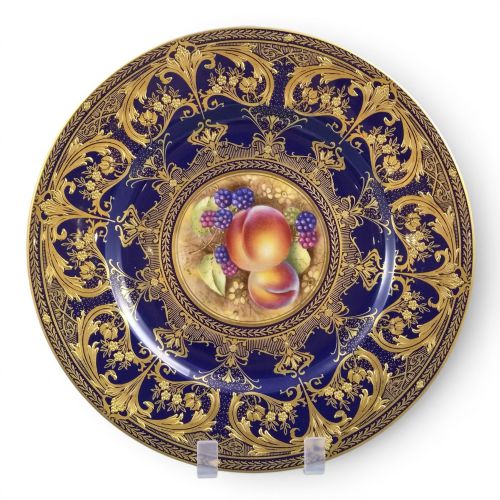
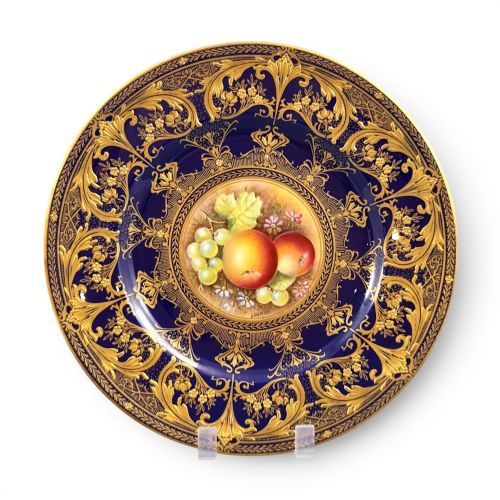


Gilded Fruit Cabinet Dish
These gilded fruit cabinet dish options are hand-painted porcelain pieces designed for display, bringing historic British and European artistry straight to your interior.
Gilded Fruit Cabinet Dish
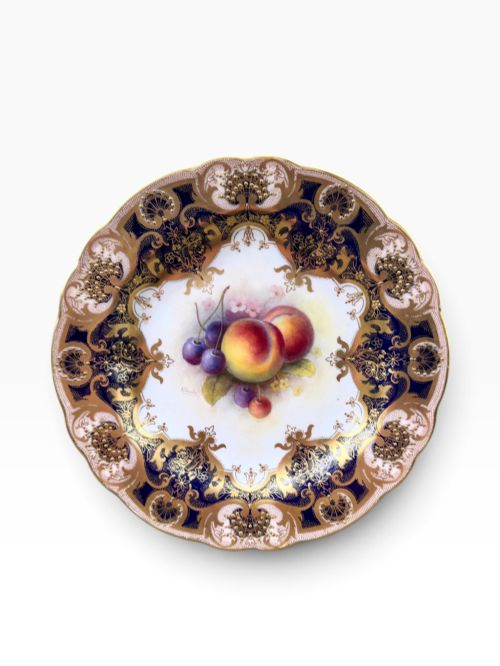
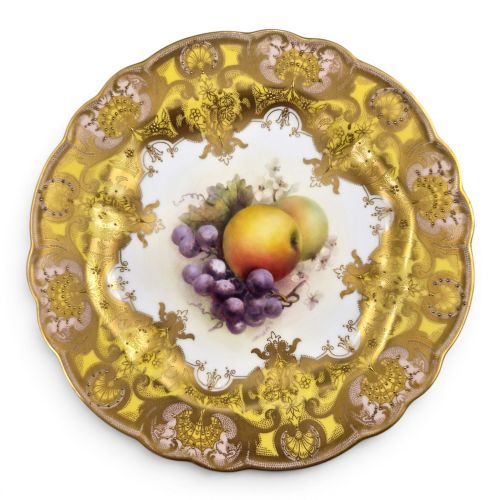
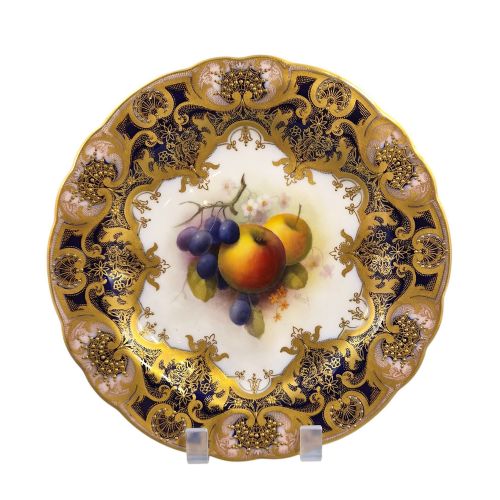
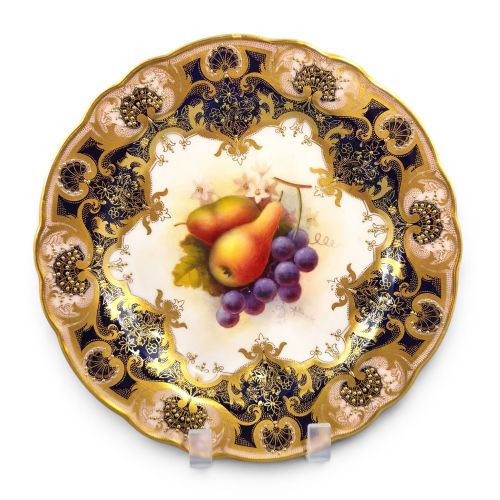
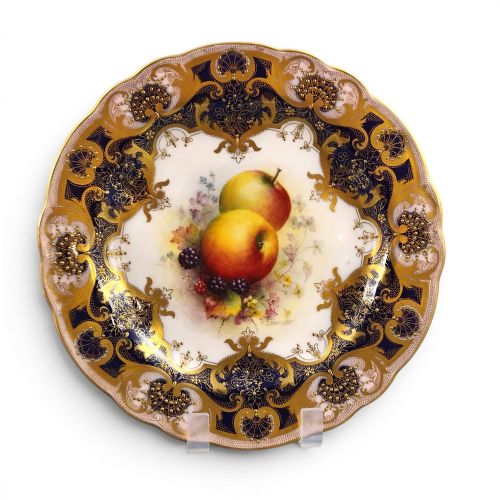
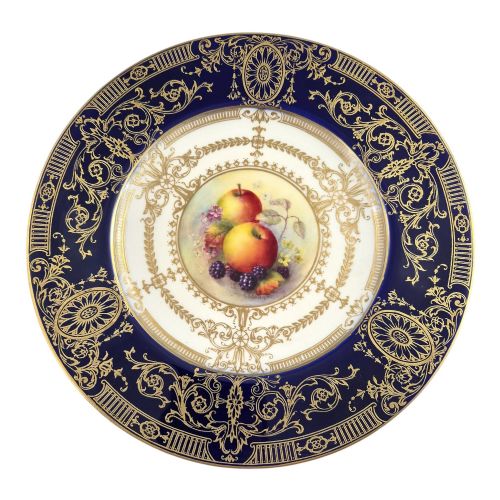
A gilded fruit cabinet dish is a decorative ceramic piece intended primarily for display rather than dining. The selection spans cabinet plates, decorative dishes, serving platters, and dessert plates from the eighteenth, nineteenth, and twentieth centuries. Georgian and Edwardian examples sit alongside pieces from the 1910s to the 1960s.
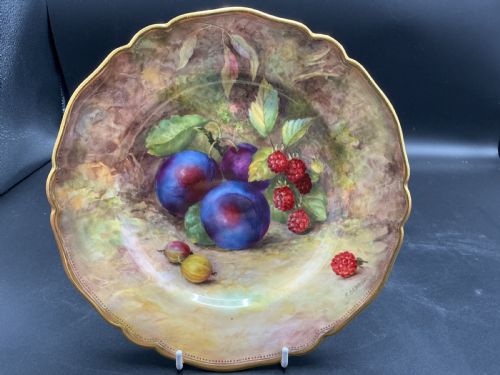
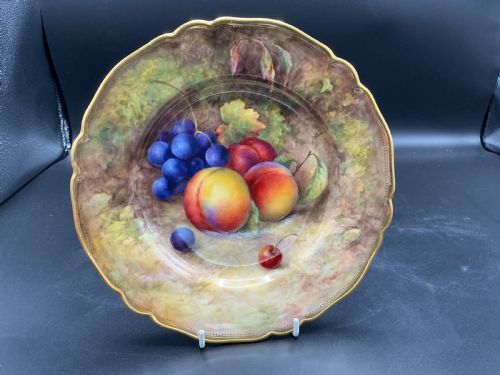
The version most commonly encountered on this page is the painted porcelain cabinet plate by Royal Worcester, often featuring hand-painted fruit motifs. These pieces frequently incorporate gilt enrichments, rope edges, and signatures from notable artists working across various decades.
Other notable forms include dessert plates, ribbon trays, and saucer dishes originating from factories such as Derby, Copeland, Chelsea-Derby, and Masons, as well as continental workshops like Herend and the Kornilov Brothers.
Materials and production methods
These items are constructed from porcelain, bone china, or ironstone, providing a sturdy white ceramic base for detailed decoration. Artisans applied hand-painted designs using enamel and standard paints to depict naturalistic fruit subjects.
Gilding, gold leaf, and gilt enamel were carefully applied to the rims and borders to frame the central painted artwork. Firing techniques fixed both the polychrome pigments and the metallic gold elements permanently to the glaze.
The listings span porcelain and bone china forms decorated with gold leaf, enamel, and hand-painted fruit motifs across multiple centuries.
Assessing quality and craftsmanship
Quality rests significantly on the skill of the artist, particularly where named painters executed the central fruit studies. Pieces bearing recognisable signatures display a higher level of fine detail and naturalistic depth in the foliage and fruit.
The crispness of the porcelain moulding, the weight of the gold leaf application, and the preservation of the painted surface distinguish finer cabinet pieces from standard utility wares.
Royal Worcester·Kornilov Brothers·Herend·Masons Ironstone
The Gilded Fruit Cabinet Dish Glossary
- Cabinet plate
- A decorative ceramic plate intended for display in a cabinet or on a wall rather than for practical dining use. These items usually feature elaborate painted scenes and gilt borders.
- Gilding
- The application of gold leaf or powdered gold to the surface of porcelain to create metallic highlights. It often defines the edges and rope borders of these dishes.
- Bone china
- A type of soft-paste porcelain containing animal bone ash, resulting in a strong, milky-white body. It forms the foundation for many twentieth-century cabinet pieces.
- Enamel
- A vitrified decorative coating fused to the porcelain body through kiln firing. It provides the vibrant, lasting colours seen in the fruit painting.
Gilded Fruit Cabinet Dish: Frequently Asked Questions
What is a gilded fruit cabinet dish used for?
These pieces were made for visual display in cabinets, on sideboards, or mounted on walls rather than for serving food.
Their ornate gold detailing and hand-painted fruit compositions meant they functioned primarily as status objects and decorative art in period homes.
How do I identify a Royal Worcester fruit plate?
Royal Worcester pieces typically feature central hand-painted studies of fruit surrounded by elaborate gilt work or rope-edge borders.
Many examples include artist signatures directly on the painted surface, such as the work of Albert Shuck, Richard Sebright, or Brian Leaman.
Are these dishes safe for food use?
Historic cabinet pieces are generally not recommended for modern dining or functional food service.
Age, delicate enamel pigments, and surface gilding mean they are best preserved as decorative items.
How do I care for antique porcelain?
Display these items away from direct sunlight to prevent any fading of the hand-painted enamel colours and gilt surfaces.
Dust them gently with a dry, soft cloth and avoid submerging older pieces in water.