



Gilded French Vitrine
A gilded french vitrine brings eighteenth-century display craft into your room, catching the light across carved wood and glazed panels.
Gilded French Vitrine
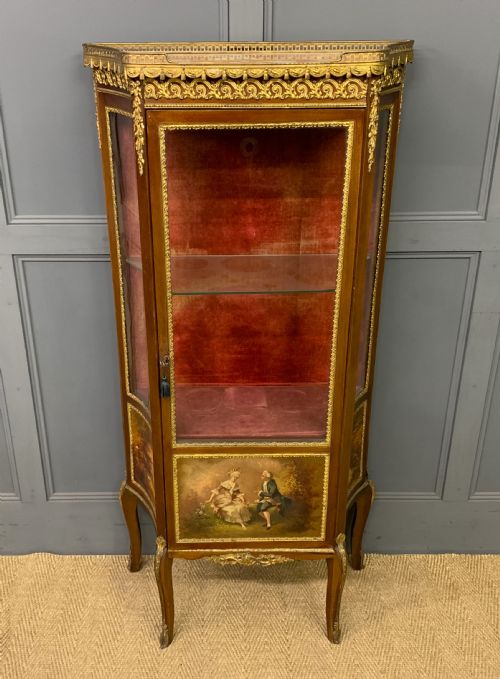
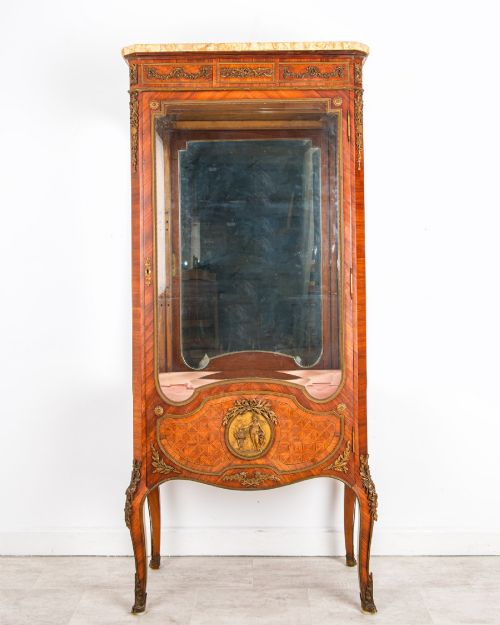
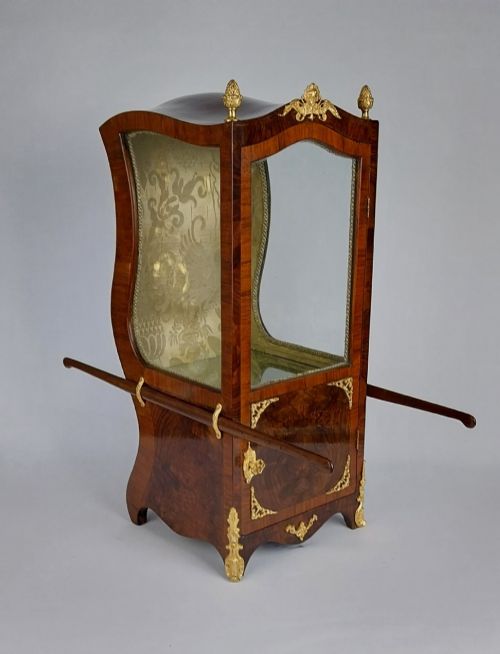
A gilded french vitrine is a glazed cabinet designed to display porcelain, miniatures, and precious objects behind glass. You are looking at pieces spanning the nineteenth century, including specific iterations like pier cabinets, boudoir cabinets, and table top sedan vitrines.
The selections here lean heavily toward nineteenth-century revival styles, particularly Louis XV and Rococo designs with curved lines and exuberant mounts. Many examples employ kingwood or mahogany carcasses finished with painted panels in the manner of Vernis Martin.
Floor-standing display cabinets and pedestal formats dominate the current offerings, often topped with marble slabs and accented by glazed sides. These forms reflect the nineteenth-century taste for importing continental salon elegance into British interiors.
Assessing quality in construction and ornament
The division between standard production and masterwork hinges on the crispness of the bronze ormolu mounts and the depth of the wood carving. Finer cabinets exhibit hand-chased metalwork and meticulously matched kingwood veneers rather than stamped, repetitive brass trims.
Painted panels signed in the manner of notable artists or attributed to workshops like Maison Krieger elevate the standing of a piece significantly. The integration of solid marble tops and tight door joints further separates ordinary display furniture from exceptional examples.
Object forms recorded here include pier cabinets, boudoir cabinets, display tables, and floor-standing vitrines.
François Linke·Maison Krieger·Angela Kaufman
The Gilded French Vitrine Glossary
- Ormolu
- Gilded bronze or brass mounts applied to furniture. This technique added decorative metallic highlights to corners, feet, and friezes.
- Vernis Martin
- A simulated Japanese lacquer technique developed in France. It involved layered translucent varnishes over painted panels, often seen on eighteenth and nineteenth-century cabinets.
- Kingwood
- A dense, richly figured tropical timber. Cabinet makers utilised its contrasting dark and golden grains for decorative veneering.
- Pier cabinet
- A narrow display cabinet designed to fit against the wall space between windows. These pieces often feature marble tops and glazed doors.
- Bijouterie table
- A glass-topped display table intended for small valuables and jewels. They often feature hinged lids and velvet interiors.
Gilded French Vitrine: Frequently Asked Questions
What is a vitrine used for?
A vitrine served as a secure, dust-free cabinet for showcasing prized porcelain, silverware, and curiosities inside the home.
The glazed doors and sides allowed light to reach the displayed objects from multiple angles while protecting delicate items from handling.
How do I distinguish Louis XV and Louis XVI styles?
Louis XV style pieces rely on asymmetrical curves, cabriole legs, and flowing Rococo scrolls without rigid symmetry.
Louis XVI furniture introduces straight lines, neoclassical symmetry, fluted columns, and geometric restraint following archaeological discoveries of the period.
Where should I place a display cabinet?
These cabinets work best away from direct sunlight to protect interior fabrics and painted panels from fading over time.
Positioning them against solid interior walls where floor levels are even ensures the heavy glass doors hang correctly.
How do I care for giltwood and ormolu?
Dust surfaces gently with a soft, dry brush to prevent abrasive particles from scratching the delicate gold leaf or metal surface.
Avoid liquid cleaners, polishes, and modern detergents, which can permanently strip the historic gilding from the wood and bronze.