


Gilded Frame Original Watercolour
A gilded frame original watercolour brings together nineteenth and early twentieth-century painting on paper and the ornate gilded wood housings that preserve them.
Gilded Frame Original Watercolour
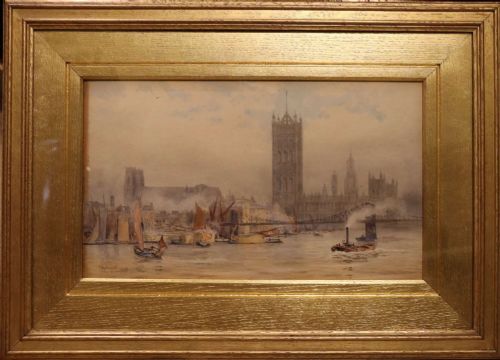
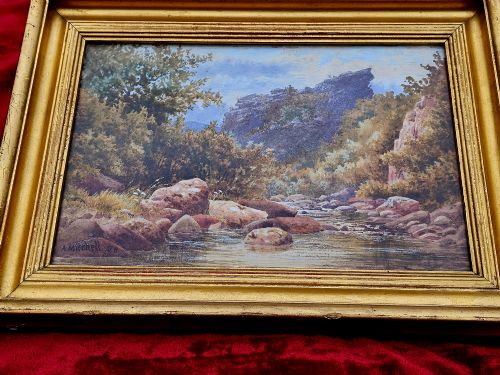
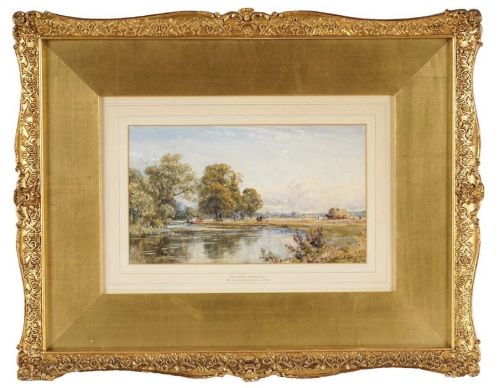
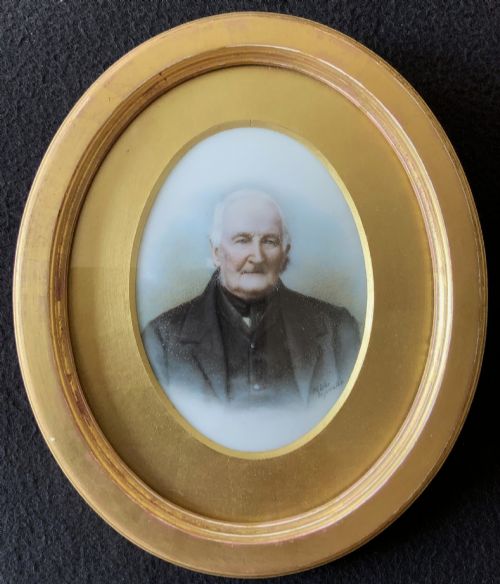
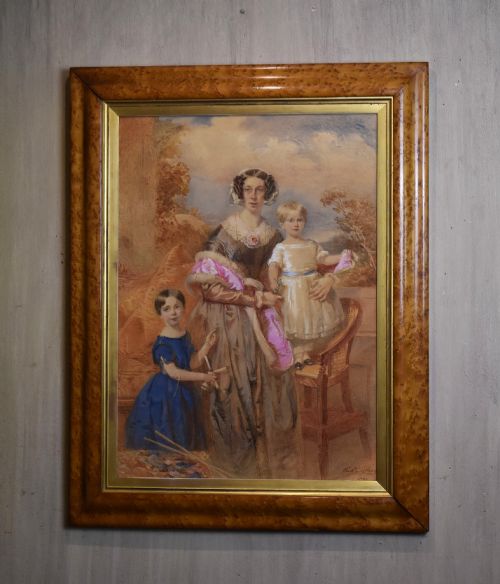
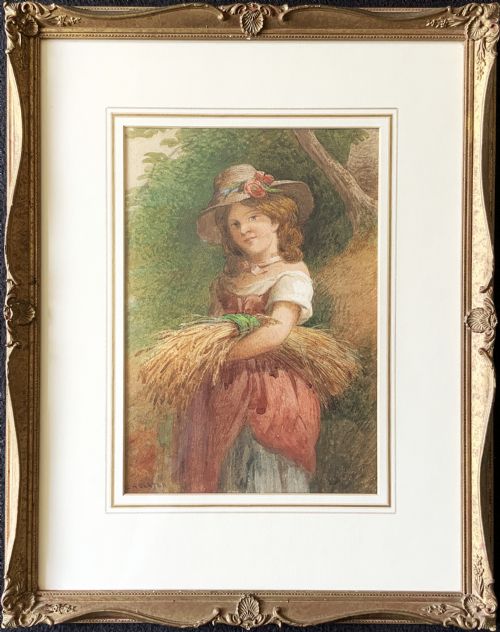
A gilded frame original watercolour is a unique painting on paper housed behind glass within a metallic-gilt wooden moulding. These artworks span the Victorian era, Edwardian period, and the 1930s, capturing landscapes, portraits, and marine scenes.
The pieces on this page include British pastoral realists, Orientalist compositions, and French impressionist works. Buyers meet watercolours paired with gouache, ink, and glass protection designed to shield delicate pigments.
Subjects range from grand tour Italian scenes and coastal Dorset views to quiet domestic portraits and snowy landscapes. Each creation relies on the direct hand of the artist working in water-based media on paper substrates.
Materials and construction
Artists applied water-soluble pigments, occasionally mixed with gouache, onto paper sheets mounted beneath protective glass. The resulting imagery depends on the absorbency and weight of the paper support to hold washes of colour.
Surrounding the artwork is a wooden moulding finished with gilt leaf or metallic paint. This gilded frame provides structural rigidity while creating a bright perimeter that reflects light outward from the painted surface.
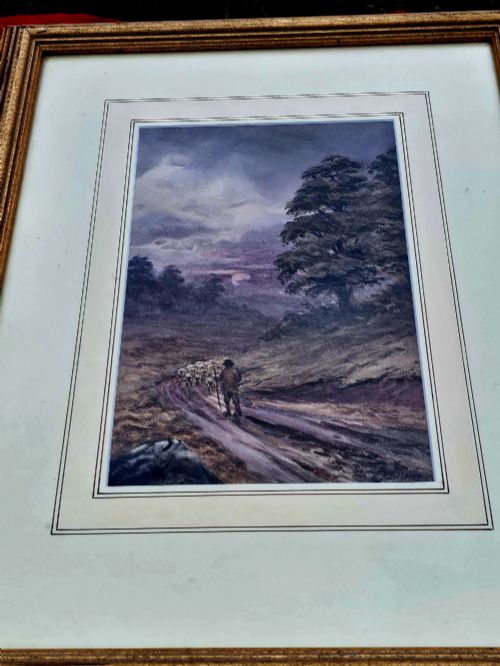
Sheep, fishermen, and fashionable figures populate these historic landscapes, caught forever mid-stride beneath protective glass.
Quality variations in historical watercolours
Quality rests upon the certainty of the brushwork, the preservation of the paper against toning, and the integrity of the original gilt frame. Stronger works display confident handling of light and pigment wash without heavy fading.
The survival of the period housing matters significantly, as original frames matched to the date of the painting maintain historical continuity. Finer examples retain their original glass and backing papers, safeguarding the work from environmental intrusion.
H. Medlycott·A. Mitchell·EJ Letheren·Robert Thorne Waite·Frederick Tatham·Charles Henry Slater·Gaston Cornil·John Bedloe Goddard·Alfred George Morgan·J S Ainley·Frederick Septimus Lewis·James Hardy of Bath·John McDougal·Ernest Uden·Thomas Bush Hardy·Franz Knebel·William Edward Frost·George Whyatt·Robert Buchan Nisbet·Edward Horace Thompson·Nora Cundell·Robert Richard Scanlan·Herbert Hughes-Stanton·Edith E Caswall·Samuel Palmer
The Gilded Frame Original Watercolour Glossary
- Gilt wood
- Wood coated with thin gold leaf or metallic powder to create a bright, reflective surface. This finish is typical of period picture frames designed to enhance the artwork.
- Watercolour
- A painting method where natural pigments are suspended in a water-soluble binder. It relies on the white of the paper to provide luminosity through translucent washes.
- Gouache
- An opaque water-based medium containing pigment and a binding agent, often combined with traditional watercolour. It introduces solid highlights and dense colour passages.
- Diptych
- A painting composed of two distinct panels or sheets presented as a single matched pair. These works share a common subject or artist origin.
Gilded Frame Original Watercolour: Frequently Asked Questions
How do I care for a framed watercolour?
Keep the artwork away from direct sunlight to prevent the pigments and paper from fading over time. Maintain stable indoor humidity levels to protect both the paper support and the wooden frame.
Avoid hanging these pieces in damp spaces such as kitchens or unheated rooms. The glass front should remain sealed to keep dust and insects away from the delicate painted surface.
Are these watercolours always in their original frames?
Many examples retain their period frames from the nineteenth or early twentieth century, though some have been reframed later in life. Surviving original frames often show matching signs of age consistent with the painting's creation date.
Examining the corner joints, backing boards, and gilding wear helps determine if the frame has remained with the paper since it was first produced.
What subjects are most common in these paintings?
Landscapes and coastal scenes dominate the selection, reflecting the popularity of outdoor sketching during the Victorian and Edwardian eras. You will also encounter architectural views, floral still lifes, and portraiture.
Artists frequently recorded travels across Britain and continental Europe, producing topographical records that double as decorative wall art.
How can I tell the age of the piece?
Dating relies on the stylistic markers of the painting, the type of paper used, and the construction methods of the frame. Signatures, inscriptions on the reverse, and historical artist records provide precise chronological anchors.
Materials such as early handmade paper or particular moulding profiles offer strong clues to whether a work belongs to the early nineteenth century or the interwar period.