


Gilded Dresden Porcelain
Gilded dresden porcelain pieces bring elaborate 19th-century European craftsmanship, floral motifs and rich gold embellishment into a room.
Gilded Dresden Porcelain
When you search for gilded dresden porcelain, you find ornate decorative objects originating from German factories and workshops during the 18th and 19th centuries. The selection centres on figurines, centrepieces, vases, mirrors and dishes shaped in elaborate revival styles.
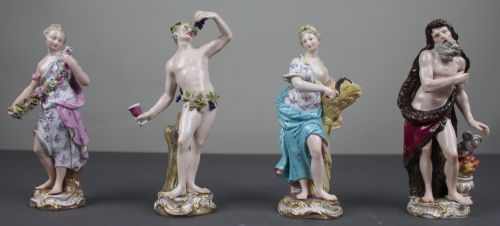
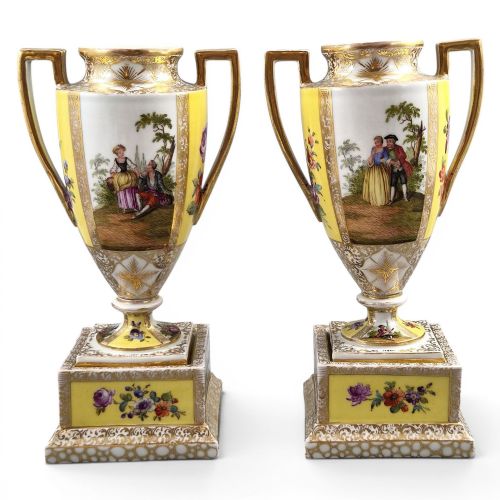
You are most likely to meet 19th-century pieces reflecting Rococo and Victorian tastes, including figural groups, lidded urns, and hand-painted dishes. These items often combine pastoral scenes with applied floral details and bright colour palettes.
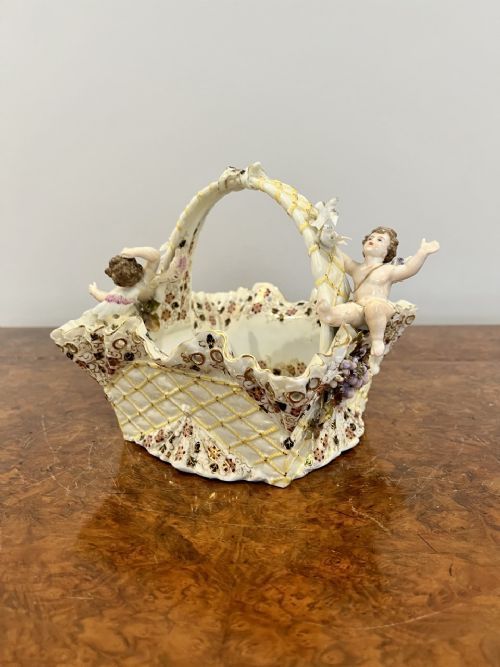
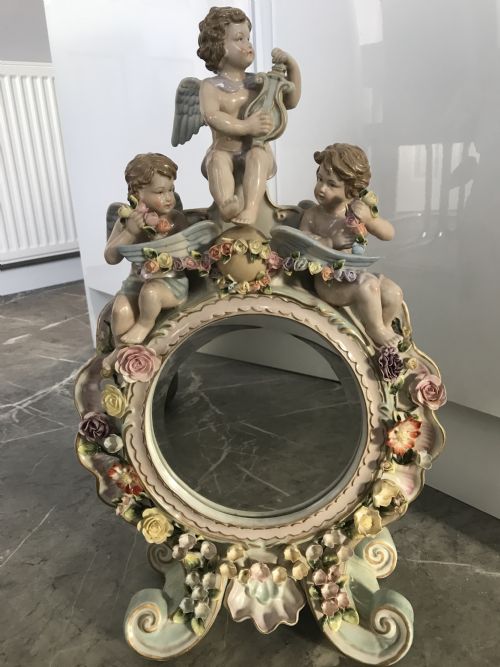
The forms range from small cabinet cups and saucers to large musical putti centrepieces and candelabra. Many items reference earlier Meissen models or use traditional factory marks on hard-paste porcelain bases.
What Varies in Quality
The refinement of the modelling and the precision of the hand-painting separate standard decorative wares from exceptional examples. Finer figures display crisp facial expressions, well-defined fingers, and delicately painted clothing rather than hurried brushwork.
The application and preservation of the gold leaf and gilding influence the overall visual impact of each piece. Superior examples retain bright, intact metallic highlights on the rococo scrolls and borders without excessive rubbing.
Several mischievous putti manage to play musical instruments, gather fruit, and herd sheep across the porcelain landscape without dropping a single gilded note.
Meissen Porcelain·Helena Wolfsohn·Carl Thieme·Bourdois And Bloch·Volkstedt Porcelain·Augustas Rex
The Gilded Dresden Porcelain Glossary
- Hard-Paste Porcelain
- A dense, durable ceramic material fired at high temperatures, composed of kaolin and petuntse. It forms the solid foundation for most continental figures and decorative vessels.
- Gilding
- The application of gold leaf or powdered gold mixture onto the porcelain surface. This technique highlights raised mouldings and decorative borders.
- Putti
- Depictions of chubby male toddlers, often winged, appearing frequently in centrepieces and allegorical figure groups. They symbolise various themes such as the seasons or music.
- Cache Pot
- An ornamental container designed to hold a flowerpot. These vessels often feature hand-painted floral panels and gilded rims.
- Rococo Revival
- A 19th-century design movement favouring asymmetrical scrolls, C-curves, and naturalistic floral motifs. It heavily influences the shape of these mirrors, vases and figures.
Gilded Dresden Porcelain: Frequently Asked Questions
What styles are most common?
Nineteenth-century Rococo Revival styles dominate, featuring asymmetrical scrolls, shell motifs, and abundant floral ornamentation. These designs emulate earlier 18th-century court aesthetics with a heavier Victorian influence.
Subjects frequently include allegorical figures of the seasons, pastoral couples, and putti engaged in musical or domestic activities.
How should I display them?
Place these delicate items in secure display cabinets or on sturdy mantelpieces away from direct sunlight and heavy foot traffic. Their intricate applied porcelain lace and protruding flowers require careful placement to avoid accidental knocks.
Group complementary forms, such as pairing lidded vases with matching cabinet plates or matching figures of the seasons together.
How do I clean gilded surfaces?
Dust the porcelain gently using a very soft, dry brush or a clean feather duster to remove surface particles without disturbing delicate applied petals. Avoid using water, abrasive cloths, or chemical cleaning solutions on the gilded areas.
Professional restoration is recommended if structural repairs are needed, particularly for items with complex lace or figural elements.