



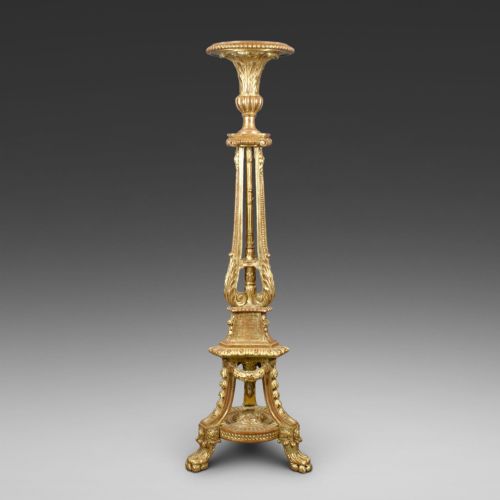


Gilded Display Pedestals
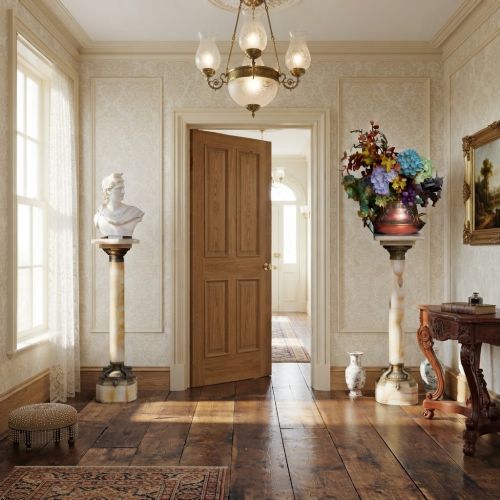
Gilded display pedestals bring height and gleaming presence to rooms, elevating sculptures and plants with undeniable gravitas.
Gilded Display Pedestals
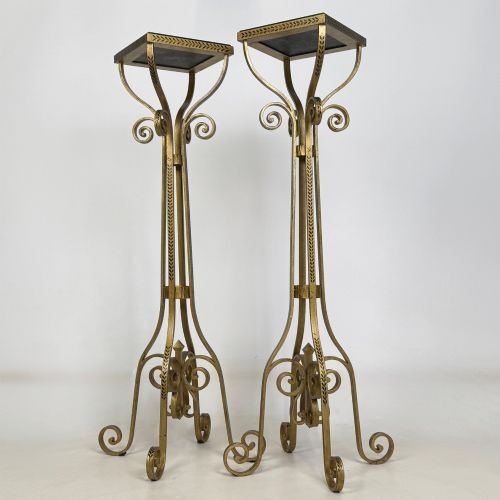
Gilded display pedestals are substantial architectural supports designed to showcase sculpture, urns, and plants within formal interiors. The examples met on this page span the nineteenth and twentieth centuries, taking the form of columns, plant stands, and torcheres.
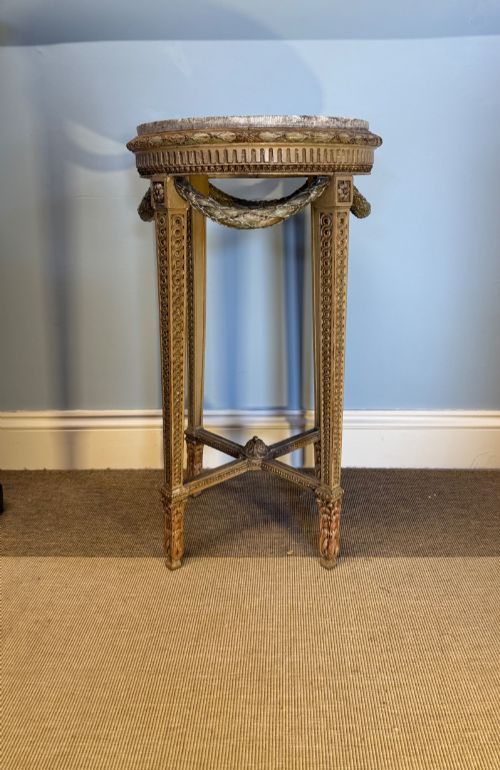
These pieces draw upon historical styles including Regency, Neoclassical, and French Rococo Revival. They function primarily to elevate decorative objects to eye level, utilising shapes that range from cylindrical cabinets to carved wooden columns.
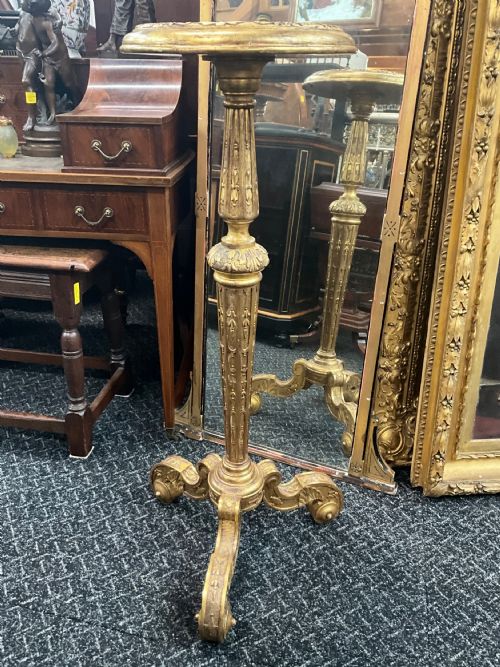
Origins stretch across European workshops, notably featuring French, Italian, and Venetian influences alongside English interpretations. Buyers encounter diverse top surfaces, from cool marble inserts to carved wooden disks suited for heavy jardinieres.
Materials and Construction
Carved wood provides the structural core for many examples, finished with gesso and gold leaf to create a brilliant reflective surface. Gilt bronze and brass mounts frequently accent these frames, adding metallic weight and intricate detail.
Insetting stone tops such as marble or onyx introduces a cool, durable surface designed to support heavy decorative urns and planters. Artisans applied thin layers of gold leaf over prepared gesso grounds to achieve the characteristic rich sheen seen across nineteenth-century creations.
Some nineteenth-century makers cleverly built rotating tops into their columns so plants could catch the sun from every angle.
Assessing Quality
Quality rests in the crispness of the carved wood decoration and the integrity of the underlying gesso and gold leaf. Finer pieces display deeply sculpted foliage and structural joinery that remains rigid under heavy loads.
The selection of inset marble or onyx tops also dictates the grade of the piece, with substantial, well-veined stone marking superior manufacturing. Retaining original finishes rather than modern over-gilding preserves the historical character expected by discerning collectors.
The Gilded Display Pedestals Glossary
- Torchere
- A tall stand designed to support a lamp or candle, frequently adapted to hold decorative urns and plants. These slender columns emphasise verticality in a room.
- Gesso
- A plaster-like mixture applied to carved wood to provide a smooth base for gilding. It allows artisans to model sharp decorative relief before applying gold leaf.
- Ormolu
- Gilded bronze mounts applied to furniture and pedestals for decorative accent. The technique involves mercury and gold to produce a durable metallic finish.
- Plinth
- The lowest architectural tier or base supporting a column or pedestal. It provides stability and visual weight to the composition.
- Parcel Gilt
- A finishing method where only specific carved elements are highlighted with gold leaf while the surrounding wood remains painted or stained. This creates contrast across the surface.
Gilded Display Pedestals: Frequently Asked Questions
Where should I place a pedestal?
These pieces suit corners, entryways, or flanking focal points like fireplaces where vertical height breaks up flat walls.
Ensure the surrounding floor space allows the column to stand clear without crowding everyday movement.
Can these stands hold heavy plants?
Sturdy wooden and marble-topped variants easily support substantial potted plants and heavy bronze urns.
Check the surface material to confirm it resists water marks from daily plant maintenance.
How do I clean gilded surfaces?
Dust gently with a dry, soft brush to protect the delicate gold leaf layer from abrasion.
Avoid liquid cleaners entirely, as moisture penetrates old gesso and causes the gilding to flake.
What defines Regency style?
Regency design draws heavily on classical Greek and Roman motifs, favoring clean architectural lines and simulated marble finishes.
These pieces often incorporate bold gilding and restrained classical carvings.