
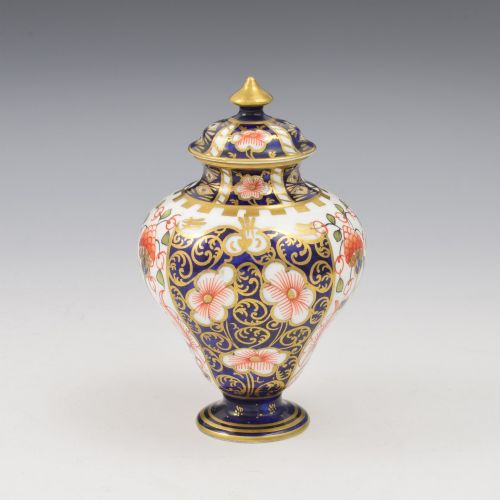
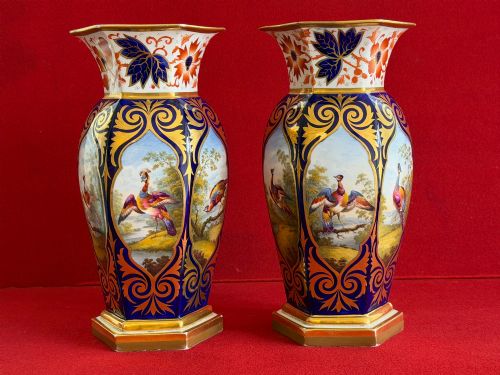
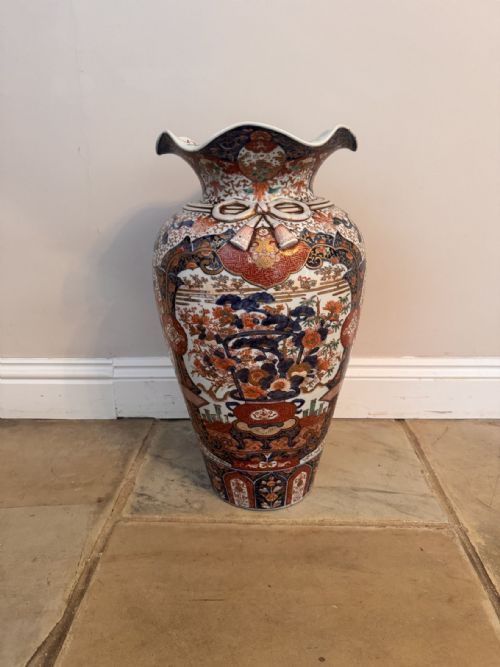
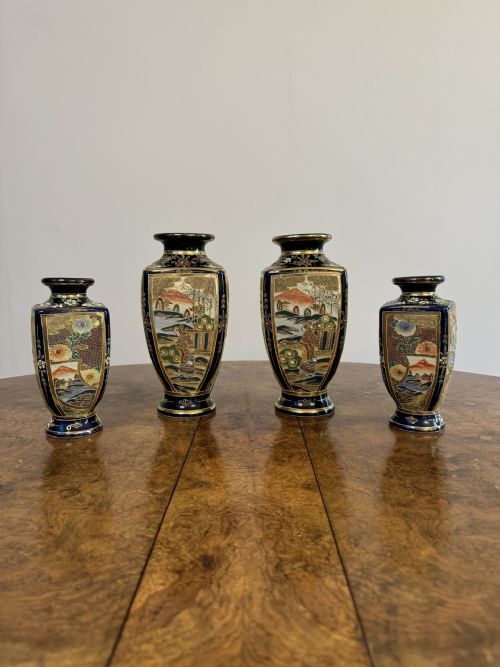
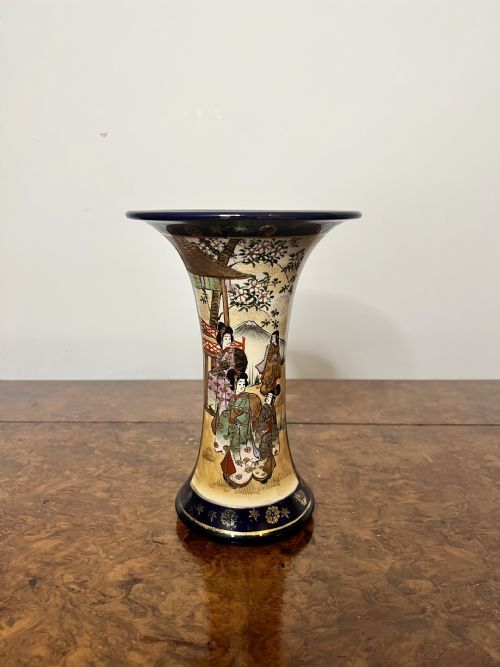
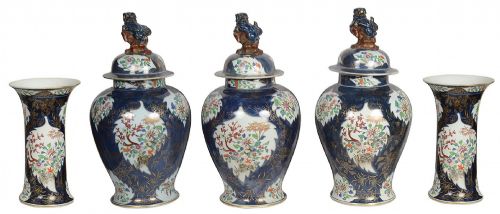

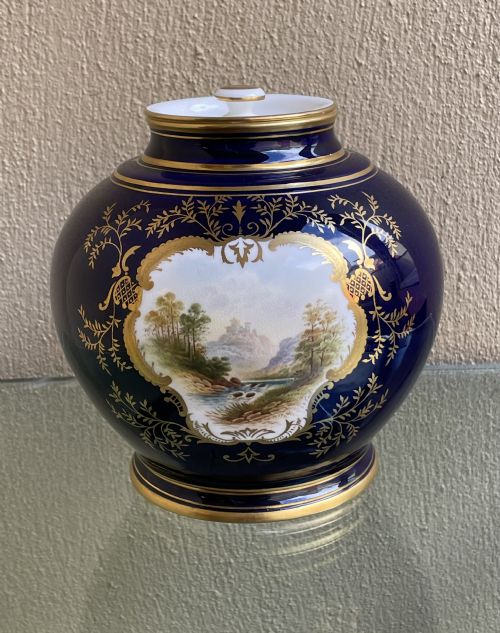
Gilded Cobalt Vase
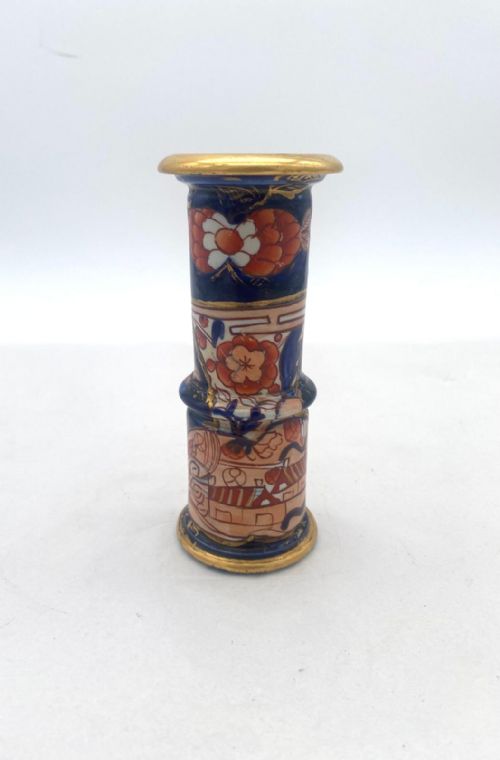
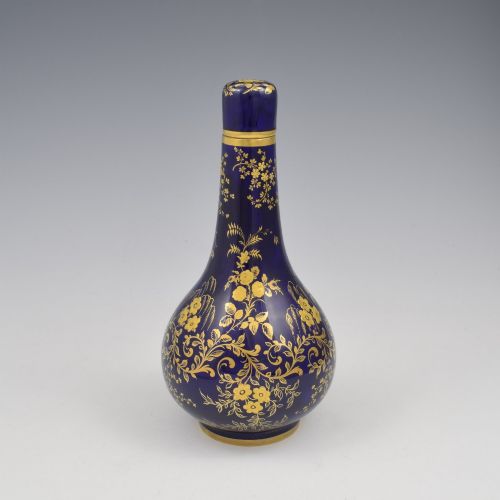
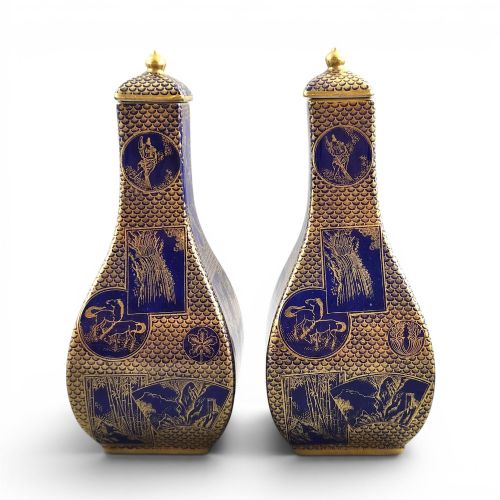
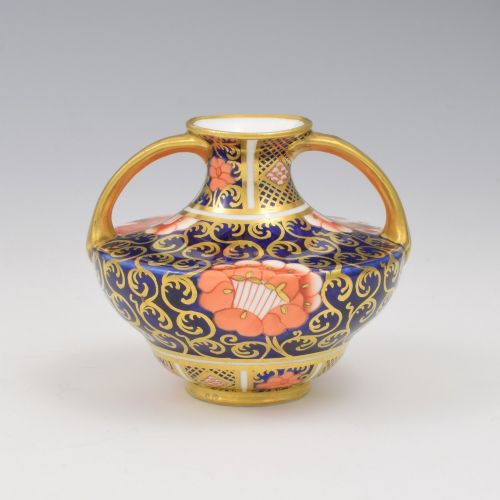
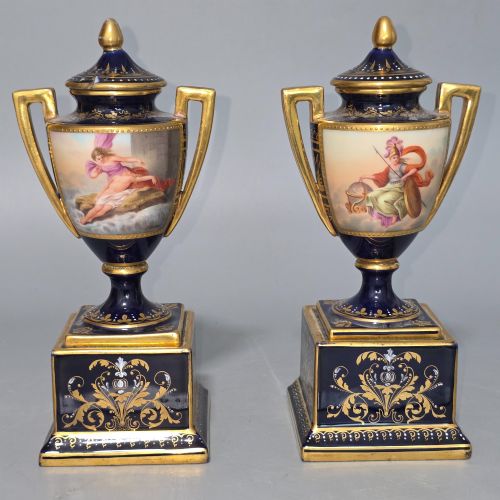
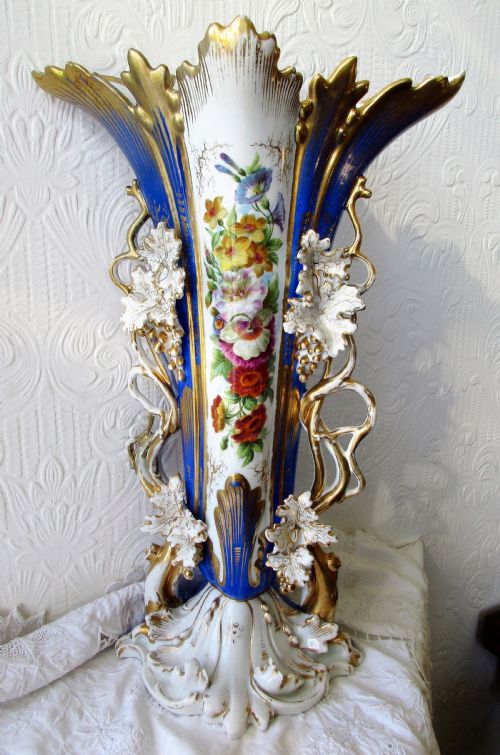
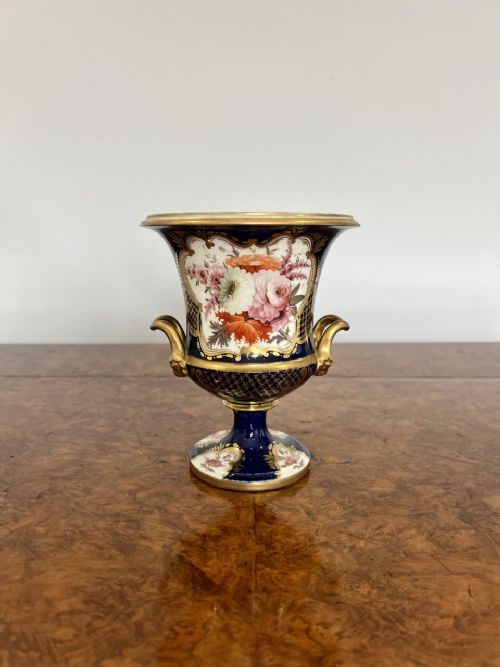
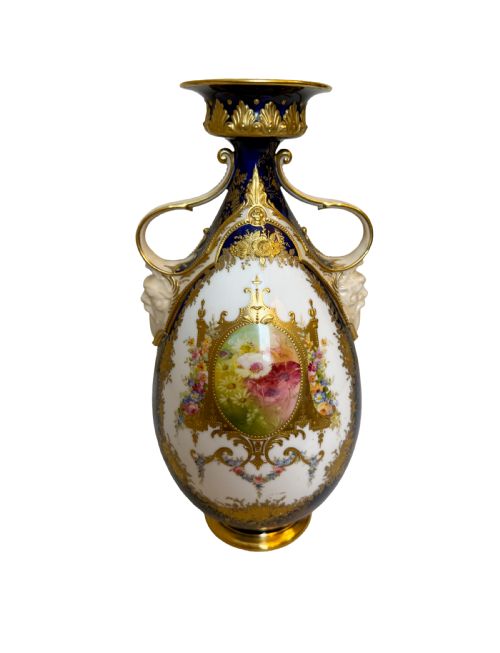
These gilded cobalt vase selections bring together rich blue grounds and bright metallic leaf, offering a striking display piece for collectors of fine ceramics.
Gilded Cobalt Vase
A gilded cobalt vase combines deep blue glazed surfaces with metallic gilding, presenting a rich contrast that has drawn makers and collectors for generations. You will find these pieces spanning the nineteenth and early twentieth centuries, encompassing English porcelain, French wares, and Japanese satsuma or imari production.
The forms range from diminutive scent bottles and bud vases to substantial floor-standing urns and garniture sets. Pieces frequently arrive as matched pairs or larger sets, intended originally for formal mantelpieces and decorative display.
Makers across Europe and East Asia adopted this aesthetic, leading to considerable variety in shape and decoration. English porcelain houses, continental factories, and Japanese workshops each interpreted the cobalt ground and gilding in distinct ways.
How They Were Made
Potters achieved the characteristic deep blue ground using cobalt oxide applied beneath or within the glaze before firing. This mineral pigment withstood high kiln temperatures, producing a stable, luminous blue canvas.
Gold leaf, liquid gold, or gilt applications were then added over the glaze and fired a second time at a lower temperature to bond the metal to the ceramic body. Many items also incorporate enamel colours and raised moriage work to add texture alongside the metallic highlights.
Some miniature scent bottles were made so small they could easily hide inside a Victorian pocket.
What Varies in Quality
The refinement of the ceramic body and the precision of the hand-painted detailing set individual pieces apart. Finer examples display crisp brushwork, securely bonded gilding, and well-balanced proportions across handles, covers, and pedestals.
Artisanal signatures, identifiable factory patterns, and the complexity of the cobalt ground contribute significantly to the distinction of a piece. Well-preserved gilding with minimal rubbing indicates careful handling and superior initial application.
Royal Crown Derby·Flight Barr And Barr·Royal Doulton·Coalport·Spode·Mason's·Vienna Porcelain·Carlton Ware
The Gilded Cobalt Vase Glossary
- Cobalt
- A metallic oxide used to impart a deep blue colour to ceramic glazes. It remains stable at high kiln temperatures, allowing for rich, uniform backgrounds.
- Gilding
- The application of gold leaf or gold paint to the surface of porcelain or earthenware. This decorative technique highlights rims, handles, and painted panels.
- Garniture
- A set of matching vases or urns, usually numbering three, four, or five pieces, designed to be displayed together on a mantelpiece or sideboard.
- Imari
- A style of Japanese porcelain decorated in underglaze blue, iron red, and gold. This palette was widely exported and subsequently copied by European potteries.
- Moriage
- A Japanese ceramic technique using piped clay slip to create raised, textured decorative patterns beneath the glaze and gilding.
Gilded Cobalt Vase: Frequently Asked Questions
How are these vases cleaned?
Dusting gently with a soft, dry cloth is usually sufficient for regular maintenance. Avoid harsh chemical cleaners and do not submerge gilded pieces in water.
Moisture can weaken aged adhesives or lift delicate overglaze gold leaf. Professional conservation is recommended for stubborn marks.
Were these pieces used for flowers?
Many smaller vessels, such as bud vases and spill vases, were designed to hold fresh blooms. Larger urns and garniture sets served purely decorative functions in formal rooms.
Using antique porcelain for water carries risks if hairline cracks are present, so many owners prefer dry display.
How can I tell the period?
Makers' marks stamped, painted, or impressed on the base provide the most reliable guide to dating. Style indicators, such as Empire shapes or Meiji decorative motifs, offer further context.
Comparing pattern numbers and paste consistency against known factory archives helps confirm the era of manufacture.
Are lids original to the vases?
Lidded pieces, such as jar garnitures and potpourri urns, should ideally retain their matching original covers. Inspect the fit and interior seating to ensure proper alignment.
Replacements are sometimes substituted over time, so checking the ceramic body and gilding style across both parts is essential.