

Gilded Cobalt Porcelain Vase
A gilded cobalt porcelain vase brings together deep blue glaze and rich gold leaf across centuries of European and Japanese craft.
Gilded Cobalt Porcelain Vase
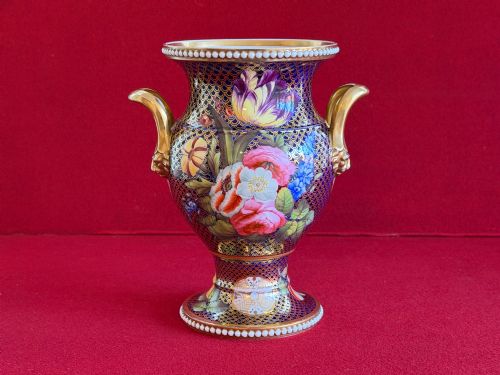
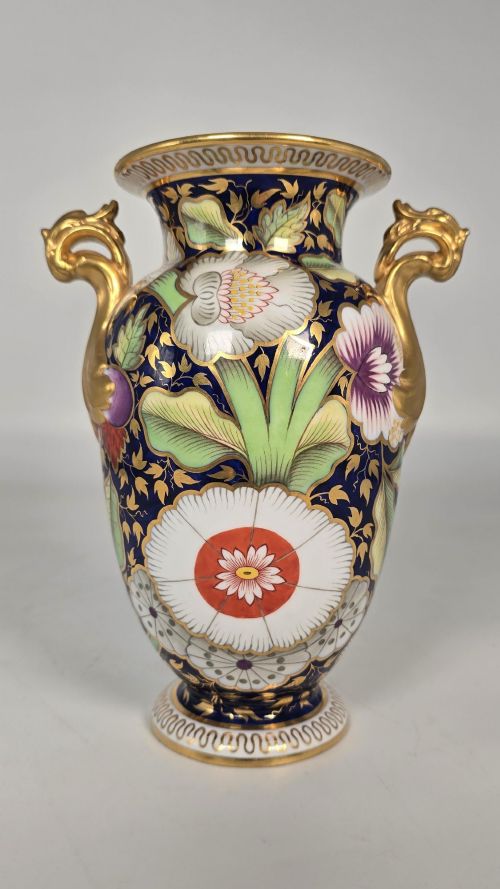
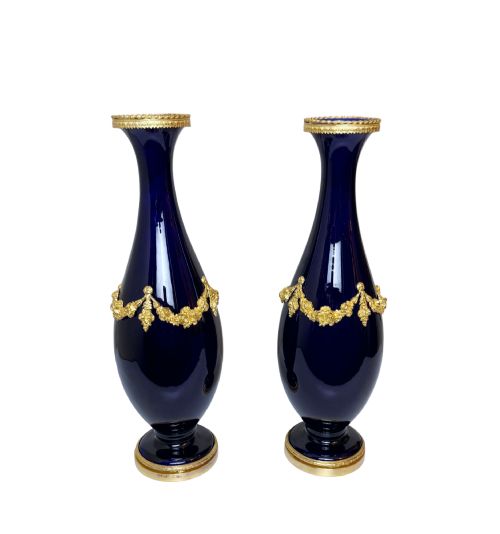
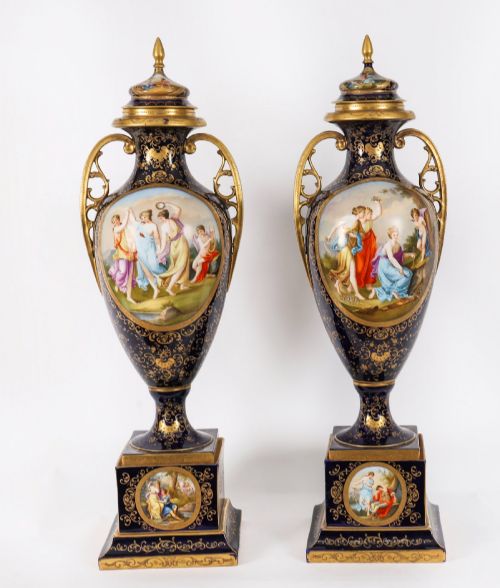
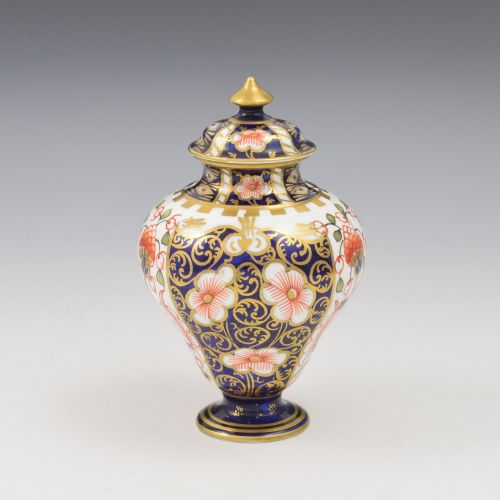
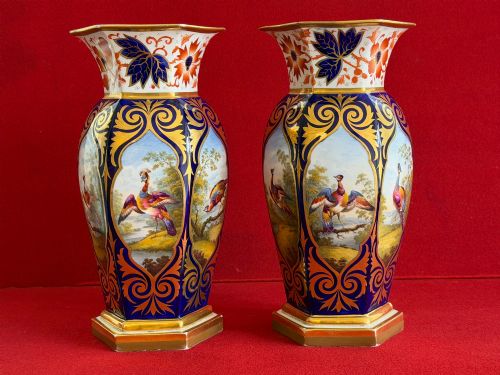
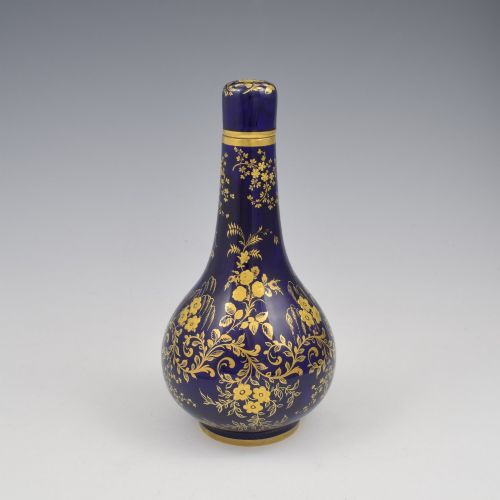
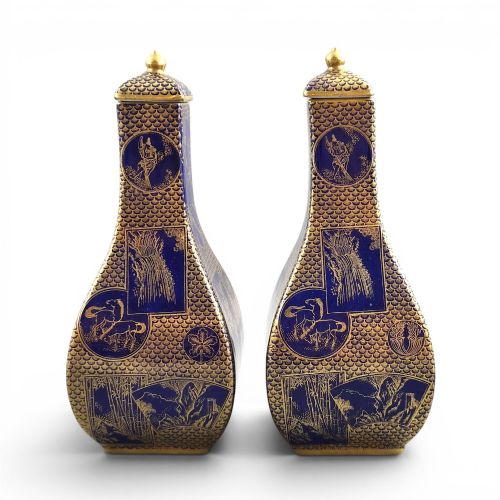
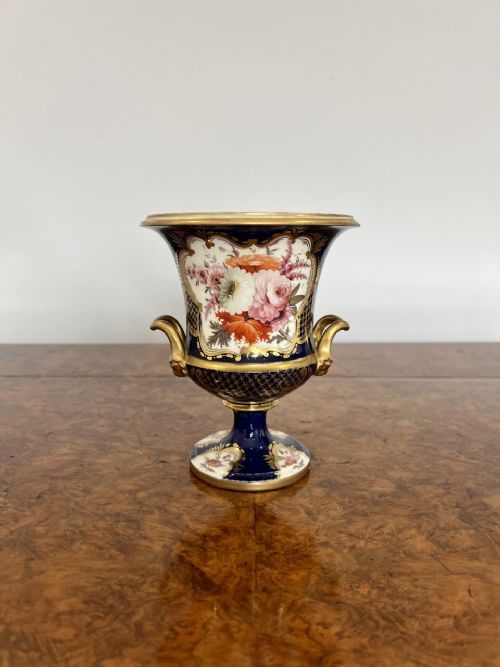
A gilded cobalt porcelain vase combines a deep blue ceramic ground with metallic gold decoration, appearing across various forms including bottle vases, campagna urns, and lidded jars. These pieces emerge from the 19th century through the early 20th century, drawing on Regency, Victorian, Edwardian, and Meiji period aesthetics.
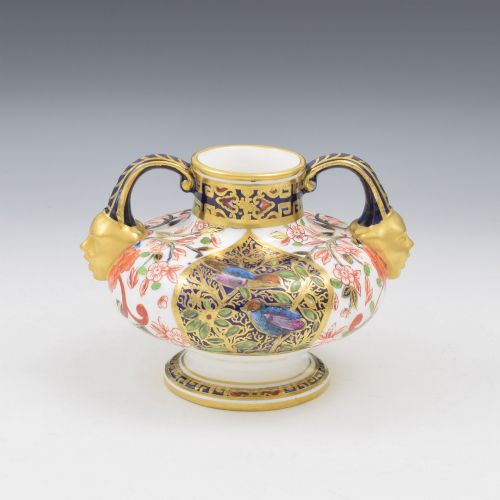
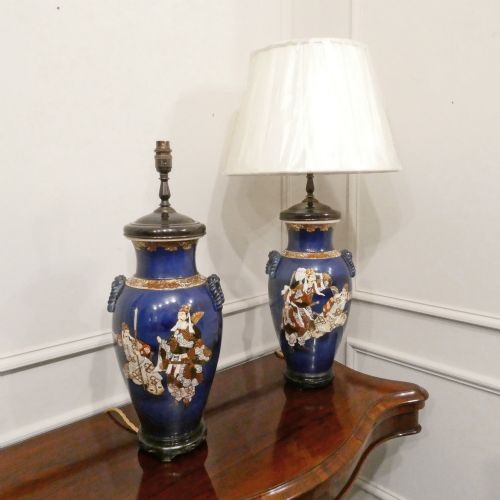
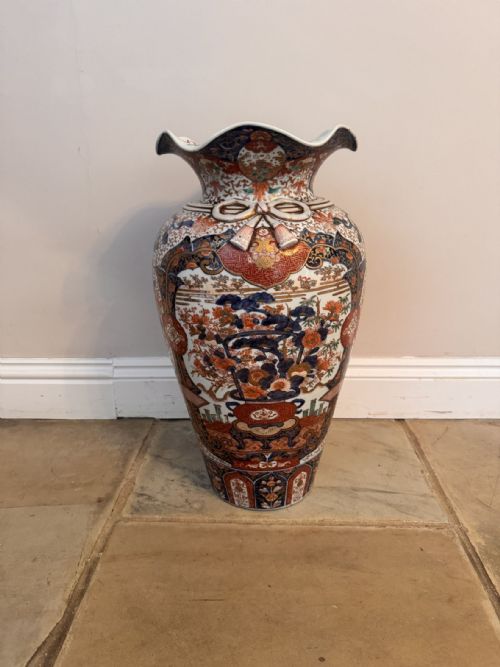
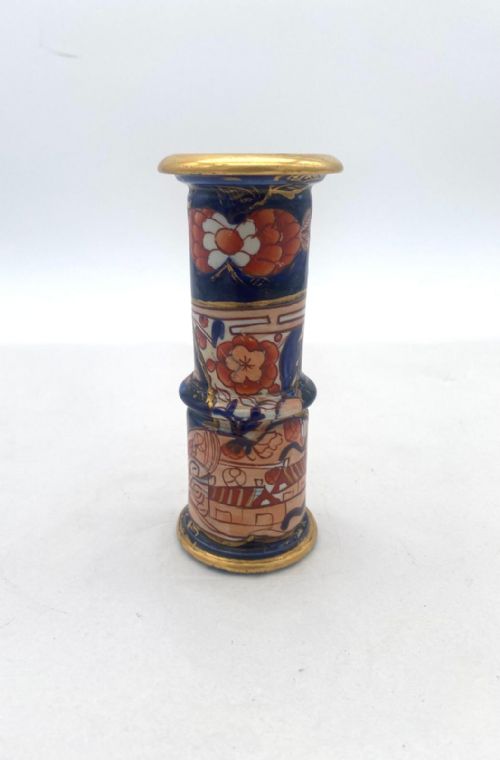
The version most commonly met on this page is an English porcelain or earthenware vessel from the Regency or Victorian eras, or an export piece from the Japanese Imari and Satsuma traditions. These items range from miniature scent bottles and bud vases to large floor-standing and garniture sets.
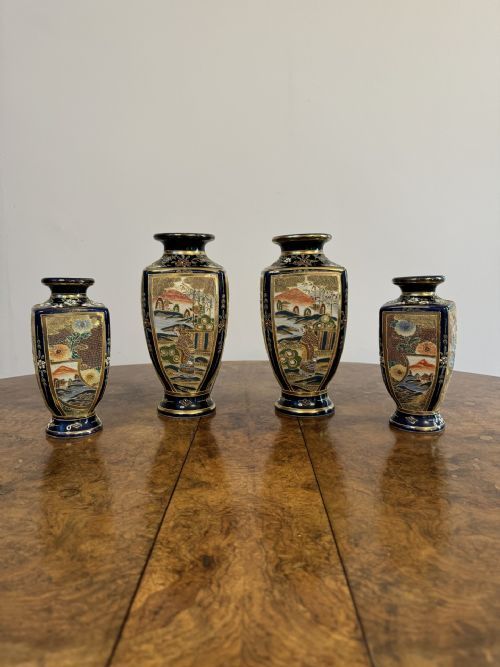
Makers and factories represented in these listings include Royal Crown Derby, Flight, Barr & Barr Worcester, Mason's, Spode, Coalport, Royal Doulton, and Satsuma workshops associated with the Meiji period. Forms span simple spill vases up to elaborate amphorae and twin-handled urns.
Materials and construction methods
The foundation of each piece relies on fired ceramic bodies, specifically porcelain, ironstone, or earthenware, shaped into baluster, bottle, or urn profiles. Artisans then applied a rich cobalt blue ground colour, often referred to as mazarine or royal blue.
Decoration involved hand-painting enamel details followed by the application of gold leaf, gilt, or raised moriage gilding. Firing in kilns set the glaze and bonded the metallic leaf to the ceramic surface.
Gilded Cobalt Porcelain Vase Retail Price Guide 2026
Typical asking prices for gilded cobalt porcelain vase among the pieces listed under this phrase on Sellingantiques today, from the lower quarter to the upper quarter. They describe what is for sale here now, not the wider market.
Some miniature scent bottles measure little more than a finger's length, proving that grand 19th-century taste sometimes came in tiny packages.
Assessing quality in cobalt and gilt ceramics
The distinction between standard production and top-tier work rests on the precision of the hand-painting and the depth of the cobalt ground. Master painters working for established porcelain houses achieved finer detail in floral panels, figures, and gilt borders.
The integrity of the gilding and the weight of the porcelain body further separate ordinary items from exceptional examples. Signed pieces or those carrying distinct pattern numbers demonstrate greater workshop attention.
Royal Crown Derby·Flight Barr and Barr·Royal Doulton·Coalport·Spode·Mason s
The Gilded Cobalt Porcelain Vase Glossary
- Cobalt
- A deep blue mineral pigment used to colour ceramic glazes before firing. This oxide produces the dark blue ground seen on many 19th-century vessels.
- Gilt
- A thin layer of gold applied to the surface of porcelain or earthenware. It provides the metallic highlights characteristic of these decorative pieces.
- Garniture
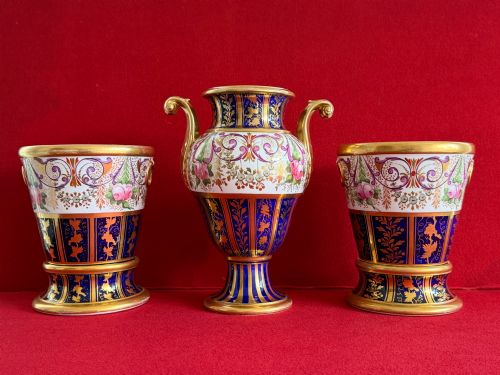
- A set of matching vases or urns designed to be displayed together on a mantelpiece or sideboard. They typically consist of three or more graduated pieces.
- Imari
- A style of Japanese export porcelain decorated in underglaze blue and iron red with extensive gold additions. European factories frequently copied these palettes during the Victorian era.
- Moriage
- A Japanese ceramic technique using slip to create raised, textured decorative details before gilding. This method appears frequently on Satsuma earthenware.
Gilded Cobalt Porcelain Vase: Frequently Asked Questions
How were these vases originally used?
Many of these vessels served as decorative garniture sets on mantelpieces or as centrepieces in formal 19th-century drawing rooms. Smaller versions functioned as bud vases, miniature scent bottles, or rose water sprinklers.
Larger floor-standing examples and covered urns were intended to display wealth and artistic taste within the home. Their rich gilding and deep blue grounds ensured they caught the candlelight during evening gatherings.
How do I care for antique gilded porcelain?
Dust these pieces gently with a soft, dry brush to protect the delicate gold leaf and enamel decorations from abrasion. Avoid using water, chemical cleaners, or immersion, as moisture can damage historic ceramic bodies and lift fragile gilt.
Keep them away from direct sunlight to prevent any fading of the cobalt glaze or hand-painted enamel colours over time. Handle them by the body rather than by applied handles or covers to prevent accidental drops.
How can I tell English pieces from Japanese exports?
English pieces from this period typically utilise hard-paste or soft-paste porcelain and ironstone, often featuring classical Regency or Victorian shapes like campagna urns. Their patterns frequently reference Sèvres or Derby styles with precise floral and gilt motifs.
Japanese pieces from the Meiji period generally employ Satsuma earthenware or Imari porcelain with distinct crackle glazes, raised moriage figures, and densely packed eastern motifs. Makers marks, where present, will also point clearly to either European factories or Japanese kiln signatures.
What does a garniture set mean?
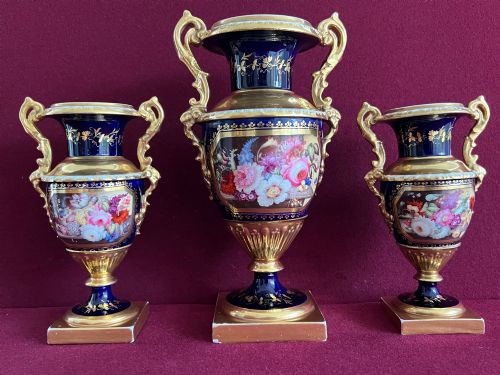
A garniture is a matched set of three, four, or five vases and urns created to be displayed together as a unified decorative scheme. These sets were popular in grand interiors to balance architectural mantelpieces and large pieces of furniture.
Individual pieces within the set often share the same cobalt ground, hand-painted panels, and gilt patterns but vary in height. Central jars usually feature covers, while flanking vases may take open forms.