






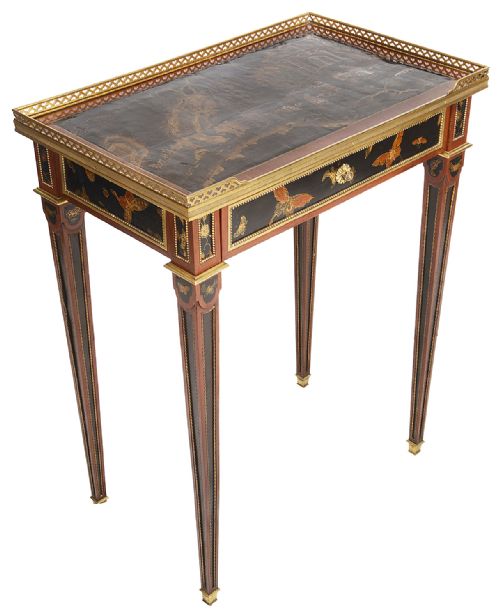


Gilded Chinoiserie Occasional Tables
These gilded chinoiserie occasional tables bring hand-painted lacquer, gold leaf and intricate oriental scenes straight into the sitting room.
Gilded Chinoiserie Occasional Tables
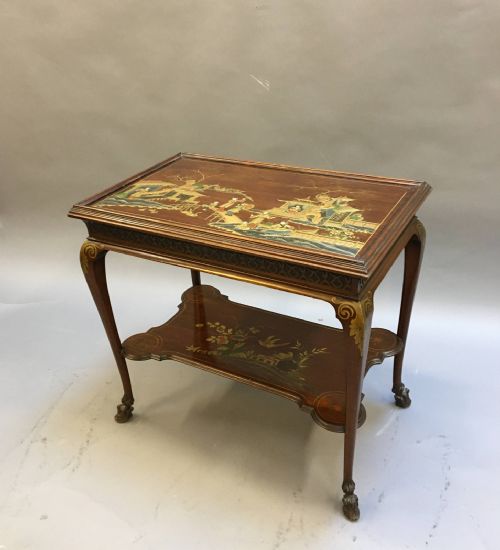
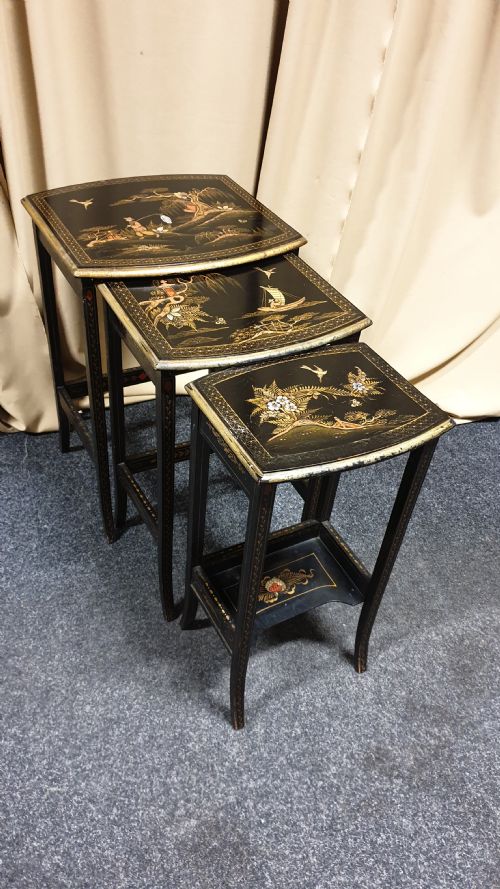
Gilded chinoiserie occasional tables combine structural woodwork with orientalist decoration, spanning the nineteenth century, Victorian era, nineteen-hundreds and the decades up to nineteen-thirty. The selection on this page centres heavily on nests of tables, along with standalone occasional tables, games tables, sewing tables and tray tables.
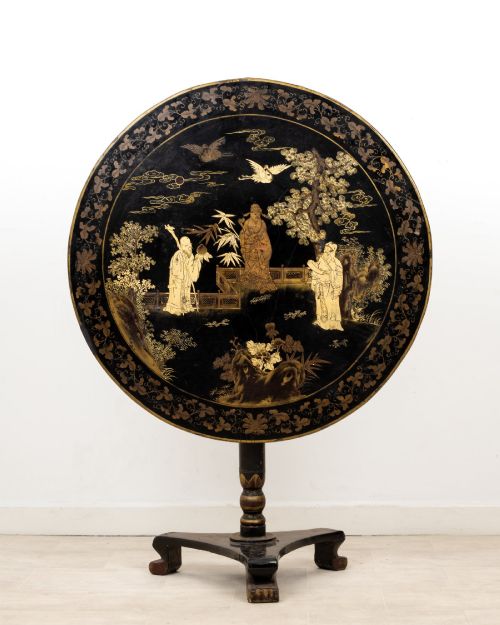
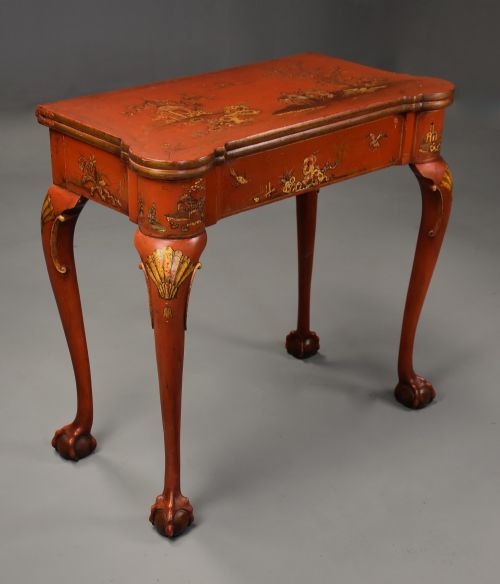
Buyers will encounter both black lacquer and red lacquered surfaces finished with gold leaf. These pieces draw on Queen Anne styles, Chinese export traditions and nineteenth-century interpretations of Asian design.
The forms range from single tilt-top tables and games tables to nesting sets of three or four pieces. Each version relies on hand-painted detailing to create distinct surface decoration.
How they were made
Construction relies on timber, hardwood and lacquered wood processed to form stable tabletops and frames. Makers applied layers of lacquer in black or red tones to build a smooth base before adding ornamentation.
Decoration involves hand-painted motifs finished with gold leaf and gilt work, sometimes paired with boulle-work detailing or brass elements. Artisans built these surfaces to catch the light while serving functional roles in the home.
Gilded Chinoiserie Occasional Tables Retail Price Guide 2026
Typical asking prices for gilded chinoiserie occasional tables among the pieces listed under this phrase on Sellingantiques today, from the lower quarter to the upper quarter. They describe what is for sale here now, not the wider market.
Object types range from single occasional and sewing tables to nests of three or four.
What varies in quality
Quality rests upon the execution of the hand-painted decoration and the depth of the lacquer finish. Pieces with refined detail across nests of four tables or games tables demonstrate greater care in design.
The handling of the gold leaf and the crispness of the orientalist motifs distinguish standard production from superior examples. Structural stability in multi-tiered tables also marks the division between everyday items and finer pieces.
The Gilded Chinoiserie Occasional Tables Glossary
- Chinoiserie
- A European decorative style reflecting Chinese artistic influences, featuring hand-painted motifs and imaginary oriental landscapes. It flourished across various periods of furniture production.
- Lacquer
- A durable resin finish applied to wooden surfaces in layers, typically polished to a smooth gloss in black or red. It provides the protective canvas for gold leaf decoration.
- Nest of tables
- A set of graduated tables designed to slide one beneath another to save space when not in use. They appear frequently in sets of three or four.
- Boulle-work
- An elaborate marquetry technique using materials like tortoiseshell and brass, occasionally seen combined with lacquer furniture. It adds textural contrast to the surface.
- Tilt-top table
- A table featuring a mechanism that allows the surface to pivot vertically when not in service. This form appears in nineteenth-century examples.
Gilded Chinoiserie Occasional Tables: Frequently Asked Questions
What periods do these tables come from?
The pieces span the nineteenth century, the Victorian era, and the early decades of the twentieth century up to nineteen-thirty. Many examples date from around nineteen-hundred and nineteen-twenty.
Craftsmen produced these works across multiple eras, leading to varied interpretations of Queen Anne and Chinese export styles.
How were nests of tables used historically?
Nests of tables provided flexible surface space for tea, writing or games without permanently cluttering a room. Individual tables could be pulled out as needed and stored compactly together.
Their lightweight construction made them easy to move around Victorian and twentieth-century sitting rooms.
What is the difference between black and red lacquer?
Black lacquer offers a dark, reflective background that makes gold leaf and hand-painted details stand out sharply. Red lacquer provides a warmer, more vibrant visual field for the same orientalist motifs.
Both finishes required multiple coats of lacquer applied to a wooden or hardwood base.
Are these tables sturdy enough for daily use?
These occasional tables are built from hardwood and lacquered wood designed for light domestic tasks like holding drinks or books. Nests of tables and tray tables offer practical surfaces when handled with care.
Avoiding excessive moisture and heavy loads helps preserve the delicate hand-painted surfaces and gold leaf.