
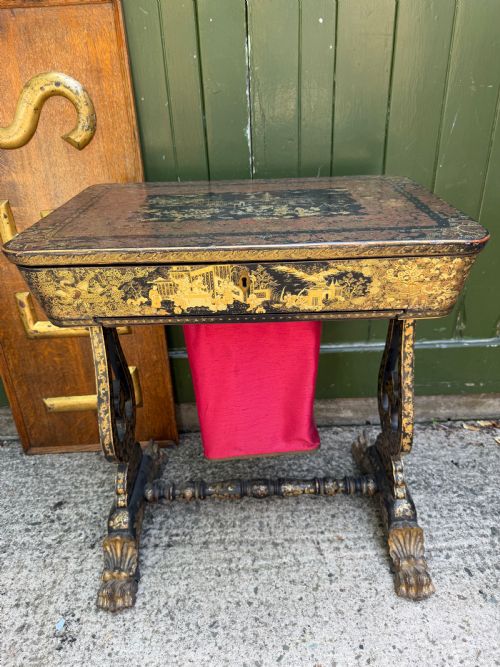


Gilded Chinoiserie Box
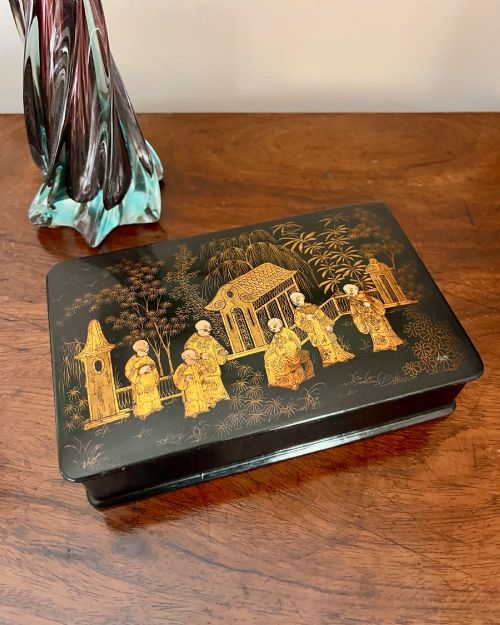
A gilded chinoiserie box brings layered narrative and lustrous surface into a room, offering both decorative presence and practical containment for small treasures.
Gilded Chinoiserie Box
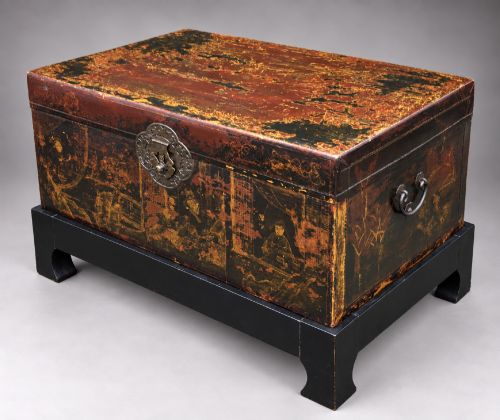
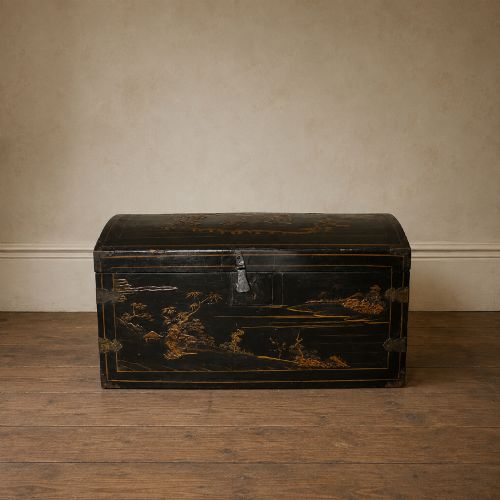
A gilded chinoiserie box brings together Eastern-inspired motifs and European decorative traditions across several centuries. When exploring a gilded chinoiserie box, buyers encounter forms ranging from compact tea caddies and jewellery boxes to larger blanket boxes, trunks, and table cabinets.
The selection on this page spans the eighteenth, nineteenth, and early twentieth centuries, drawing on Georgian, Regency, and Victorian periods. Pieces originate from diverse workshops in China, Japan, India, and England, demonstrating wide geographic range.
Tea caddies, workboxes, and medal cabinets represent the common smaller receptacles, while blanket boxes and coffers provide substantial storage. Each variant displays characteristic surface ornament rooted in traditional lacquerwork and gilded detailing.
Materials and construction
Makers built these pieces using wood, iron, and metal frameworks coated in layers of lacquer. Skilled artisans applied gold leaf and gilt decoration over the dark or brightly coloured surfaces to render intricate figurative and botanical scenes.
Interiors frequently incorporate fitted compartments, trays, or silk linings to house specific items like tea, sewing implements, or jewellery. Brass hardware such as hinges, handles, and escutcheons provides functional contrast to the glossy exterior finishes.
Listings feature items from the eighteenth, nineteenth, and early twentieth centuries, spanning Georgian, Regency, and Victorian periods.
Assessing quality and craftsmanship
The sophistication of the painted and gilded surface work distinguishes exceptional examples from simpler items. Finely rendered figures, crisp gold leaf application, and deep, unblemished lacquer layers indicate superior workshop execution.
Structural integrity of the underlying wooden carcase and the original condition of interior fittings, brass mounts, and silk components determine the desirability of each piece. Longevity depends on how well the lacquer and gilding have survived through successive generations of use.
The Gilded Chinoiserie Box Glossary
- Chinoiserie
- European decorative style reflecting Chinese artistic influences, popular in furniture and object design. It relies on imaginative depictions of pavilions, figures, and landscapes.
- Lacquer
- A durable resin finish applied in multiple layers and polished to a hard, glossy sheen. Traditional versions require extensive drying and curing times between coats.
- Japanning
- European imitation of East Asian lacquerwork developed during the seventeenth and eighteenth centuries. It typically involves building up layers of varnish and metallic dust or leaf.
- Tea Caddy
- A small box or chest originally designed for storing loose tea leaves. Many historical examples feature internal lidded compartments and lockable lids.
- Penwork
- Decorative technique using fine ink lines on wood or ivory to create intricate surface patterns. It often mimics the appearance of more costly marquetry or engraving.
Gilded Chinoiserie Box: Frequently Asked Questions
What were tea caddies used for?
Tea caddies served as secure storage containers for valuable tea leaves when tea was an expensive imported commodity. They often included small internal canisters and locks to protect the contents from household staff or guests.
Over time, these boxes evolved into decorative objects for the home, eventually finding new purposes as receptacles for trinkets or writing accessories.
How do I care for lacquer surfaces?
Lacquer requires gentle treatment to preserve the polished finish and delicate gold decoration. Keep pieces away from direct sunlight, extreme temperature fluctuations, and excess moisture to prevent cracking or warping.
Dust lightly with a soft, dry cloth and avoid chemical polishes or abrasive cleaners that can damage the surface layers.
How do I tell a Georgian box from a Victorian one?
Georgian and Regency boxes typically exhibit refined proportions and distinct penwork or crisp export lacquer techniques. Cabinetmakers of this era favoured elegant, restrained forms inspired by neoclassical and early revival styles.
Victorian and later nineteenth-century pieces often display heavier construction and bolder decorative schemes, reflecting changing industrial capabilities and broader consumer tastes.