






Lacquered Wooden Box
A lacquered wooden box delivers decades of storage and decoration, spanning Georgian tea caddies to Regency penwork.
Lacquered Wooden Box
A lacquered wooden box bridges functional storage and decorative art, appearing in forms ranging from small snuff boxes to large blanket chests. Buyers investigating this category encounter tea caddies, jewellery cases, and games boxes designed for domestic utility.
The selection on this page draws heavily from nineteenth-century production, alongside Georgian and Regency specimens. Pieces originate from diverse workshops in Britain, China, India, Japan, and Italy, each bringing distinct regional aesthetics to the wooden core.
Forms include table cabinets, wedding boxes, and coffer chests intended to secure valuables or organise personal effects. Their survival across centuries demonstrates both robust construction and careful household preservation.
How they were made
Construction relies upon stable timbers such as oak, camphor wood, kiri wood, or pine, which provide a rigid foundation for decorative finishes. Artisans applied layers of lacquer, paint, or penwork directly to the wooden substrate to achieve durable, smooth surfaces.
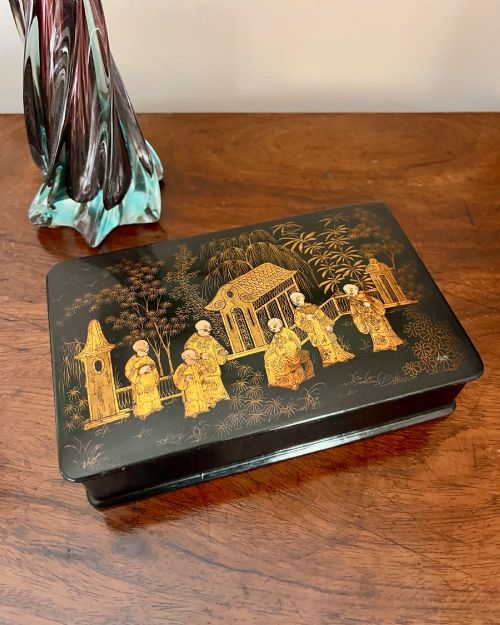
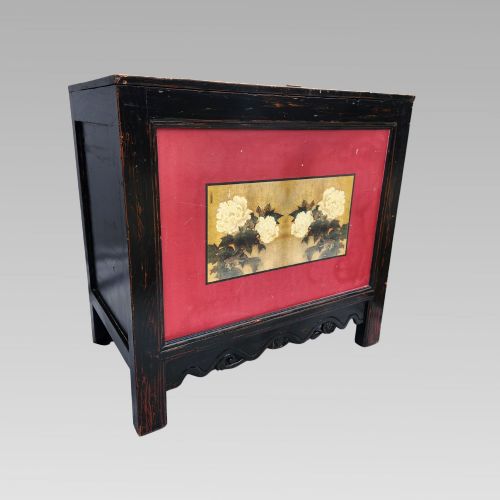
Surface ornamentation incorporates gold leaf, detailed ink drawings, and painted Chinoiserie motifs depicting figures, landscapes, or floral arrangements. Brass hinges, locks, and handles complete the assembly, fastened securely to the wooden bodies.
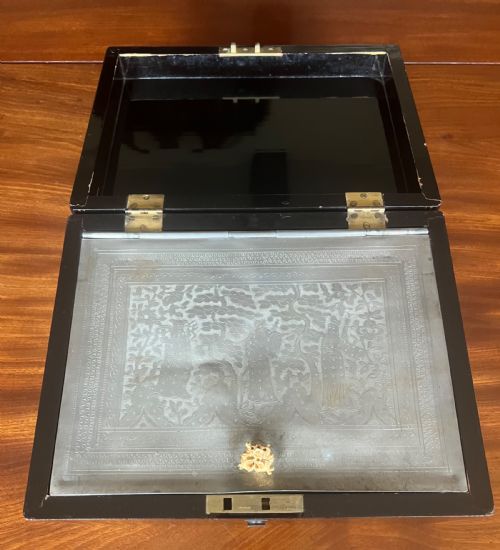
Some nineteenth-century tea caddies still carry the faint, sweet trace of dried leaves inside their lead-lined compartments.
What varies in quality
The refinement of the surface decoration largely determines the standing of an individual piece, distinguishing meticulous hand-painted detail from simpler commercial output. Penwork execution requires exceptional draughtsmanship, where fine ink lines create intricate geometric or pictorial scenes without blurring.
The integrity of the underlying woodwork and the survival of the original lacquer finish dictate long-term worth. Examples retaining their fitted interior compartments, original brass hardware, and untroubled polish command greater appreciation among collectors.
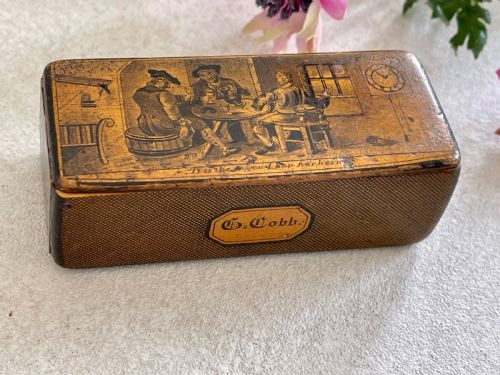
G Cobb·Swift And Son
The Lacquered Wooden Box Glossary
- Penwork
- A decorative technique utilising India ink applied with a fine pen to create intricate monochrome designs resembling engravings on a prepared wooden surface. This method gained particular popularity during the Regency period for small luxury boxes.
- Chinoiserie
- European artistic interpretations of Chinese and East Asian stylistic motifs, prevalent in furniture and decorative objects from the seventeenth through the nineteenth centuries. These designs frequently incorporate imaginary landscapes, pavilions, and figures.
- Caddy
- A small container or chest originally manufactured for storing tea leaves securely when tea was a costly commodity. Interior compartments often featured fitted lids or lead linings to preserve the contents.
- Lacquer
- A durable resinous finish applied to wood and polished to a hard sheen, originating in East Asian traditions and later adapted by European makers. It provides protection against moisture while offering a smooth canvas for gilding and painting.
- Tansu
- Traditional Japanese mobile storage cabinetry constructed from timber with metal reinforcement brackets. These pieces emphasise practical compartmentalisation and honest joinery.
Lacquered Wooden Box: Frequently Asked Questions
How do I date a lacquered wooden box?
Dating relies upon examining the construction methods, timber species, and stylistic indicators such as Regency penwork or Georgian Chinoiserie motifs. Hardware styles and interior arrangements also offer reliable clues to the period of manufacture.
Comparing the wear patterns and lacquer composition against known examples from the eighteenth and nineteenth centuries helps confirm the era. Documentation or signatures, when present, provide definitive chronological anchors.
Were tea caddies used for other items?
Tea caddies were primarily built to store and protect valuable tea leaves in locked compartments, often featuring multiple internal canisters. However, owners frequently repurposed them for jewellery, sewing accessories, or personal letters as fashions changed.
Many surviving caddies retain original dividers and lead foil linings that point to their initial culinary function. Conversions happened during their working lives, reflecting the practical needs of past households.
How do I care for antique lacquer?
Antique lacquer requires protection from direct sunlight, extreme temperature fluctuations, and excessive humidity which can cause the wooden substrate to expand and the finish to crack. Dusting should be performed gently with a dry, soft cloth without chemical polishes.
Maintaining a stable indoor climate preserves both the lacquer and the underlying timber. Avoid placing damp items or modern adhesives directly onto historic surfaces.
What is the difference between penwork and japanning?
Penwork involves applying fine ink lines by hand onto a light or dark background to simulate elaborate engravings, reaching a peak in Regency decorative arts. Japanning is a European imitation of East Asian lacquerwork that builds up dark resin layers finished with raised gold or metallic decoration.
Both techniques ornamented portable wooden objects, yet penwork relies on linear draughtsmanship while japanning focuses on built-up painted relief. Each requires distinct conservation considerations.