


Gilded China Pitcher
These gilded china pitcher examples bring together Victorian and later ceramics with gold leaf and gilt work, offering timeless display and serving forms.
Gilded China Pitcher
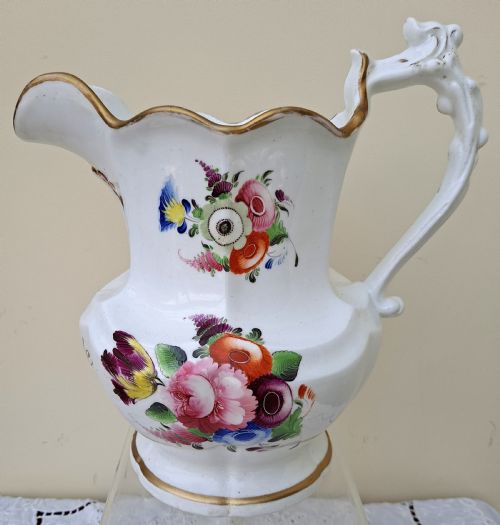
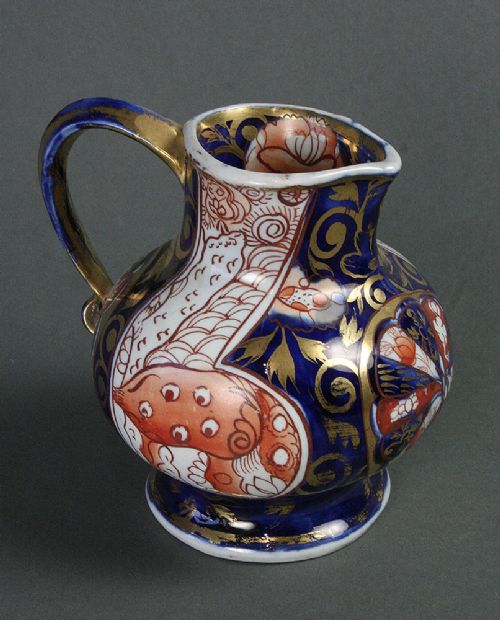
A gilded china pitcher represents a broad category of ceramic vessels decorated with gold leaf, gilt, or gilding, spanning periods from the Georgian era through the twentieth century. These items include cream jugs, decorative ewers, wash jug and bowl sets, commemorative vessels, and coffee pots produced in England.
The versions most commonly met on this page range from Victorian Rococo Revival pieces and Rockingham porcelain to twentieth-century Royal Worcester, Coalport, and Crown Derby productions. Makers utilised porcelain, earthenware, and ironstone china as bases for hand-painted floral panels and commemorative designs.
How they were made
Makers formed these items using porcelain, earthenware, and ironstone ceramic bodies, frequently shaping them into traditional jugs, pitchers, and ewers with rope edges or elephant's foot patterns. Surface decoration relied upon hand-painted enamel and floral panels applied directly to the ceramic ground.
Finishing touches involved the application of gold leaf, gold gilt, and gilding to highlight handles, rims, and pictorial panels. Artisans and painters signed specific works, such as the Royal Worcester pieces decorated by Freeman and Davis.
Listings here feature porcelain, earthenware, and ironstone materials decorated with gold leaf across the Victorian, Edwardian, and mid-twentieth-century periods.
What varies in quality
The refinement of the ceramic body and the precision of the hand-painted enamel set apart the finer examples from standard production. Superior pieces display intricate hand-painting, such as detailed fruit or floral panels, executed by named artists.
The application and preservation of the gold leaf or gilding also dictate the grade of a piece. Rich, burnished gold detailing that remains crisp and intact indicates higher initial craftsmanship and careful preservation.
Royal Worcester·Coalport·Crown Derby·Rockingham·Mason's·John Baley
The Gilded China Pitcher Glossary
- Gilding
- The application of gold leaf or powdered gold to a surface. This technique adds decorative lustre to ceramics and highlights raised structural elements.
- Ewer
- A large jug with a wide spout and a curved handle. These vessels were historically used for pouring water or served purely decorative functions.
- Porcelain
- A fine, hard-paste or soft-paste ceramic material fired at high temperatures. It provides a smooth, white surface ideal for detailed enamel painting.
- Ironstone china
- A patented type of heavy earthenware developed in England. It combines durability with the refined appearance of porcelain.
- Enamel
- Opaque glass-like material fused to ceramics through firing. It creates vibrant, permanent colours on decorative panels.
Gilded China Pitcher: Frequently Asked Questions
What is a gilded china pitcher used for?
These vessels originally served practical household functions such as pouring cream, serving coffee, or holding water in wash jug and bowl sets. Many also functioned as commemorative pieces or decorative ewers displayed on mantelpieces and sideboards.
Over time, their decorative qualities shifted their primary role toward display and collection. Today, owners typically use smaller cream jugs for table service while larger ewers and decorative pitchers remain purely ornamental.
How do I date a Victorian ceramic jug?
Dating involves examining the style, manufacturing marks, and decorative motifs present on the piece. Victorian examples often incorporate Rococo Revival curves or commemorative inscriptions tied to specific historical years.
Makers' marks stamped or painted on the underside provide the most reliable chronological markers. Comparing the style of painting and the ceramic body against known production periods helps narrow down the decade of manufacture.
Are these pieces safe for everyday use?
Most antique ceramic items require careful handling due to their age and delicate surface decorations. Hand-washing in lukewarm water without harsh detergents preserves the fragile enamel and gold leaf.
Using them for display rather than daily dining service protects the gilding from wear and tear. Thermal shock from hot liquids can also stress older ceramic bodies.
How do I clean and care for gilt?
Gilt and gold leaf surfaces demand gentle maintenance to avoid rubbing away the metallic layer. Soft, dry cloths remove dust effectively without disturbing the delicate finish.
Water and chemical cleaning solutions should be avoided unless strictly necessary, as moisture can penetrate hairline cracks in the glaze. Proper placement away from direct sunlight prevents fading of both the enamel colours and the surrounding gilding.