
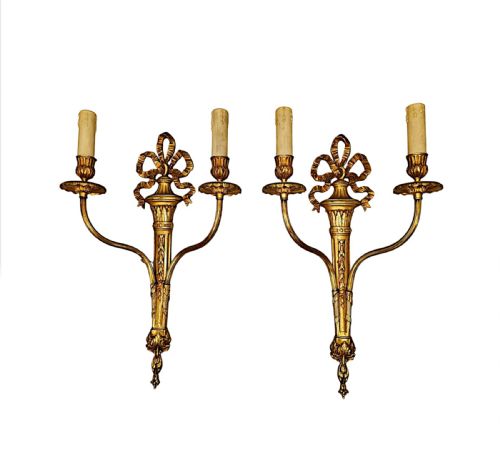
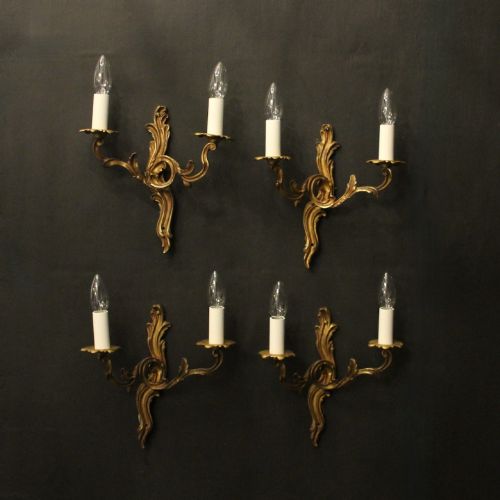

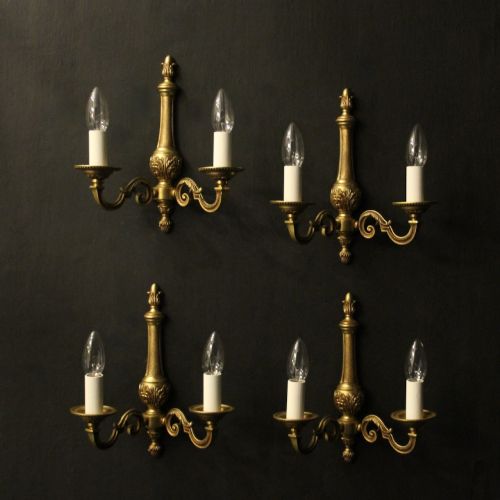
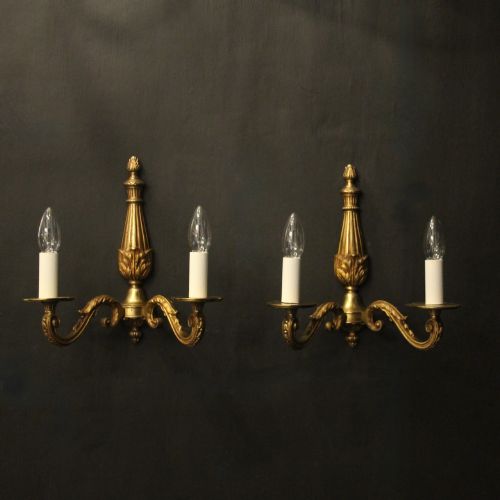
Gilded Candle Wall Light
A gilded candle wall light brings warm reflection and decorative metalwork to a room, illuminating interiors with period charm.
Gilded Candle Wall Light
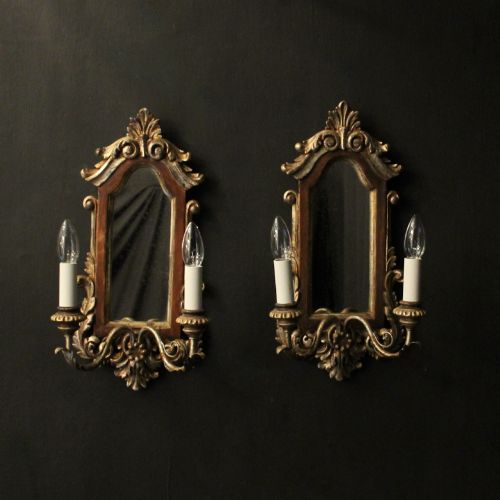
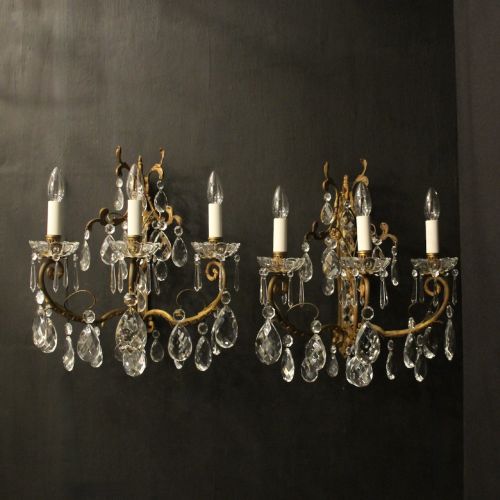
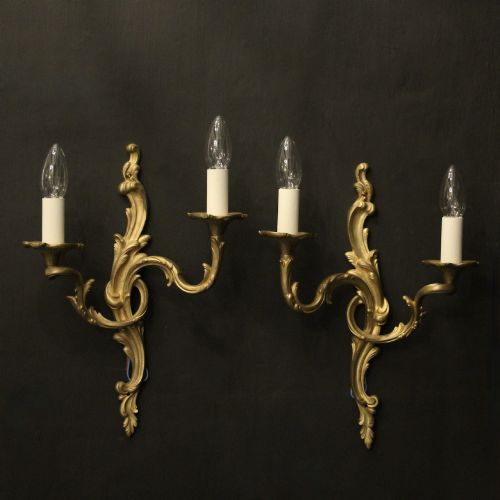
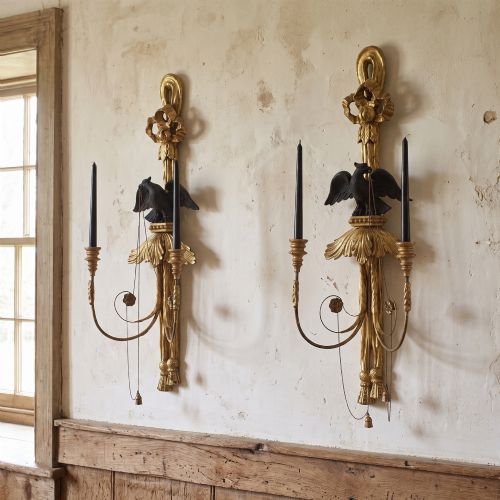
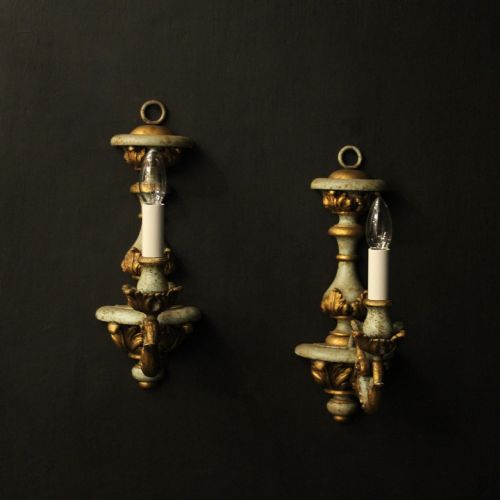
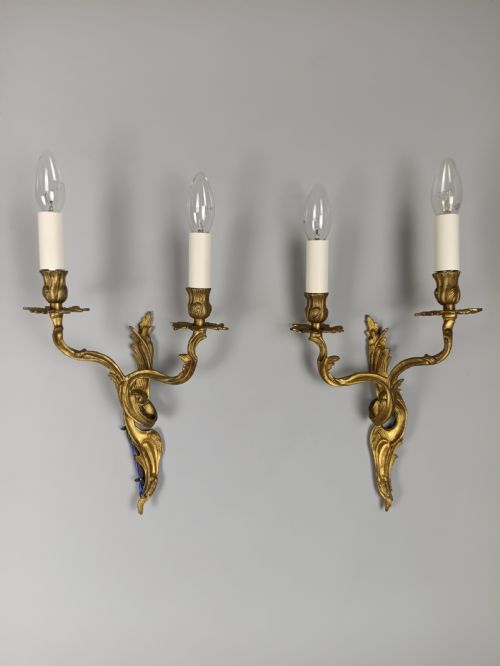
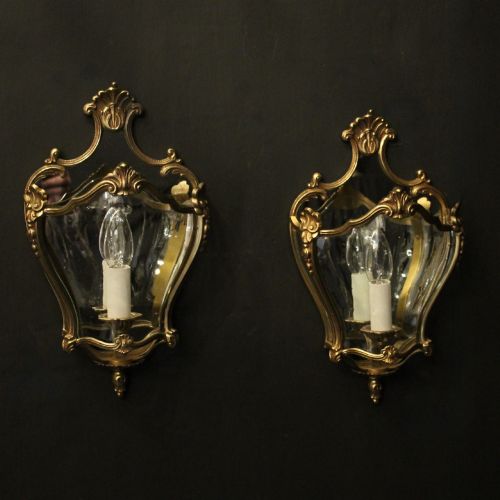
When searching for a gilded candle wall light, buyers encounter wall fixtures designed to hold candles, spanning periods from the eighteenth century through the mid-twentieth century. The selection contains wall sconces, girandoles, and half lanterns originating predominantly from France, Italy, and England.
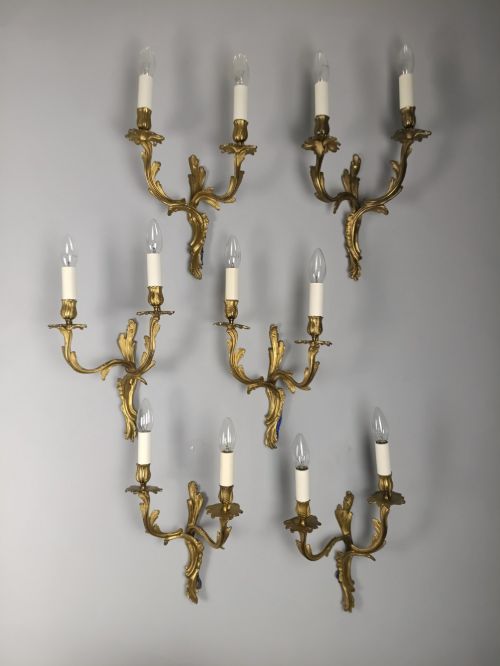
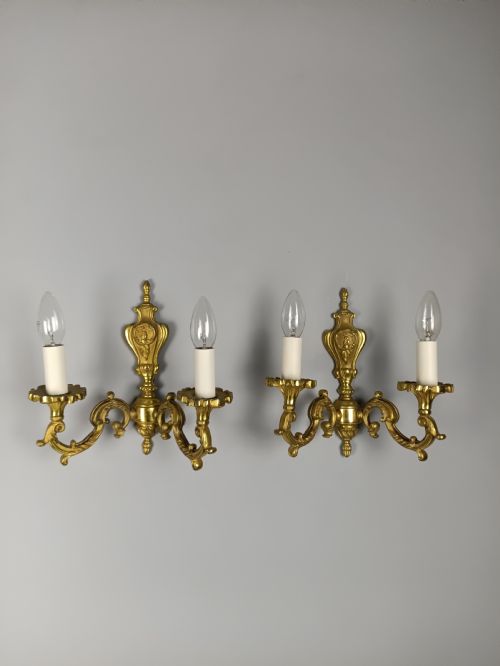
Most items appearing on this page date from the early twentieth century, particularly the 1920s and 1930s, alongside nineteenth-century examples and earlier styles. These pieces range from single-arm sconces to large sets of twin or triple-arm fixtures.
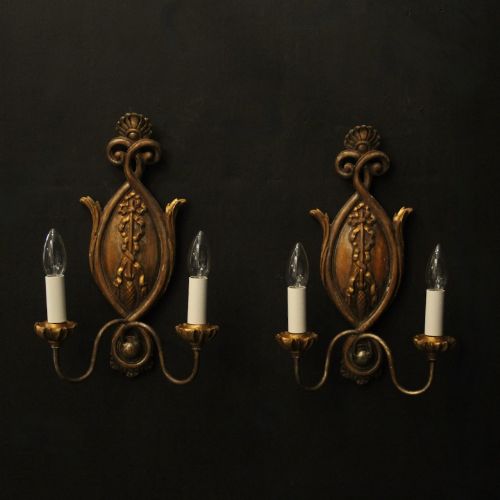
Stylistically, French Rococo, Louis XVI, and Florentine designs dominate the offerings, often incorporating ribbon motifs, mirror backs, or carved wooden frames.
How they were made
Construction relies on metals such as brass, gilt bronze, ormolu, and gilt metal, shaped into arms and backplates to hold candles securely. Artisans applied gilding over metal surfaces or carved wood to achieve a bright, reflective golden finish.
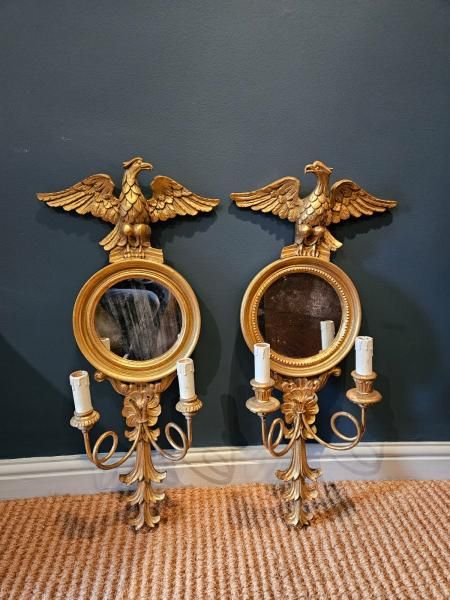
Giltwood pieces utilise carved wooden frames, sometimes paired with gesso, supporting glass mirrors in girandole forms to amplify the candlelight within the room.
Several pieces include sculpted ribbon details tied permanently in metal bow arrangements.
What varies in quality
Quality depends on the crispness of the casting in bronze and brass work, or the depth and detail of the hand-carved decoration found on giltwood frames. Pieces demonstrating finer artistic execution exhibit more intricate ornamentation, such as delicate ribbon crestings or elaborate floral motifs.
The preservation of the original gilded surface significantly influences the character of each fixture, distinguishing finely maintained examples from heavily restored or worn items.
The Gilded Candle Wall Light Glossary
- Girandole
- A decorative wall sconce featuring a mirror backplate designed to reflect and multiply the light from candles. These fixtures frequently incorporate carved giltwood or gilded metal frames.
- Ormolu
- Gilded bronze, where a finely ground gold-mercury amalgam is applied to a bronze base and heated. This technique was widely utilised in French decorative arts.
- Giltwood
- Wood that has been coated with a thin layer of gold leaf or gold paint. It appears frequently in eighteenth and nineteenth-century Italian and English frames and sconces.
- Wall Sconce
- A decorative lighting fixture fixed to a wall to hold candles or electric bulbs. The form encompasses single, twin, and multi-arm variations.
- Louis XVI Style
- A neoclassical design style characterised by straight lines, symmetry, and classical motifs such as ribbons and urns. It is a common aesthetic among French wall lights.
Gilded Candle Wall Light: Frequently Asked Questions
How do I hang a wall sconce securely?
Wall sconces require sturdy fixings suited to the weight of the metal or giltwood structure. Secure screws directly into wall studs or utilise appropriate wall anchors.
Ensure the backplate sits flush against the wall surface to support the weight of the arms and candles safely.
Can these antique wall lights take electricity?
Many historical wall lights retain their original candle fittings, while others have been adapted for electrical wiring by modern makers. Electric conversions allow safer integration into contemporary homes.
Buyers should inspect the internal wiring of any converted fixture to confirm it meets current electrical safety standards.
What is the difference between a sconce and a girandole?
A wall sconce is a general term for any lighting fixture attached to a wall, holding candles or bulbs. A girandole specifically includes a mirror component designed to reflect the candlelight.
Girandoles often feature ornate giltwood frames and multiple candle branches surrounding the central glass.
How do I clean gilded surfaces safely?
Gilded metal and giltwood require gentle dusting with a soft, dry brush to prevent damage to the delicate gold leaf layer. Avoid harsh chemical cleaners or abrasive cloths that can strip the finish.
Professional conservation advice should be sought for pieces showing significant tarnishing or flaking.