
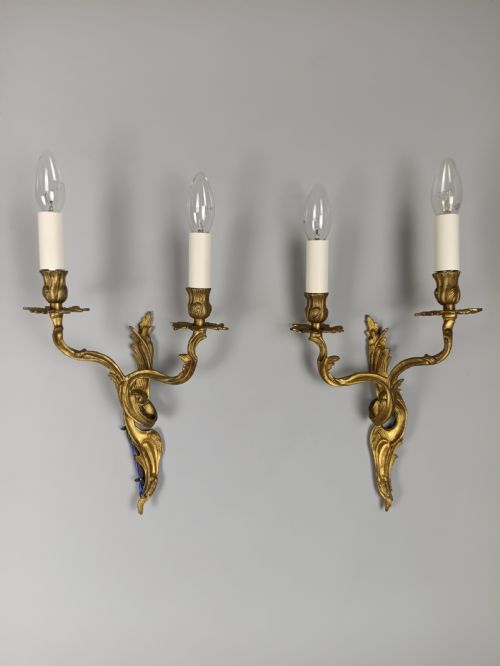
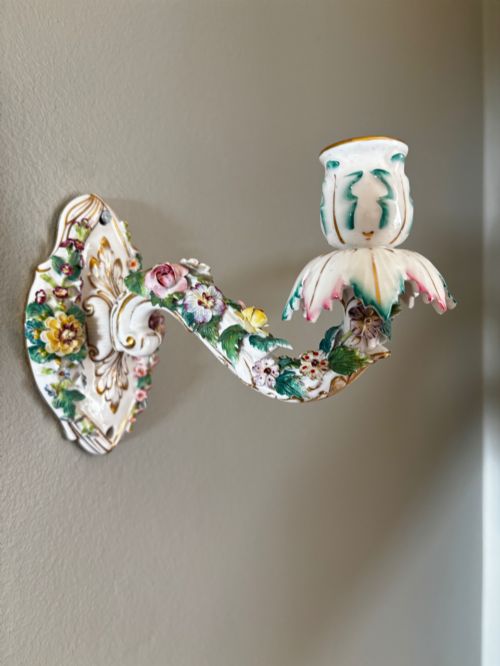
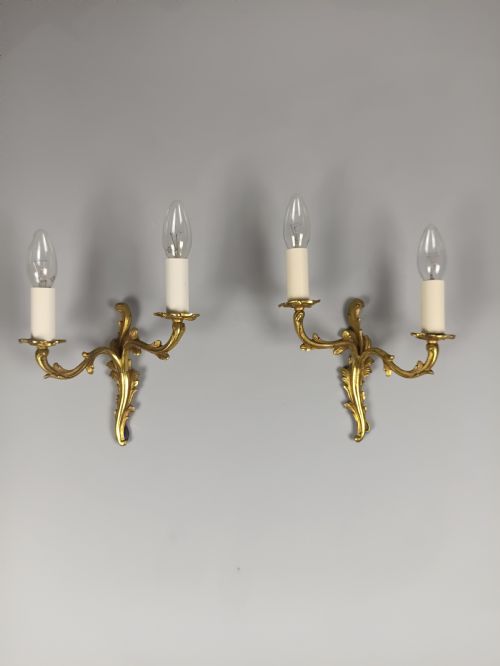
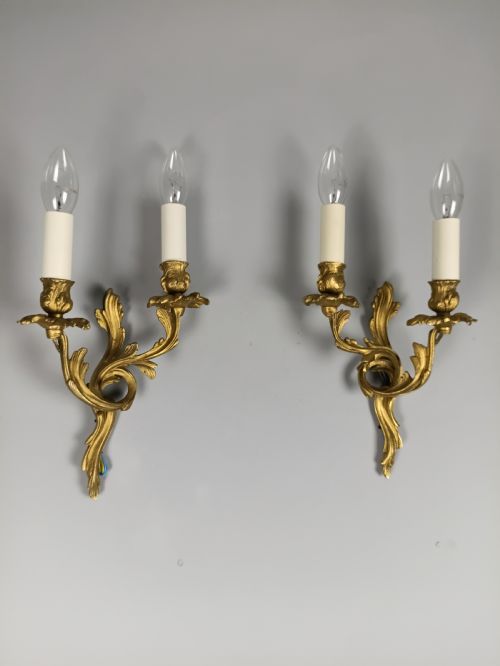
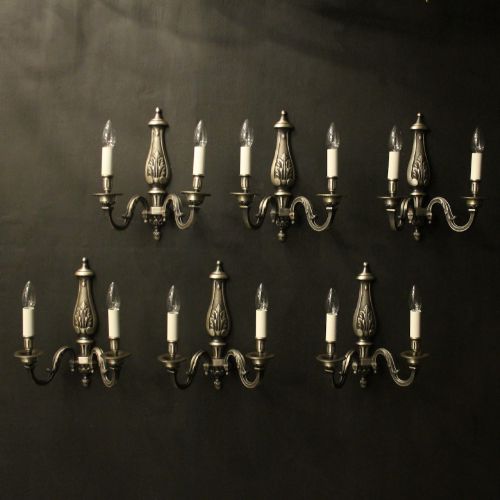
Gilded Candle Wall Brackets
Gilded candle wall brackets bring ambient illumination and sculptural elegance to a room, catching the light across centuries of Continental and English design.

Gilded Candle Wall Brackets
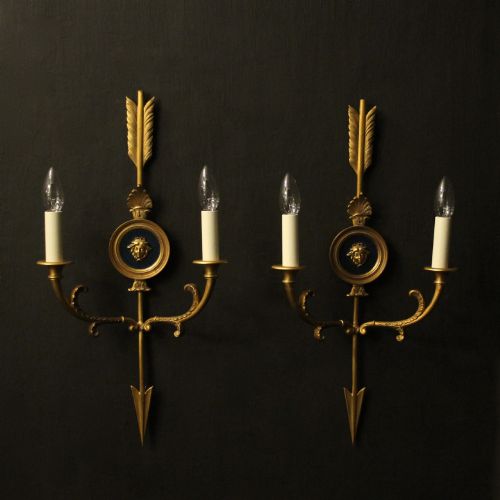
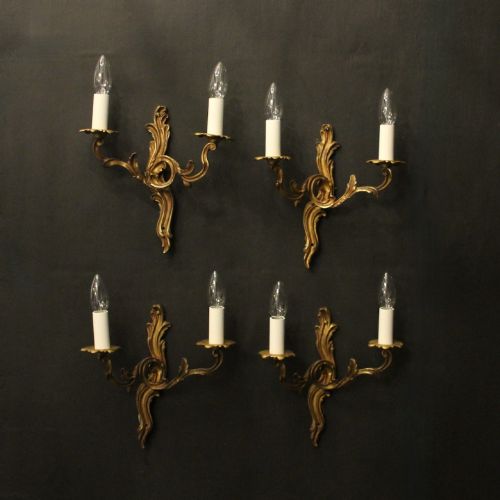
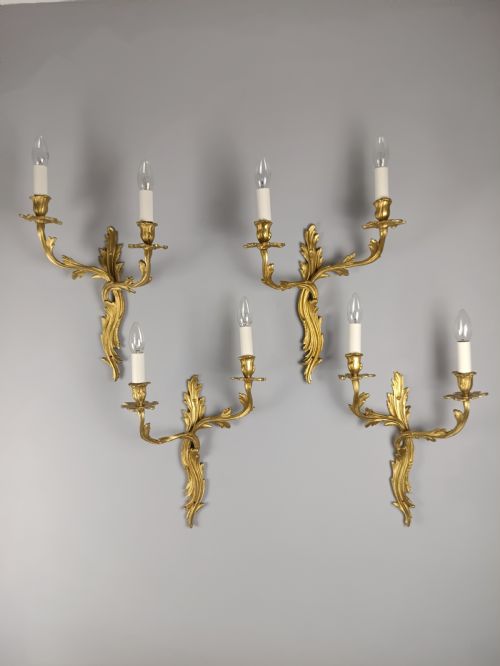
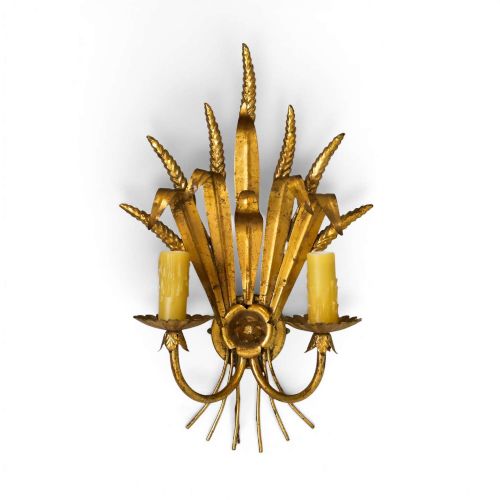
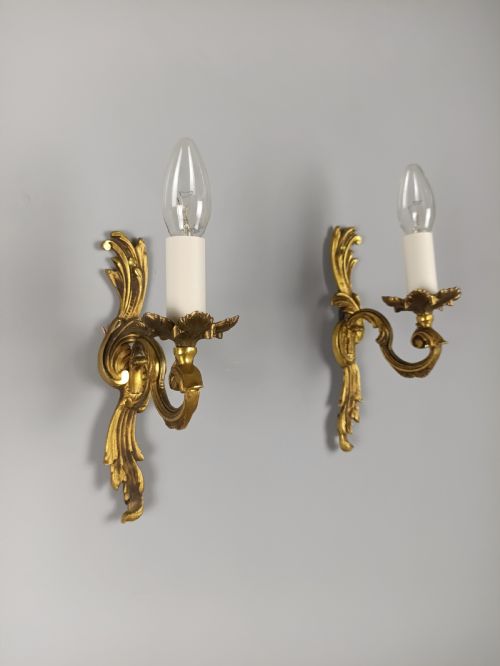
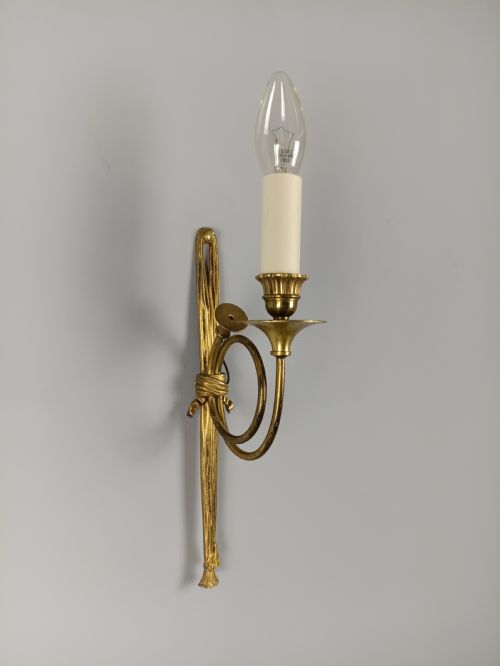
Gilded candle wall brackets are lighting fixtures designed to mount directly onto vertical surfaces, providing illumination while serving as decorative focal points. You will frequently encounter pairs and sets originating from French and Italian workshops across the nineteenth and twentieth centuries.
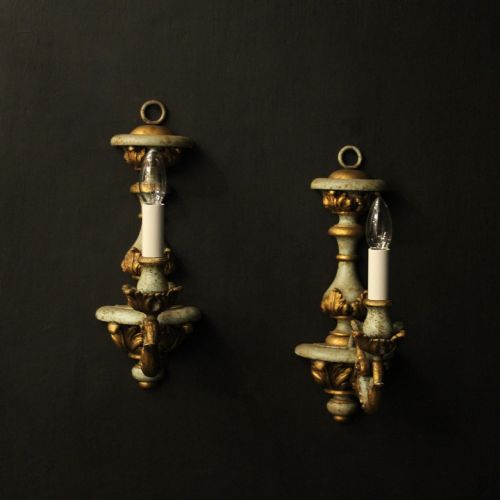
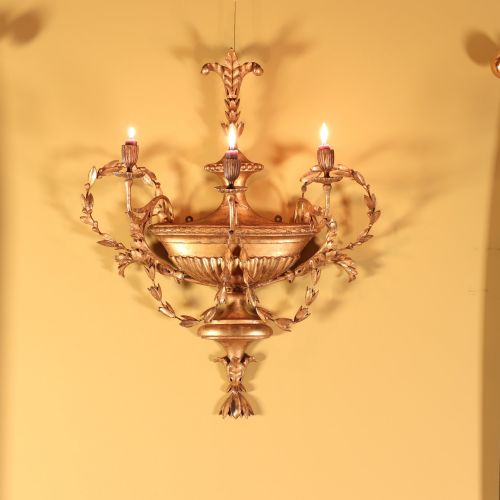
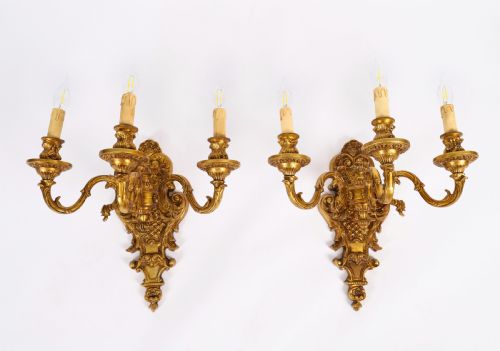
The selection ranges from single-arm sconces to grand multi-branch fixtures supporting several candles or electrical conversions. Common decorative idioms include French Rococo, Louis XVI, Florentine carvings, and Neoclassical symmetry.
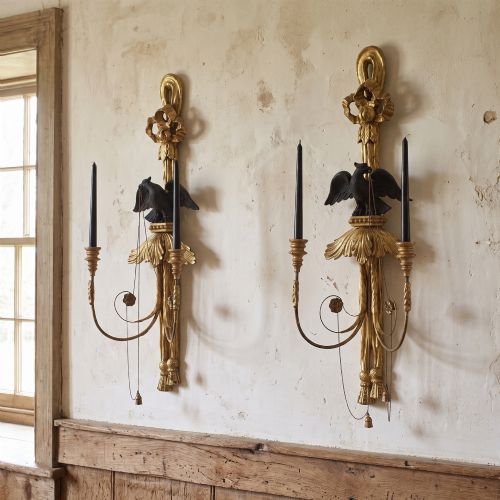
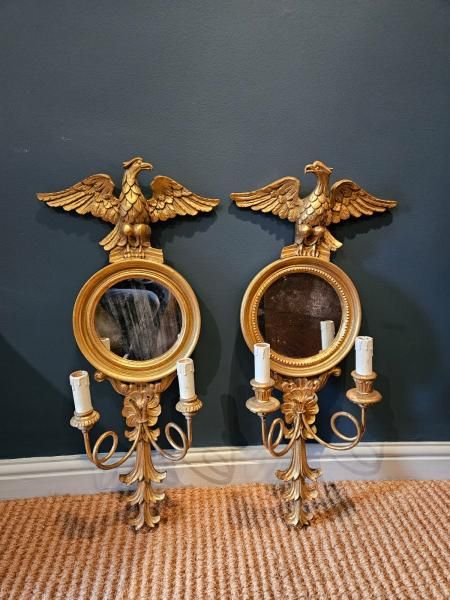
Makers utilised various forms, incorporating mirror backs, crystal drops, and carved eagles to enhance the reflective quality of the rooms they inhabited. These wall lights span diverse periods, notably the early twentieth century and earlier Victorian eras.
Construction and Materials
Artisans constructed these brackets using materials such as giltwood, gesso, carved wood, and cast metals including brass, bronze, and ormolu. Giltwood and gesso pieces relied on skilled carving and the application of delicate gold leaf over prepared wooden surfaces.
Metal brackets were cast, chased, and subsequently gilded or silver-gilded to achieve a durable yet lustrous finish. Workshops often combined cast bronze arms with backplates designed to mount securely to wall studs.
Eagle wall sconces keep a watchful, sharp-beaked eye over the parlour from their perch above the mantel.
Quality Variations
The integrity of the gilding further distinguishes superior pieces, where gold leaf or ormolu retains its rich texture and adherence to the underlying substrate. Heavier gauge metals and dense hardwoods indicate sturdier construction than lighter, pressed alternatives.
The Gilded Candle Wall Brackets Glossary
- Ormolu
- Finely ground high-carat gold mercury-gilded onto a bronze object. This technique imparts a rich, warm metallic lustre characteristic of fine French decorative metalwork.
- Gesso
- A plaster mixture applied to wood surfaces as a base for gilding. It provides a smooth ground that artisans can carve and detail before applying gold leaf.
- Sconce
- A wall-mounted lighting fixture designed to hold candles or electric lamps. Historically, these directed candle illumination outward into the room using backplates.
- Rococo
- An ornate design style popular in the eighteenth century and revived later, featuring asymmetrical scrolls, shell motifs, and naturalistic curves.
- Giltwood
- Timber that has been coated with a thin layer of gold leaf. It forms the primary structural and decorative medium for many Italian and English wall lights.
Gilded Candle Wall Brackets: Frequently Asked Questions
How do I install antique wall brackets?
Professional installation is recommended to ensure the weight of the metal or wood fixture is securely anchored to wall studs. Electrical wiring should be inspected by a qualified electrician to meet current safety standards.
For hardwired models, ensure the mounting backplate covers the junction box completely while maintaining the correct alignment on the wall surface.
Were these brackets originally wired for electricity?
Most pieces dating from the nineteenth and early twentieth centuries were originally designed for candles or oil. Many have since been converted to accept electric bulbs for modern domestic use.
Conversions often retain the original candle tubes and sockets to preserve the visual appearance of the fixture while offering contemporary convenience.
How do I clean gilded surfaces safely?
Dust gilded wood and metal gently with a soft, dry brush or microfibre cloth to prevent accumulation. Avoid chemical cleaners, water, or abrasive cloths that can strip or damage the delicate gold leaf.
When handling crystal drops or mirror plates, apply a mild glass cleaner to a cloth rather than spraying directly onto the surrounding gilt frame.
How can I tell a reproduction from an antique?
Examine the construction methods visible on the reverse of the backplate, where older pieces show hand-cut screws, tool marks, and natural wood ageing. The wear patterns on gold leaf and the patina of the underlying bronze or brass also indicate genuine age.
Weight and material density provide further clues, as older castings and carved timbers typically feel heavier and more substantial than modern lightweight replicas.