
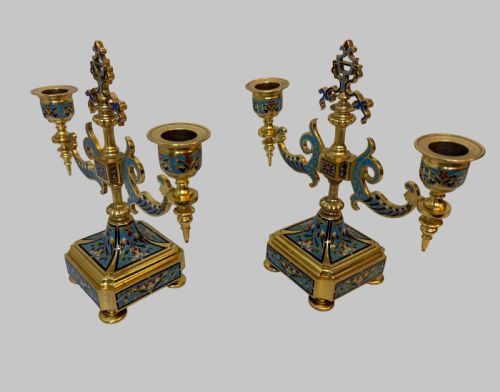


Gilded Brass Table Light
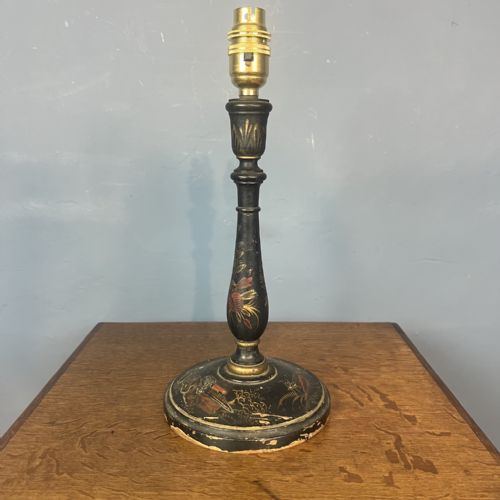
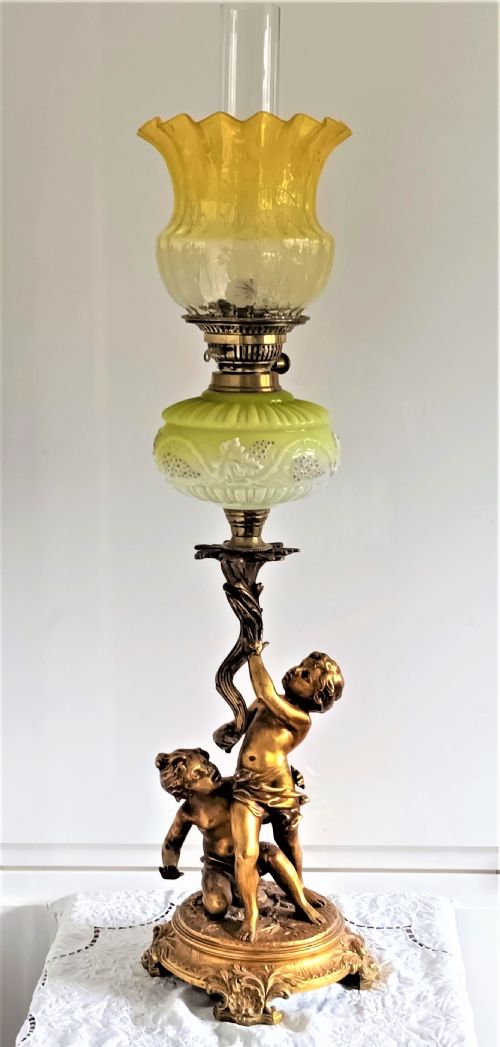
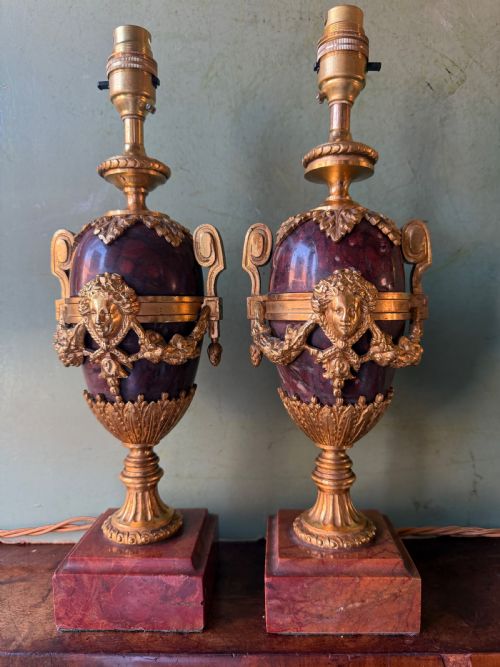
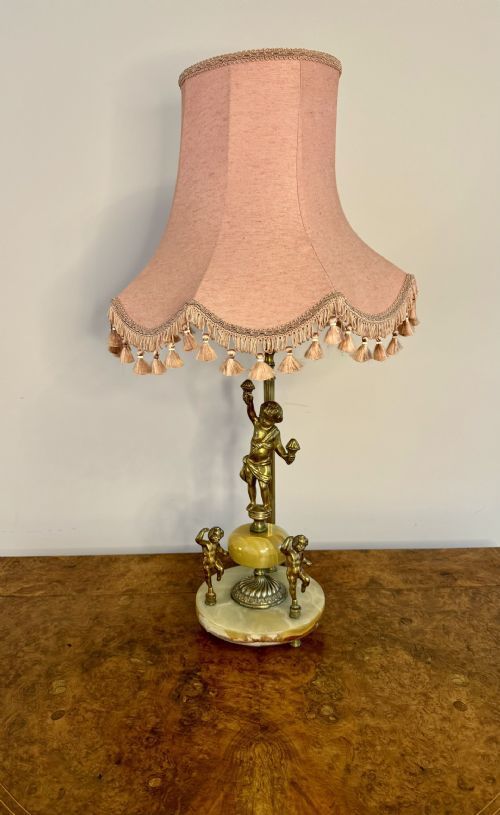
These gilded brass table light pieces bring warmth and decorative weight to a room, spanning French Empire to Victorian styles.
Gilded Brass Table Light
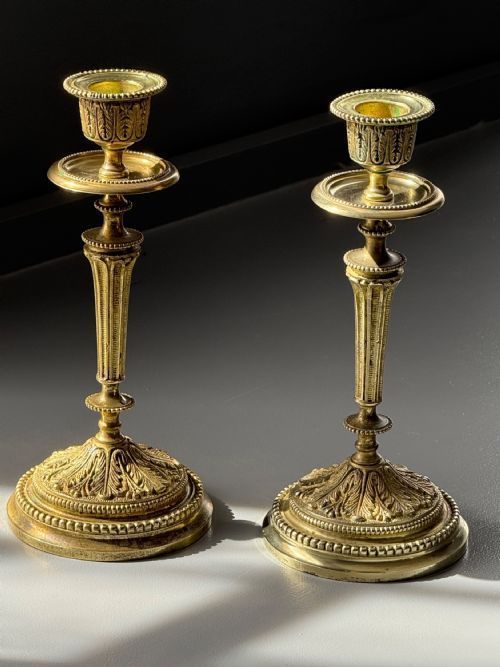
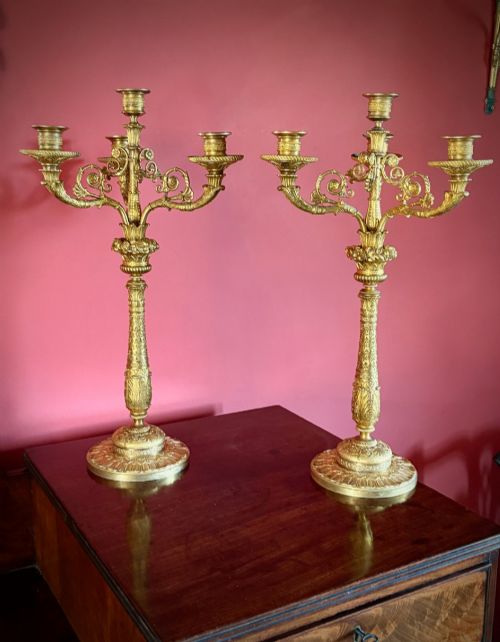
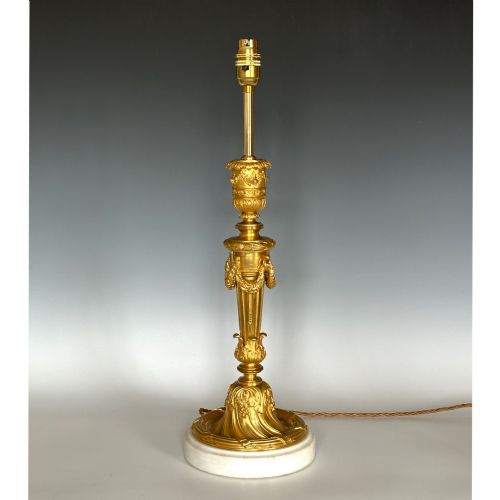
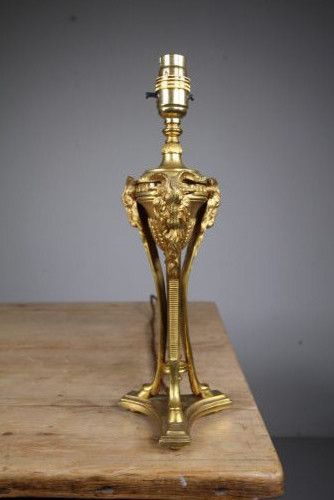
A gilded brass table light selection gathers together transformed candelabra, converted altar sticks, and dedicated lamp bases dating from the nineteenth and early twentieth centuries. Buyers encounter pairs and single items drawing heavily on French Rococo Revival, Louis XVI, and Neoclassical vocabularies.
The objects frequently originate from English and French workshops, though items featuring Japanese Satsuma, Cantonese pottery, and Swedish Empire bronze appear across the period range. Many pieces began life as oil lamps or candle holders before receiving electrical fittings in later decades.
Table lamps, candelabras, and standard candlesticks dominate the physical forms available on this page, often incorporating multi-branch configurations or mounted crystal lustres.
Materials and Techniques
Maker operations relied on cast bronze, brass, and gilt metal, often finished with mercury gilding or modern ormolu techniques to achieve a durable golden sheen. Mounts and structural elements were frequently paired with contrasting natural materials including rouge marble, onyx, and hand-painted cobalt blue ceramics.
Champlevé enamel work, crystal droplets, and applied fabric shades introduce additional textural contrast to the metal foundations. Components were cast in separate sections and mechanically joined using threaded screws and pins typical of nineteenth-century metalwork.
Several heavy brass lamp bases started life as altar candlesticks before electricians gave them a modern job.
Defining Quality
The distinction between ordinary and exceptional examples rests on the crispness of the bronze casting and the depth of the subsequent gilding. Finely chiselled details on floral mounts, cherubs, and acanthus leaves separate master foundry production from routine commercial output.
Substantial weight from solid brass or bronze cores, combined with integrated use of decorative stone like marble or onyx, indicates higher workshop ambition. The integration of complex elements like multi-branch arms and champlevé panels further elevates the standing of an individual piece.
Corby Castle·Galle
The Gilded Brass Table Light Glossary
- Ormolu
- A gilded bronze or brass finish produced by applying a mixture of gold and mercury or through electrogilding. The technique creates a rich golden surface characteristic of French decorative arts.
- Candelabra
- A branched candlestick holder designed to support multiple lights simultaneously. These fixtures often feature removable branches or central decorative finials.
- Champlevé
- An enamelwork technique where troughs are dug into a metal surface and filled with vitreous paste before firing. This adds colourful geometric or floral patterns directly onto the metal body.
- Lustre
- A cut-glass pendant or drop hung from lighting fixtures to refract illumination. Lustres are commonly suspended from arms on nineteenth-century candelabra and lamps.
Gilded Brass Table Light: Frequently Asked Questions
How do I convert these for modern use?
Most older pieces arrive with historical wiring or require professional rewiring to meet contemporary safety standards. Electricians can usually thread modern flex through the existing central channel without altering the outer metal body.
Retaining original key switches or adding inline floor switches helps preserve the historic aesthetic of the lamp base during conversion.
What periods do these lamps cover?
The available selection spans the nineteenth century through the early twentieth century, encompassing Victorian, Edwardian, and various revival epochs. French styling heavily influences the design vocabulary throughout this timeframe.
Dates generally range from the eighteen-fifties up to nineteen-thirty, reflecting shifting tastes in interior illumination.
How do I clean gilded brass safely?
Gilded surfaces require gentle dusting with a soft dry cloth to prevent abrasion of the delicate metallic finish. Water and chemical polishes strip away thin layers of gilding permanently.
Allowing an aged patina to remain intact maintains the historical character and visual depth of the metal.
Are original shades usually included?
Most antique metal bases and candelabra survived without their original shades, which perished or went out of fashion over time. Many items listed now feature complementary fabric shades added during later decades.
Matching a replacement shade to the period style helps balance the visual weight of the heavy brass or bronze base.