


Gilded Brass Candlesticks
Gilded brass candlesticks bring warmth and formal presence to a room, catching candleflame in their metallic surfaces.
Gilded Brass Candlesticks
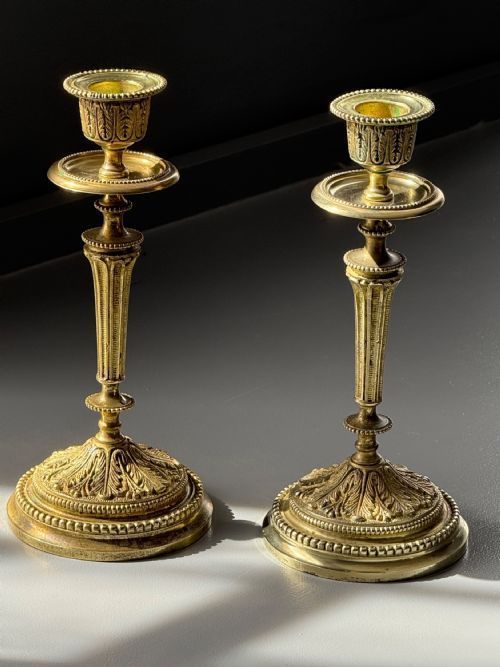
When you search for gilded brass candlesticks, you encounter items designed to elevate domestic illumination from practical necessity to formal display. The selections span the eighteenth, nineteenth, and early twentieth centuries, drawing heavily upon French Rococo Revival, Louis XVI, Empire, and Victorian aesthetics.
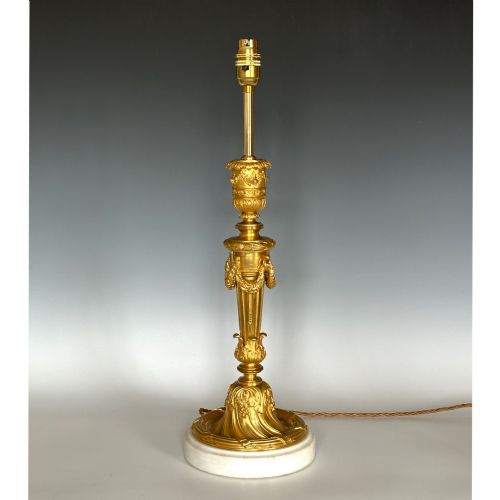
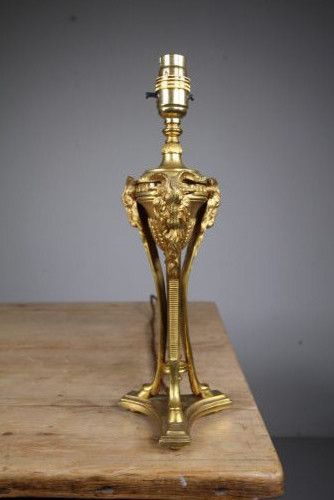
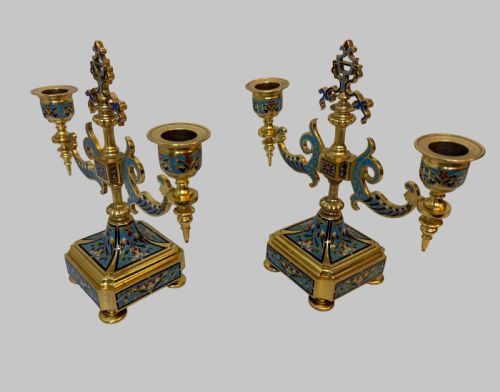
You meet pairs most frequently, often cast in heavy bronze or ormolu alongside single altar sticks, desk candlesticks, and multi-branch candelabra. Many nineteenth-century examples have undergone conversion into table lamps or standard lamps while retaining their original metalwork.
Origins stretch across England, France, Italy, and Sweden, incorporating regional variations like champleve enamel or marble bases. The forms range from small chamber sticks to tall standing candelabra and specialised decorative desk sets.
How they were made
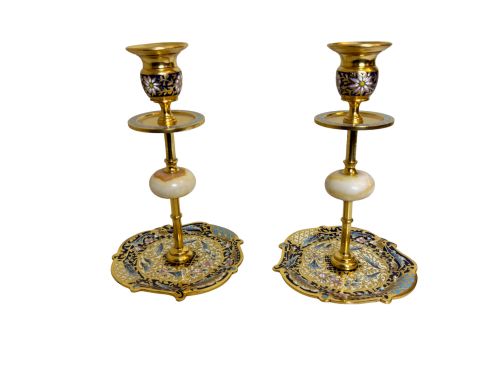
Makers utilised casting techniques in brass, bronze, and gilt bronze, often combining patinated bronze with bright ormolu highlights to create depth. Mercury gilding or electroplating applied the gold layer onto the base metal, whilst champleve enamel and carved marble provided contrasting colour and texture.
Individual components were cast in sections before being assembled with threaded rods, pins, or screws. Artisans chased the cooled metal surfaces by hand, sharpening crisp acanthus leaves, figures, and architectural motifs with gravers and punches.
Playings cats or kittens appear in the metalwork alongside dolphins, rams' heads, and the Four Seasons.
What varies in quality
Weight and construction integrity also separate tiers of production, as heavier castings with substantial wall thickness and secure joints endure centuries of handling better. The durability and warmth of the original gilding or ormolu finish determine how successfully the metal catches light.
The Gilded Brass Candlesticks Glossary
- Ormolu
- Finely ground high-carat gold amalgam applied to bronze, creating a rich golden surface finish through heat mercury gilding. This technique was widely practiced by French metalworkers.
- Champleve
- An enamelling technique where troughs or cells are hollowed out in the metal surface and filled with vitreous enamel powder before firing. It appears on nineteenth-century decorative pieces.
- Pricket candlestick
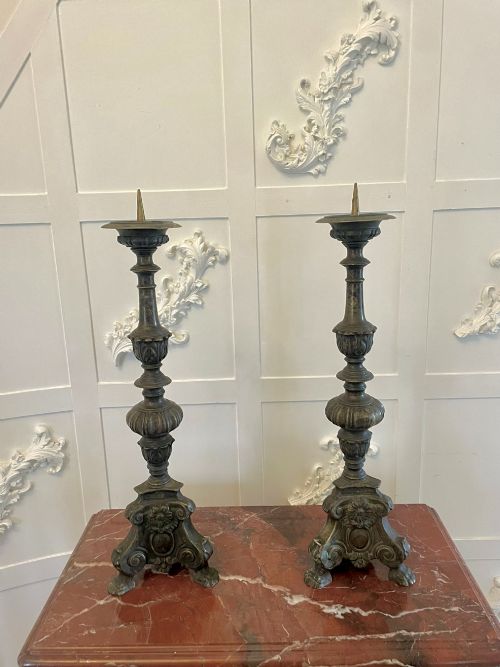
- A candlestick featuring a sharp central spike designed to push directly into the base of a wax candle rather than sitting inside a socket. These often date to ecclesiastical or formal contexts.
- Candelabra
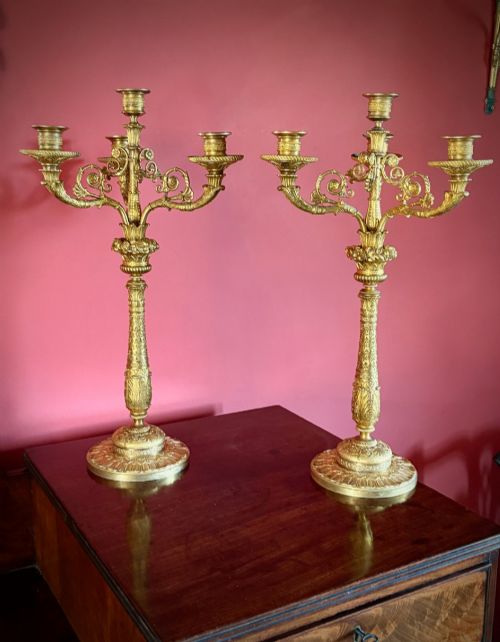
- A branched lighting fixture holding multiple candles or lights from a single central stem. They vary from small desk models to large multi-light floor stands.
- Chamber stick
- A low, portable candlestick fitted with a handle and a shallow pan to catch dripping wax while moving through a house at night.
Gilded Brass Candlesticks: Frequently Asked Questions
How do I clean gilded brass candlesticks?
Dust gently with a soft, dry cloth to prevent accumulation in the crevices of chased metalwork. Avoid abrasive polishes that strip away original ormolu or gilding.
Moisture and chemical cleaners damage historical metal surfaces permanently. Stick to non-invasive cleaning methods to preserve the integrity of the finish.
Were these candlesticks converted to electricity?
Many nineteenth-century candelabra and candlesticks have received later electrical conversions to function as table lamps. Wiring often runs through the central stem or alongside the original structure.
Conversions can sometimes be reversed if the core metal components remain unaltered by drilling. Check the base and stem construction to understand the extent of any alterations.
How can I tell a French piece from an English one?
French pieces frequently display neoclassical or rococo revival motifs with extremely fine hand-chasing and distinct regional casting signatures. Ormolu finishes on continental items tend to possess deep, rich patination.
English production often favours sturdier domestic utility, as seen in military designs or regional interpretations of Gothic styles. Materials like mahogany and lacquered brass appear more frequently in British listings.