


Gilded Bone China Service
A gilded bone china service brings tangible weight to a table, offering generous proportions and metallic lustre in porcelain designed to last generations.
Gilded Bone China Service
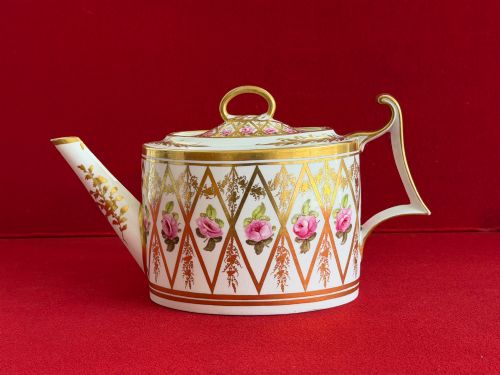
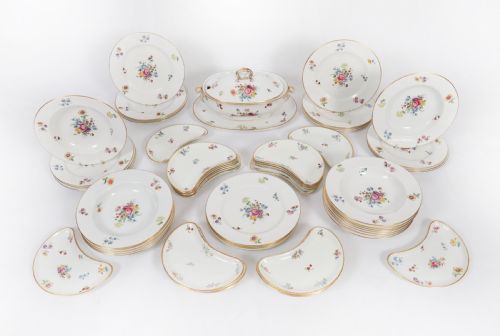
A gilded bone china service comprises matching sets intended for dining, dessert, or tea, formed from fine ceramic body and embellished with gold leaf or gilt highlights. These collections range from single teapots and sugar bowls to extensive dinner services spanning dozens of plates.
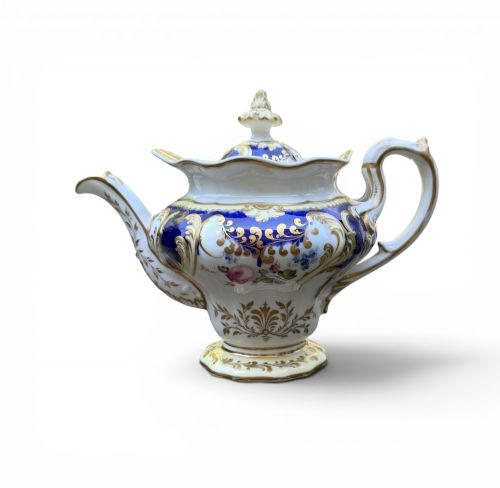
The selections on this page draw from Georgian, Regency, Victorian, and Edwardian periods, alongside later twentieth-century examples. Buyers most frequently encounter nineteenth-century settings, particularly Victorian tea sets and larger dessert or dinner services.
Forms vary according to their original domestic function, encompassing specialised vessels such as sucriers, comports, and cream jugs alongside standard cups and saucers. Each grouping reflects the dining customs of its era, from formal Georgian dessert displays to large Victorian gatherings.
What varies in quality
The refinement of the ceramic body and the skill of the hand-painted decoration distinguish superior examples from standard production. Finer sets display crisp moulding, delicate enamel work, and dense, burnished gold gilding that retains its brilliance.
Completeness and uniformity across a service also dictate distinction, as larger multi-piece sets matching in pattern and factory mark carry greater consistency. The precision of the individual painter, particularly on signed or attributed dessert plates, elevates the artistic merit.
Thomas Steele painted fruit so convincingly on early nineteenth-century dessert plates that contemporary insects reportedly tried to sample the painted plums.
Royal Crown Derby·Spode·Coalport·Minton·Flight Barr And Barr·Royal Worcester·Wileman Foley Shelley·Hicks Meigh And Johnson·Royal Davenport·Doric China Longton Stafford·Gladstone Potteries
The Gilded Bone China Service Glossary
- Bone china
- A type of soft-paste porcelain incorporating bone ash, known for its high strength, chip resistance, and translucent quality. This material forms the durable base for many fine English services.
- Gilt
- A thin layer of gold applied to the surface of the porcelain for decoration. It provides the characteristic metallic gleam seen along rims and handles.
- Sucrier
- A covered sugar bowl designed for use in tea and coffee services. These vessels often match the exact pattern and gilding of the teapot.
- Comport
- A raised dish or pedestal bowl used for presenting fruit or sweetmeats as part of a dessert service. They frequently anchor the centre of a matched table setting.
- Imari
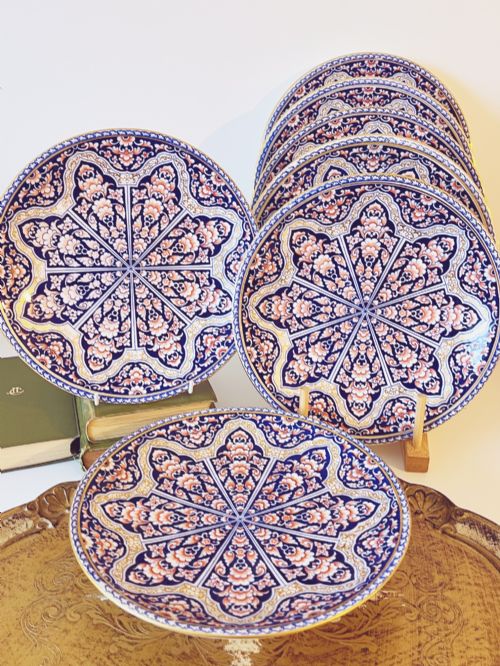
- A decorative style inspired by Japanese export wares, typically featuring a palette of iron red, cobalt blue, and heavy gilding. It remains a prominent design motif across several periods.
Gilded Bone China Service: Frequently Asked Questions
How do I care for gilded bone china?
Wash these pieces gently by hand using warm water and a mild detergent, avoiding abrasive sponges that can wear away the gold leaf.
Store them with felt separators between plates to prevent scratching the glaze and the delicate gilt rims.
Can I use an antique service daily?
While these sets were built for practical dining, older enamels and gold leaf benefit from careful handling rather than heavy everyday use.
Reserve them for special occasions to preserve the hand-painted details and the integrity of the bone china.
How do I distinguish Regency from Victorian sets?
Regency pieces often display neoclassical restraint with crisp white surfaces and refined botanical painting, dating roughly from the early nineteenth century.
Victorian services tend toward heavier ornamentation, incorporating rich colours, elaborate moulding, and more lavish application of gold gilding.
What is the difference between a tea and dessert service?
A tea service typically includes teapots, cups, saucers, cream jugs, and sugar bowls designed for serving hot beverages.
A dessert service focuses on flat plates and elevated comports intended for presenting fruit, cakes, and sweet courses at the end of a meal.