


Vintage English China Set
A vintage english china set brings historic table service into the present room through painted porcelain, bone china and ironstone.
Vintage English China Set
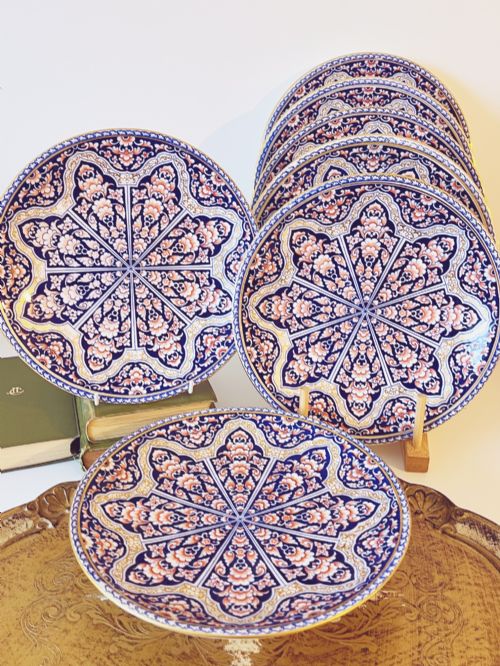
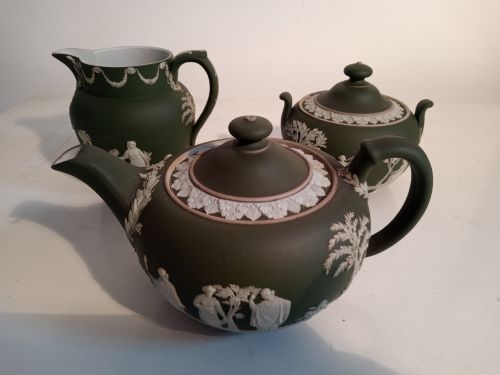
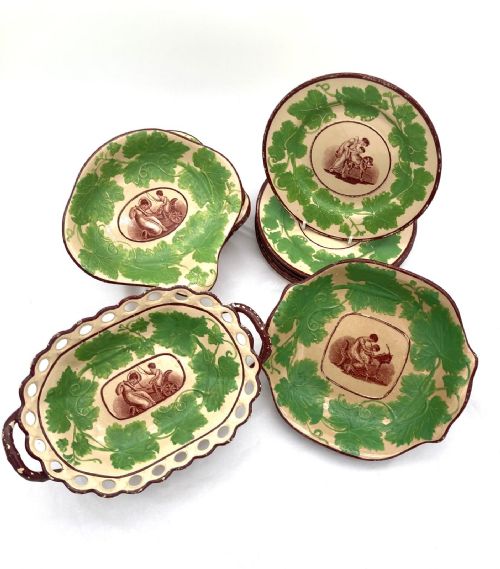
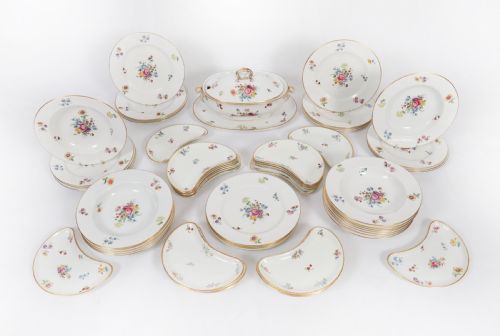
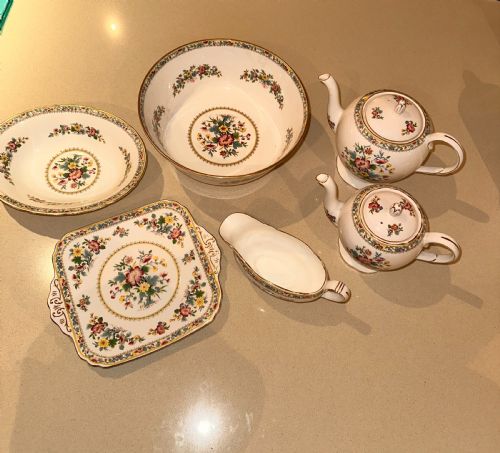
A vintage english china set comprises matching or service-complete ceramics designed for dining, tea or coffee, ranging from expansive dinner services to intimate tea trios. When searching for a vintage english china set, collectors encounter diverse forms including dessert services, coffee cups and saucers, and multi-piece tea services spanning periods from the Georgian era through Victorian and Edwardian times to the 1930s.
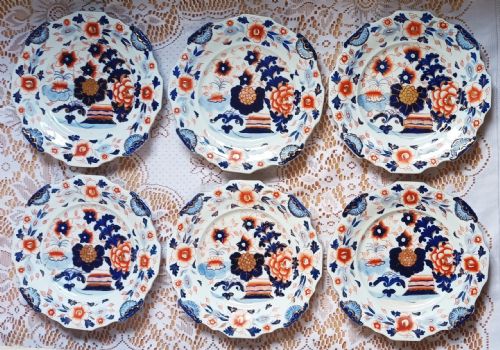
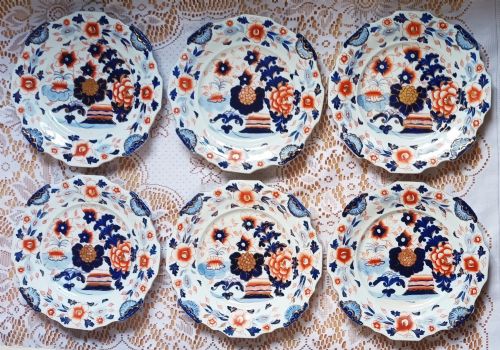
The materials utilised across these groupings reflect traditional British ceramic production, incorporating porcelain, bone china, earthenware, ironstone and ceramic bodies finished with enamel, glaze and gold leaf. Surviving examples demonstrate forms such as octagonal jugs, comports, demitasse cups, plates and platters, each bearing historical patterns like Japan, Bat Wing, London Bridge and Harlequin.
The physical character of these sets is defined by their period context, shifting from hand-painted 18th-century porcelain trios to sturdy 19th-century ironstone plates and brightly coloured 20th-century bone china teasets. Buyers meet varied scales, from single-person bachelor teasets to large formal dining assemblages intended for ten or more persons.
Materials and production methods
Makers formed these ceramic pieces using local clays, bone ash and hard-paste porcelain recipes shaped by hand or moulded into specialised forms like octagonal jugs and footed comports. These bodies received careful kiln firings to prepare the porous substrate for subsequent decoration.
Surface ornamentation relied on hand-painting, enamel work and transfer printing under or over the glaze, frequently enhanced by applied gold leaf and rich gilding. Artisans executed intricate motifs including floral sprays, birds and geometric patterns directly onto the ceramic surface before final glazing.
Bat wings and fancy birds flutter quietly across nineteenth-century porcelain cups.
Factors determining quality
Quality separates standard utilitarian wares from superior exhibition pieces through the precision of the hand-painting, the crispness of transfer-printed lines and the evenness of the glaze application. Finer sets display delicate brushwork and rich, unblemished gold leaf detailing that remains sharp across every component of the service.
The physical integrity of the ceramic body and the completeness of the original service grouping heavily influence the standard of a set. Well-preserved multi-piece assemblages with matching registry or date marks demonstrate superior original curation compared to mismatched or heavily worn groupings.
Royal Crown Derby·Wedgwood·Spode·Booths·Coalport·Mason's·Shelley·Royal Worcester·Royal Albert·Doric China·Davenport·Sutherland Ware·Gladstone Potteries
The Vintage English China Set Glossary
- Bone china
- A type of soft-paste porcelain incorporating animal bone ash, resulting in a strong, translucent white ceramic body. It became a staple of British tablewares from the late eighteenth century onward.
- Ironstone
- A heavy, durable earthenware patent developed in the nineteenth century to imitate Chinese porcelain while offering greater resistance to daily wear. It frequently carries bold transfer-printed or hand-painted patterns.
- Comport
- A raised dish or bowl on a foot, traditionally used for serving fruit or dessert as part of a formal nineteenth-century dining service. These stand centrally among matching plates.
- Demitasse
- A small cup used for serving strong black coffee or espresso, frequently paired with a matching saucer. They appear often in twentieth-century porcelain and bone china services.
- Enamel
- A glass-like substance fused to the surface of ceramic wares through firing to add vibrant colour and decoration. Enamels provide the bright hues seen in many traditional floral and geometric patterns.
Vintage English China Set: Frequently Asked Questions
What is the difference between bone china and ironstone?
Bone china contains animal ash which gives it a delicate translucency and a refined appearance suited to formal tea and coffee services.
Ironstone is a dense, heavy earthenware designed for durability, making it ideal for robust dinner and dessert services intended for heavier use.
How were tea and dessert services used historically?
Tea services were central to domestic hospitality, utilised during afternoon gatherings for serving guests from a matching pot, cups, saucers and sugar bowls.
Dessert services featuring comports and plates were brought out at the conclusion of formal meals specifically for serving fruit, sweetmeats and small cakes.
Can antique china sets be used daily?
Many sturdy ironstone and bone china sets remain robust enough for careful daily use, provided they are hand-washed gently without harsh detergents.
Fine porcelain sets with delicate gold leaf or overglaze enamel work are better reserved for occasional display and light dining to preserve their historic decoration.
How do you identify the period of a china set?
Periods are identified through a combination of ceramic body composition, stylistic markers such as Georgian neoclassical motifs or Art Deco geometry, and maker's marks.
Many pieces carry specific factory stamps, shape names, or impressed date codes on the underside that narrow down their production era.