
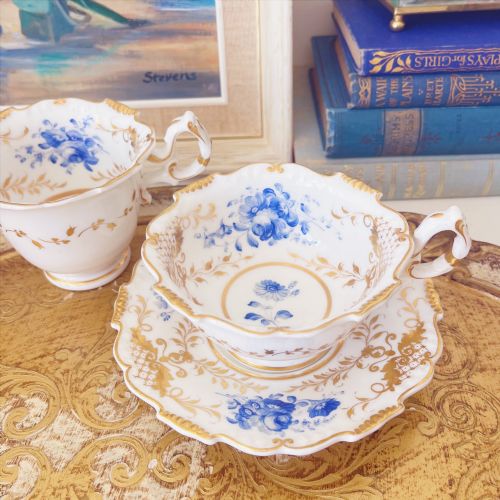
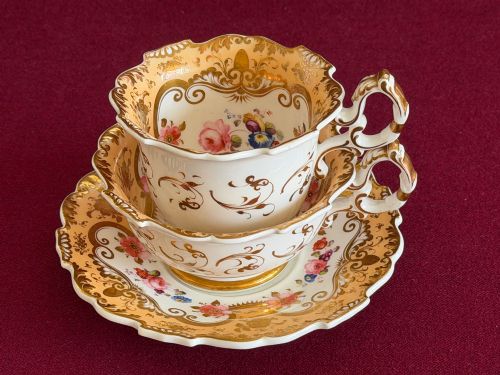
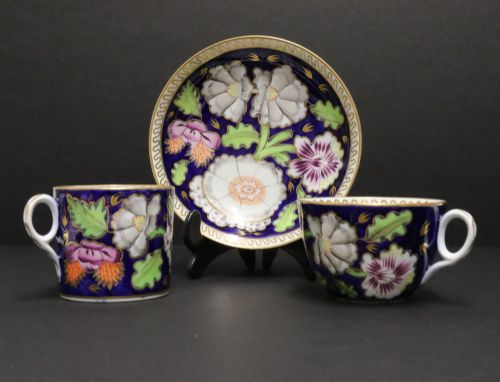
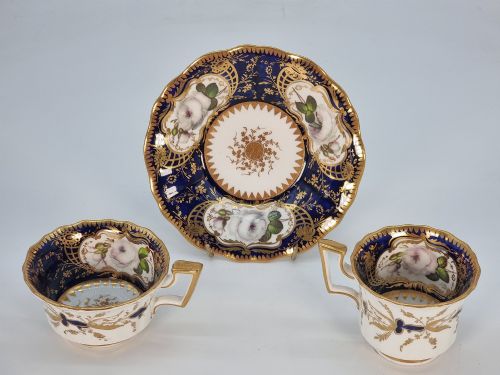



Gilded Bone China Cup
These gilded bone china cup examples bring together refined Regency and Victorian ceramic artistry, offering a tangible link to nineteenth-century dining traditions.
What a gilded bone china cup is
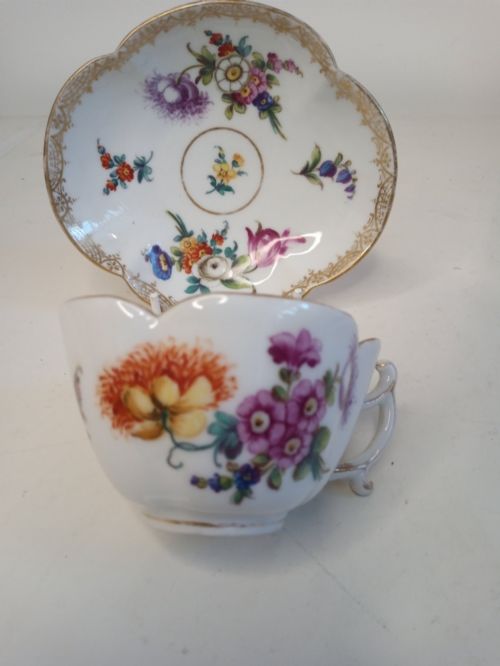
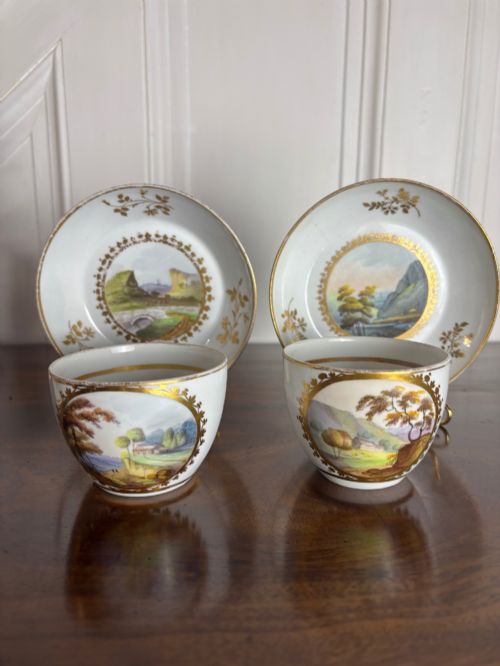
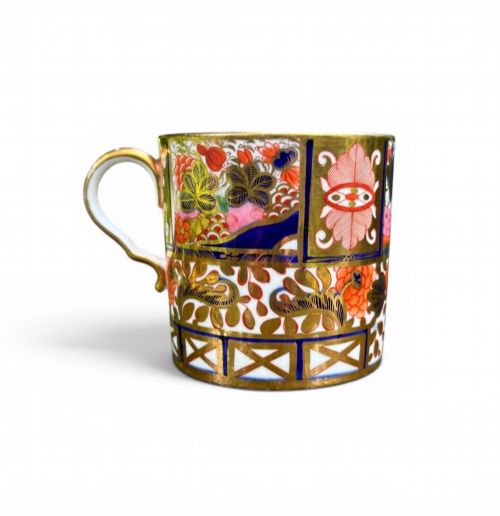
A gilded bone china cup represents a sophisticated category of nineteenth century teaware designed for display and genteel use. When exploring these items, collectors encounter various forms including tea and coffee cup trios and chocolate cups with covers.
The pieces on this page span the nineteenth century, including specific items from around eighteen fifteen and eighteen seventy. These ceramics reflect distinct Regency and Victorian aesthetics through meticulous painting and border work.
Teacups and saucers alongside decorative ceramics dominate the available selection. Each gilded bone china cup bridges practical utility with ornamental refinement typical of the period.
How they were made
Craftsmen utilised bone china and porcelain as the primary ceramic bodies for these vessels. These materials provided a smooth, durable surface capable of supporting intricate painted decoration and gilding.
Makers applied gold leaf and gold gilding to accentuate rims, handles, and intricate motifs. Enamel work in shades such as turquoise added vibrant geometric borders and contrasting colour to the white ceramic ground.
Handpainted details completed the surface ornamentation, requiring steady brushwork by skilled artisans. Firing techniques fixed the enamel and metallic elements securely onto the body of the cup and saucer.
Chocolate cups came with covers specifically to keep the frothy beverage warm while upper-class gossips gossiped.
What varies in quality
The refinement of the handpainted decoration separates standard items from exceptional examples. Precision in the execution of geometric borders and figural motifs reveals the artisan's skill.
The application and preservation of the gold leaf or gold gilding indicate the original standard of production. Thicker, more burnished gilding reflects a higher grade of craftsmanship.
The integrity of the porcelain or bone china body, including the thinness and translucency achieved during firing, defines the upper tier of these pieces.
H and R Daniel·Minton·Spode
The Gilded Bone China Cup Glossary
- Bone china
- A type of soft-paste porcelain incorporating animal bone ash. This composition produces a strong, translucent ceramic body ideal for delicate teaware.
- Gold leaf
- Gold beaten into extremely thin sheets used for gilding surfaces. Artisans apply this material to ceramic rims and handles for a brilliant metallic finish.
- Enamel
- Opaque or translucent glass fused to a ceramic surface through firing. It provides vibrant colours for geometric and floral borders.
- Pearl border
- A decorative ceramic edging technique resembling a string of pearls. This detail frames painted scenes and central motifs on nineteenth-century pieces.
Frequently Asked Questions
What is a gilded bone china cup?
A gilded bone china cup is a nineteenth-century ceramic vessel embellished with gold leaf or gilding, designed for consuming tea, coffee, or chocolate.
These pieces often include matching saucers or covers, reflecting the formal dining customs of the Regency and Victorian eras.
How do I identify a nineteenth-century piece?
Nineteenth-century pieces typically display specific stylistic markers such as handpainted enamel borders and regency or victorian forms. Examining the ceramic body and gilding style helps confirm the era.
Makers' marks or patterns recorded in historical archives also assist in determining the exact period of production.
Were these cups meant for daily use?
While technically functional, many of these delicate vessels served as status symbols for wealthy households during tea and social gatherings. Their intricate handpainted details and gold leaf suggest careful handling.
Owners often displayed them in cabinets alongside other fine decorative ceramics rather than using them for everyday dining.
How should I clean a gilded cup?
Cleaning requires gentle hand washing in lukewarm water with a mild detergent. Avoid abrasive sponges or harsh chemicals that can damage the delicate gold gilding.
Patting the piece dry with a soft cloth prevents water spots and preserves the enamel work.