





Gilded Black Serving Tray
A gilded black serving tray brings rich Regency elegance and dramatic dark contrast to any room.
Gilded Black Serving Tray
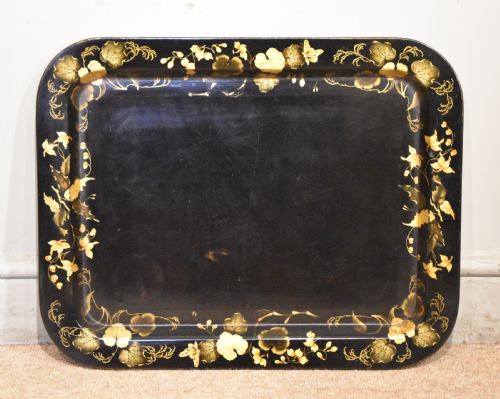
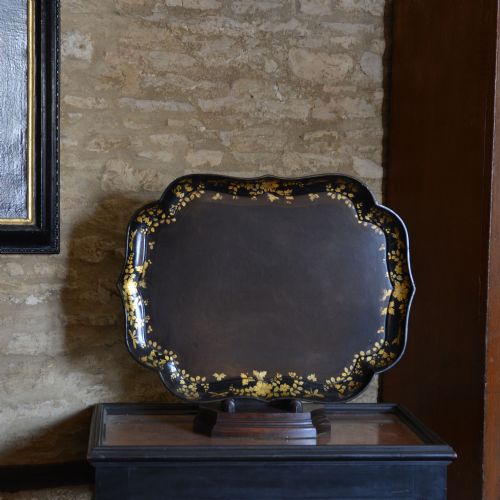
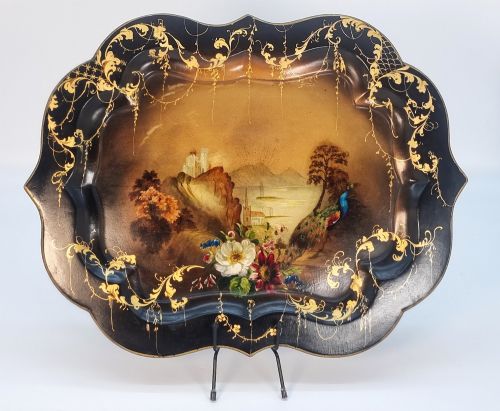
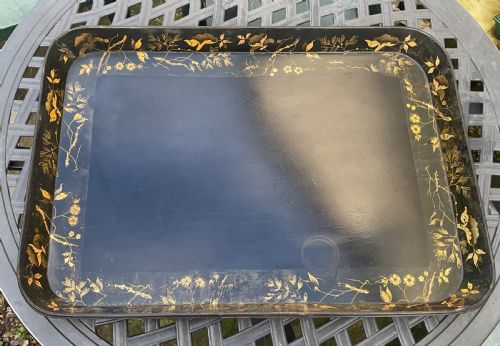
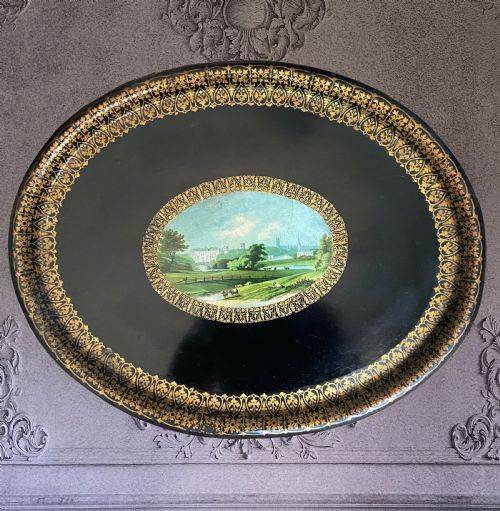
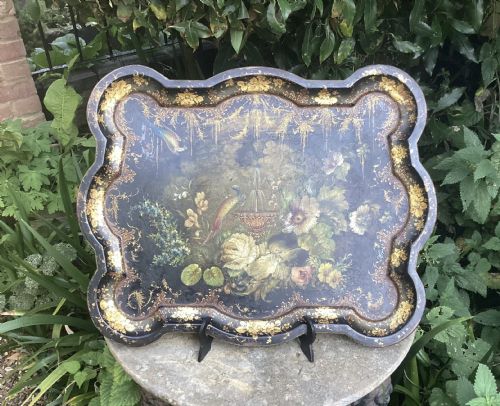
A gilded black serving tray combines deep lacquered grounds with bright metallic highlights, drawing the eye instantly in any interior setting. When searching for a gilded black serving tray, buyers encounter substantial pieces designed for both practical use and decorative display. The majority of these items date from the nineteenth century, encompassing Regency and Victorian periods.
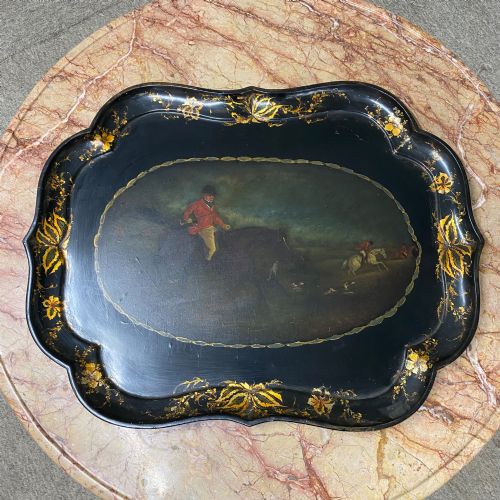
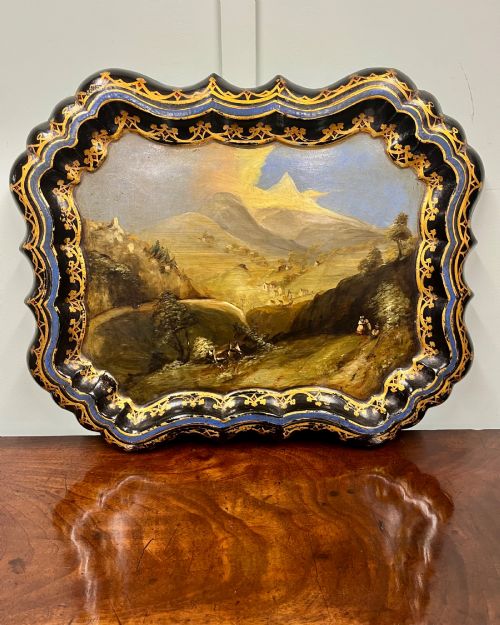
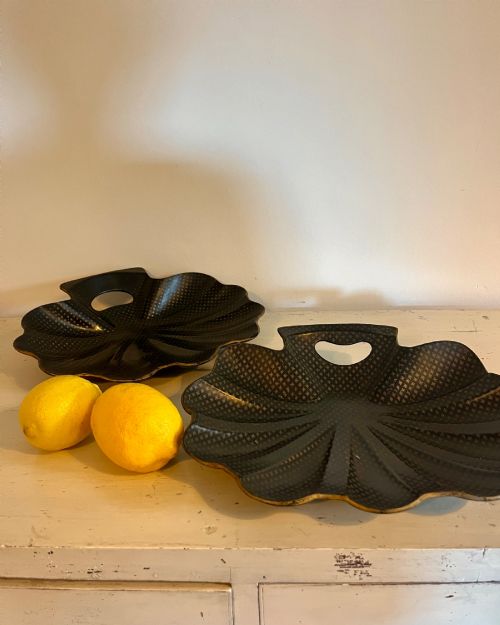
Forms range from large oval papier-mâché dishes and kidney-shaped serving pieces to versatile toleware trays mounted on stands. Many examples feature detailed hand-painted scenes, including horse racing, hunting landscapes, and Chinoiserie motifs. These durable items transition effortlessly from functional table service to prominent wall hangings or low cocktail tables.
Materials and construction
Makers constructed the primary body of these pieces using layers of papier-mâché or sheet iron known as toleware. Artisans pressed and shaped paper pulp or metal sheets before applying successive coats of dark lacquer to achieve a smooth, hard-wearing surface.
Gilding was then applied by hand using fine gold leaf to create ornate borders and intricate pictorial designs. Paintwork and lacquering sealed the metallic elements, protecting the delicate ornamentation from daily wear.
Gilded Black Serving Tray Retail Price Guide 2026
Typical asking prices for gilded black serving tray among the pieces listed under this phrase on Sellingantiques today, from the lower quarter to the upper quarter. They describe what is for sale here now, not the wider market.
Listings feature items from the Regency and Victorian periods, constructed primarily from lacquered papier-mâché and painted sheet iron.
Judging quality and execution
Superior examples display exceptional crispness in the hand-painted details and landscape miniatures, showing the secure hand of a skilled artisan. The depth and lustre of the black lacquer ground indicate the care taken during the multi-stage polishing process.
The weight and structural rigidity of the papier-mâché or metal body set finer pieces apart from standard utility items. Maker signatures or stamps from recognised workshops further elevate the standing of a piece within the category.
Jennens & Bettridge·Clay
The Gilded Black Serving Tray Glossary
- Papier-mâché
- A composite material made from paper pulp or layers of paper bound with glue, then dried and lacquered to form a sturdy object. This technique allowed makers to mould large, resilient trays with smooth surfaces.
- Toleware
- Painted or lacquered sheet metal items produced extensively in Britain and Europe. The iron foundation provided a durable alternative to wood or papier-mâché for serving vessels.
- Gilding
- The application of gold leaf or gold powder to a surface to impart a metallic sheen. Artisans utilised this method to frame painted central scenes and outline structural rims.
- Chinoiserie
- European decorative art reflecting Chinese artistic influences, popular during the eighteenth and nineteenth centuries. This style frequently appears in the gold-painted motifs adorning dark lacquered trays.
- Regency
- A British design period spanning the early nineteenth century characterised by classical restraint and bold decorative contrasts. Pieces from this era often feature clean architectural lines paired with lavish surface ornamentation.
Gilded Black Serving Tray: Frequently Asked Questions
How were these trays originally used?
These trays served wealthy households for carrying drinks, teapots, and glassware across formal drawing rooms. Servants transported refreshments on them, or families displayed them on stands when not in active service.
Over time, many of these durable objects transitioned into purely decorative items. Owners placed them on folding tables or hung them on walls to showcase the painted scenes.
How do I clean a papier-mâché tray?
Dust the surface gently using a soft, dry cloth to prevent scratching the delicate lacquer and gold leaf. Avoid using water, damp sponges, or household chemical cleaners, which can soften the historic finish.
Keep the item away from direct sunlight and excessive moisture to protect the paper core and painted details. Proper placement ensures the lacquer and gilding remain stable for years to come.
Can I use these trays for serving food?
While originally built for hospitality, antique trays feature historic lacquer and gold leaf that benefit from careful preservation. Placing heavy hot dishes directly on the surface risks damaging the delicate nineteenth-century finish.
Using them for light dry items or decorative display protects the fragile painted artistry. Many owners prefer to enjoy them visually rather than subjecting them to modern kitchen use.
How do I identify a Regency period piece?
Regency trays often display crisp classical motifs, restrained borders, and deep black lacquer grounds characteristic of early nineteenth-century workshops. The materials typically consist of dense papier-mâché or heavy sheet iron.
Examining the reverse side and the wear patterns on the base reveals the age of the lacquer. Specific maker marks from prominent nineteenth-century firms further confirm the period.