



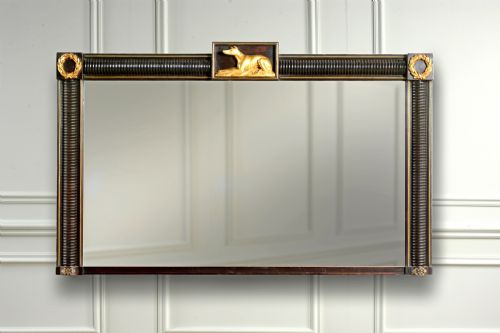

Gilded Black Mirror Frame
A gilded black mirror frame brings together dark ebonised surfaces and bright metallic leaf to anchor a room with crisp architectural contrast.
Gilded Black Mirror Frame
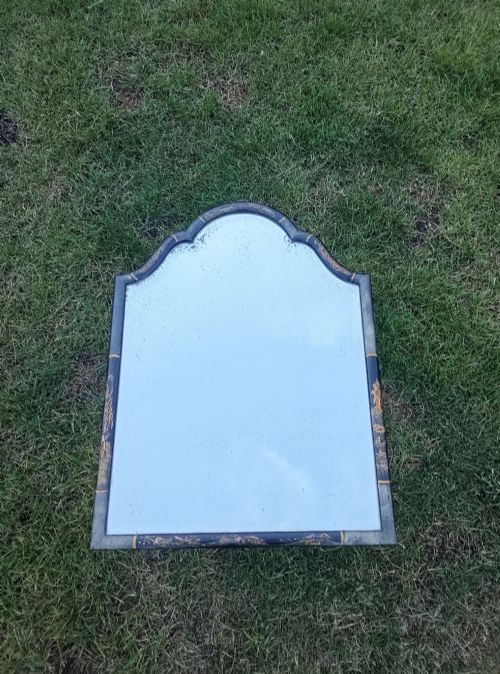
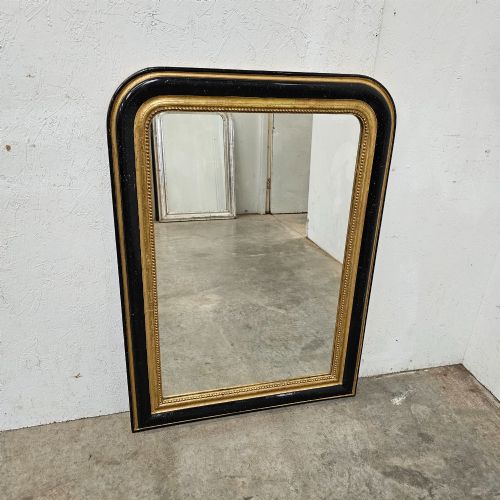
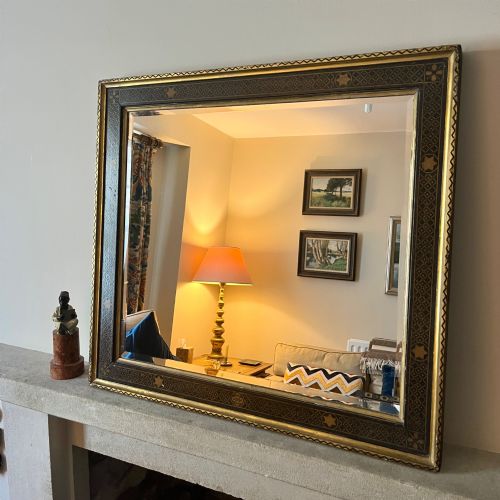
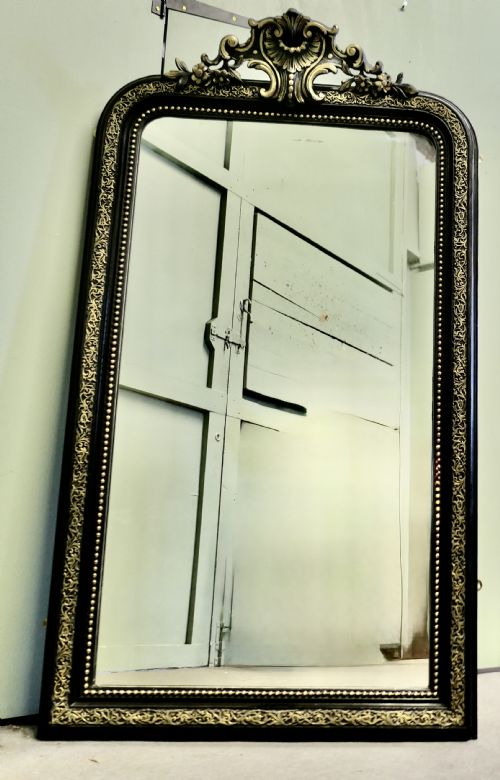
A gilded black mirror frame groups together pieces spanning the eighteenth century through to the mid-twentieth century, with nineteenth-century examples appearing frequently in forms such as overmantel mirrors and wall mirrors.
The aesthetic ranges from French Napoleon III and Louis Philippe models to British Victorian ebonised designs and Chinese export pieces.
Makers utilised various formats, including tall pier mirrors, arch-top overmantels, oval wall hangings, and table dressing mirrors, alongside occasional novelty items like an advertising sign.
Materials and construction
Makers built these frames primarily from wood, applying layers of gesso to create smooth surfaces or intricate relief ornamentation before finishing the ground.
Surfaces received dark paint or ebonising to simulate costly ebony, contrasted with gold leaf, parcel-gilt, or silvered details highlighting carved motifs.
Glazing typically involved flat or bevelled mirror glass, occasionally accompanied by reverse painting on glass or decorative lacquer panels.
Gilded Black Mirror Frame Retail Price Guide 2026
Typical asking prices for gilded black mirror frame among the pieces listed under this phrase on Sellingantiques today, from the lower quarter to the upper quarter. They describe what is for sale here now, not the wider market.
A shoe shop advertising sign joins the mirror collection, proving that ebonised wood and gold leaf were too good to reserve for reflections alone.
Design and execution
Quality rests upon the crispness of the carved wood and gesso ornamentation, where sharply defined motifs distinguish superior work from softer, moulded replacements.
The application of the gilding and the depth of the ebonised finish create subtle interplay between dark grounds and bright metal that defines a well-executed piece.
The Gilded Black Mirror Frame Glossary
- Ebonised
- Wood treated with stain, paint, or polish to imitate genuine ebony. This dark finish provides the primary black ground for gilded highlights.
- Gesso
- A plaster-like mixture applied to wood frames to create a smooth base for gilding or to build up low relief ornament. It is carved and smoothed before metal leaf application.
- Parcel-gilt
- A decorative treatment where only specific portions of an object are gilded with gold leaf, leaving the underlying black or painted wood exposed elsewhere.
- Overmantel mirror
- A large mirror designed to hang above a fireplace mantelpiece. These pieces often feature wide horizontal proportions and architectural crestings.
Gilded Black Mirror Frame: Frequently Asked Questions
Where should I hang a large overmantel mirror?
These large mirrors traditionally sit directly above a fireplace mantelpiece to reflect light and anchor the room's main hearth.
They also function effectively on any substantial unbroken wall space where a strong horizontal or arched focal point is required.
How do I care for ebonised wood and gold leaf?
Dust the frame gently with a dry, soft cloth to prevent particulate buildup without disturbing the delicate metallic leaf.
Avoid liquid cleaners, moisture, and direct sunlight, which can dull the ebonised surface and degrade the underlying gesso.
What is the difference between an ebonised frame and black lacquer?
Ebonised frames consist of timber treated with black stain, paint, or polish to resemble dark ebony wood grain.
Black lacquer involves multiple built-up resin or varnish coats resulting in a deeply reflective, smooth surface often found on chinoiserie pieces.
Are all these frames from the Victorian period?
While Victorian ebonised and parcel-gilt overmantels appear regularly, the selection spans multiple eras including the eighteenth century, Regency period, and early twentieth century.
Stylistic influences range from French Napoleon III and Louis Philippe to Chinese export designs and the Aesthetic Movement.