


Gilded Bedroom Chairs
These gilded bedroom chairs bring bright French and English elegance to a room, offering small-scale luxury and ornamental warmth.
Gilded Bedroom Chairs
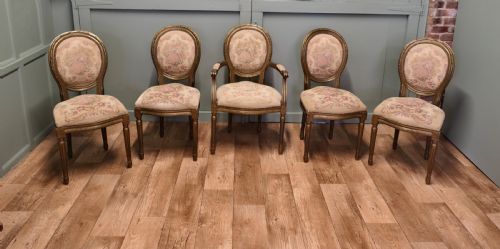
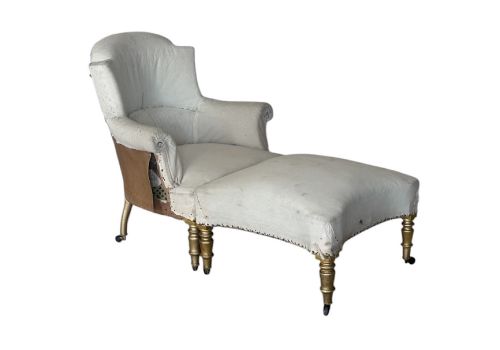
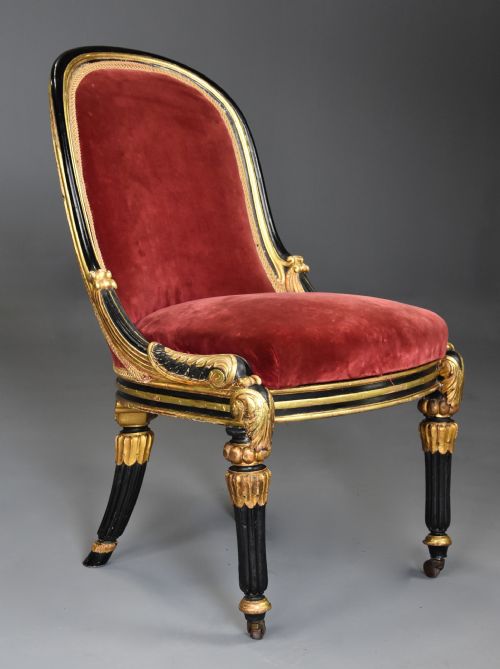
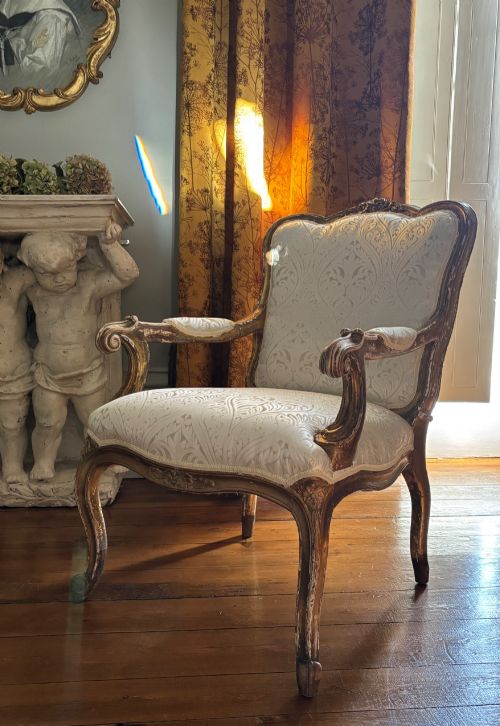
Gilded bedroom chairs encompass small seating forms made for private chambers and boudoirs during the eighteenth, nineteenth, and early twentieth centuries. These pieces include low-slung nursing chairs, side chairs, and occasional seating with metallic surface finishes.
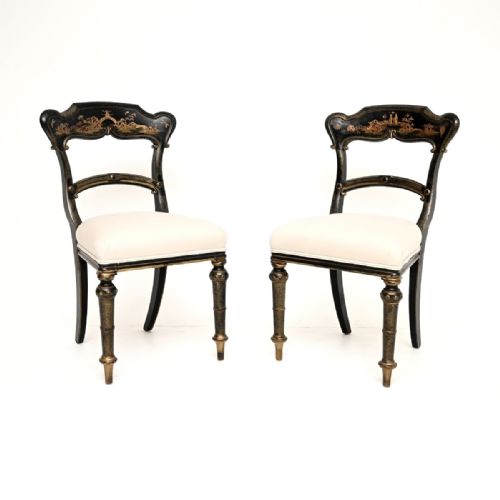
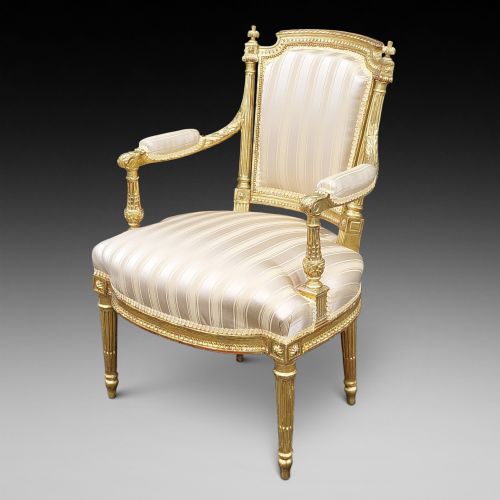
The nineteenth century yields the highest volume of examples on this page, dominated by French Louis XVI revival designs alongside Victorian and Regency interpretations. Makers employed giltwood, beech, walnut, and painted wood to achieve a gilded or lacquered appearance.
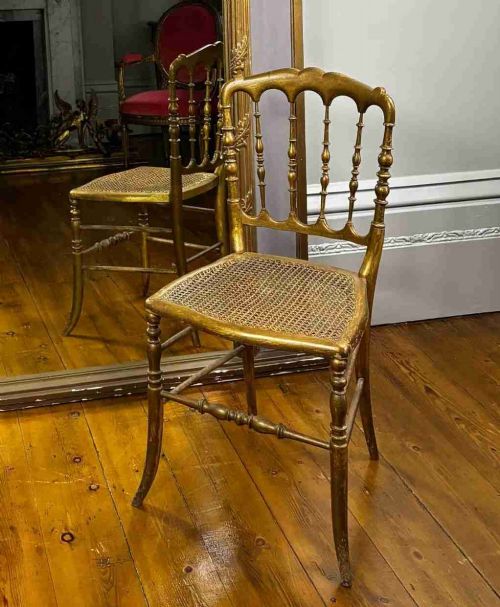
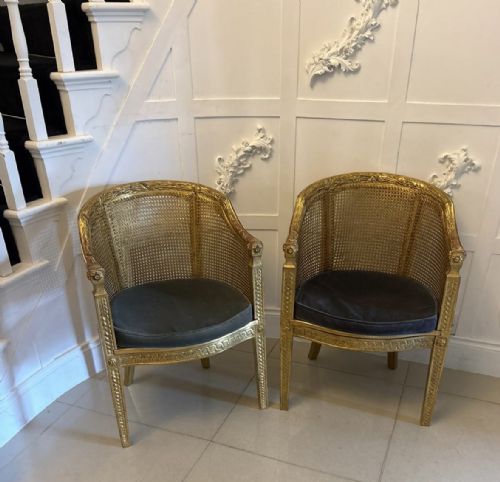
Forms range from simple cane-seated side chairs to upholstered open armchairs and slipper chairs upholstered in velvet or textile. Continental and English workshops produced these seating pieces for formal bedrooms and dressing rooms.
Materials and Craftsmanship
Construction relies primarily on hardwoods such as beech, walnut, and sometimes ebonised timber or papier-mâché, shaped into carved frames. Artisans applied thin sheets of gold leaf or surface gilding over a prepared ground layer to create the characteristic metallic sheen.
Upholstery techniques involve traditional stuffing materials secured beneath fabrics including blue velvet, silk, and contemporary textiles, while other examples feature woven cane panels. Frame assembly utilises traditional joinery reinforced with hand-carved decorative motifs like fluting, bead reels, and floral crests.
Quality Variations
Depth and crispness of hand-carved wood ornament separate standard production from superior examples, where mouldings remain sharp and refined. The quality of the original gilding layer, whether genuine gold leaf or paint simulation, dictates how gracefully the surface ages.
Structural integrity depends on the tightness of the frame joints and the preservation of the primary timber beneath the surface decoration. Chairs retaining original cane work or period upholstery demonstrate higher degrees of original preservation.
Holland and Sons·Blaise Maucuy·Bruce J Talbert·Lamb of Manchester·Jennens and Bettridge
The Gilded Bedroom Chairs Glossary
- Giltwood
- Timber coated with gold leaf or powder over a gesso base. This finish provides the bright reflective surface seen on revival frames.
- Fauteuil
- An open-arm armchair with upholstered back and arm pads over an exposed wooden frame. French nineteenth-century examples frequently adopt Louis styles.
- Caning
- Woven rattan strips forming seat or back panels. This technique lightened the visual weight of bedroom and salon seating.
- Nursing chair
- A low-seated chair designed for comfort during nursery duties or dressing. They often feature low profiles and upright backs.
- Bergere
- A closed armchair with upholstered sides enclosed in wood. These comfortable seats often include loose feather or down seat cushions.
Gilded Bedroom Chairs: Frequently Asked Questions
Where do I put a gilded chair?
These compact seats suit dressing rooms, corners of bedrooms, or as accent pieces in sitting rooms. Their reflective surfaces lift darker corners without occupying excessive floor space.
Pair them with simple wooden furniture to let the metallic finish stand out against plain walls or neutral textiles.
How do I clean giltwood?
Dust gently with a dry, soft feather duster or a clean microfibre cloth. Avoid all moisture, cleaning sprays, and abrasive friction, which strip the delicate gold leaf.
Professional conservators should handle any lifting or flaking metal surfaces to prevent further loss of the original finish.
Are these chairs comfortable?
Comfort varies significantly by form, as boudoir and side chairs were built primarily for posture and appearance rather than long lounging. Low nursing chairs and upholstered fauteuils offer more supportive padding than rigid cane-seated versions.
Many period examples retain traditional horsehair or spring stuffing that feels firmer than modern seating.
How do I date a gilded chair?
Examine the timber species, joinery methods, and the style of the carved ornamentation beneath the gilding. Nineteenth-century revival pieces often copy eighteenth-century models but betray their actual age through machine-sawn timber marks and modern screw fixings.
Comparing the specific floral or classical motifs to documented nineteenth-century design catalogues helps pinpoint the decade of manufacture.